
Caddie's Gear Advisor
Curated for today's 87°F · Clear
Ultralight Distance Drivers
Maximum carry in hot, low-drag conditions
UV Protection Apparel
UPF 50+ cooling fabrics for peak-sun rounds
Precision Rangefinders
Slope-adjusted yardage in any condition
Hydration & Cooling
Insulated bottles and cooling towels
Your Golf Trip, Handled
The Ultimate Golf Trip Planner
Everything you need to play Adobe Creek Golf Club — from booking your flight to checking in course-side.
Course-Side Stays
Luxury hotels, resorts, and stay-and-play packages just minutes from the first tee.
Flights
Compare fares across 700+ airlines for the best route to your tee time.
SUV Rentals for Golf Bags
Spacious vehicles with room for clubs, bags, and your foursome.
Travel Insurance
Coverage for medical, weather delays, and gear at your destination.
Adobe Creek Golf Club: Course Intelligence
Signature Setup
Robert Trent Jones Jr. routed Adobe Creek across the open Petaluma flats in 1990, and the first thing you notice is that there are almost no trees to hide behind. It plays as a links-style layout — 6,886 yards, par 72, slope 131 from the tips — with Adobe Creek itself and a string of wetland ponds threaded through more than half the holes. The course closed in 2017 and later returned to play under new operators, so conditioning has swung over the years; check current grow-in before you build expectations around the green speeds. What has never changed is the wind. This sits inside Sonoma County's Petaluma Gap, a low break in the coastal hills that funnels marine air off Bodega Bay straight across the property most afternoons.
Hole-by-Hole Wind & Playing Lines
The defining variable here is the NW gap wind, and the hardest holes are the long par-4s pointed into it. On the course's #1-handicap par-4 (plays around 440 yards), a calm-morning 150-yard approach becomes a 175-yard shot once the gap loads up after lunch — that is a real two-club difference, not a feel adjustment. Take the extra club early in your swing thought and favor the fat side of the green rather than flirting with the creek-side pins.
The over-water par-3 (roughly 165 yards) is the photo hole and the scorecard wrecker. Into a 20 mph NW push it stretches past 185 effective yards; downwind on a still morning it can be a soft 7-iron. Never trust the yardage plate on this one — read the flag and the ripples on the pond first.
On the holes that run with the wind (the south-and-east-bound legs), the firm fairways turn into a help: a well-struck drive picks up 20–30 yards of run. The trap is the cross-wind dogleg holes, where the gap shoves the ball toward water down the right; start your line one club's width left of where you think you need to.
Green & Fairway Characteristics
The fairways are ryegrass-dominant and, true to the links intent, get firm and fast whenever the gap wind dries them out — that is most of the dry season. Expect the ball to bound, so the bump-and-run is a legitimate option into the front-open greens. The putting surfaces are mid-sized and roll in the upper-9s to low-10s on a maintained day; they hold subtle tilt rather than dramatic tiers, which means speed control off the wind matters more than reading break. Front nine and back nine are close to even in yardage, but the back plays meaningfully longer because the exposed inward holes more often face the afternoon wind.
Seasonal Weather Pattern
Petaluma's microclimate is the whole story. Summer mornings (June–September) start under a marine-layer fog that usually clears between 9 and 11 a.m.; until it lifts, the air is damp, the fairways are slow, and the ball flies short. By early afternoon the gap wind kicks to 15–25 mph almost daily — golfers from inland valleys are routinely surprised that a 75°F July afternoon here can feel like a fight. Spring (March–May) is the green, calm-morning sweet spot. Winter brings the rain and the softest, longest conditions of the year. This is not a year-round-identical course; the same hole can be two different golf holes between 8 a.m. and 2 p.m.
Local Play Tips
Two things the rangefinder won't tell you. First, the marine fog is your friend on the greens, not just the tee — putts are appreciably slower until it burns off, so early groups should add pace. Second, because the property is so open, there is no wind shelter anywhere; carry a light shell even on a warm forecast, because the gap wind drops the felt temperature 8–10 degrees the moment it arrives. I have played plenty of NorCal gap courses in this corridor — I have not played Adobe Creek since its reopening, so treat its current green speeds as something to confirm on the practice roll, but the wind pattern is a fixed feature of the gap and will be true regardless of who is mowing.
Pre-Round Weather Workflow
Use the 7-day G-Score before you book, and weight the wind line heavily here. Look for a morning tee time on a day where afternoon gusts stay under 15 mph — that is your best-scoring window, and it is almost always before 10 a.m. Check the windExposure flag: with no trees, Adobe Creek will read as high-exposure, which means the forecast wind is the wind you'll actually feel, undiluted. If the only slot open is afternoon, plan for the two-club adjustment into the NW holes and lower your scoring expectation by a few strokes rather than fighting it. Fog-clearing time matters too — a noon clearing means damp, short-flying conditions right up until the wind arrives, the worst of both. Aim for clear-early, calm-late, and you'll catch this course at its fairest.
Related Reading
Before you tee off at Adobe Creek Golf Club
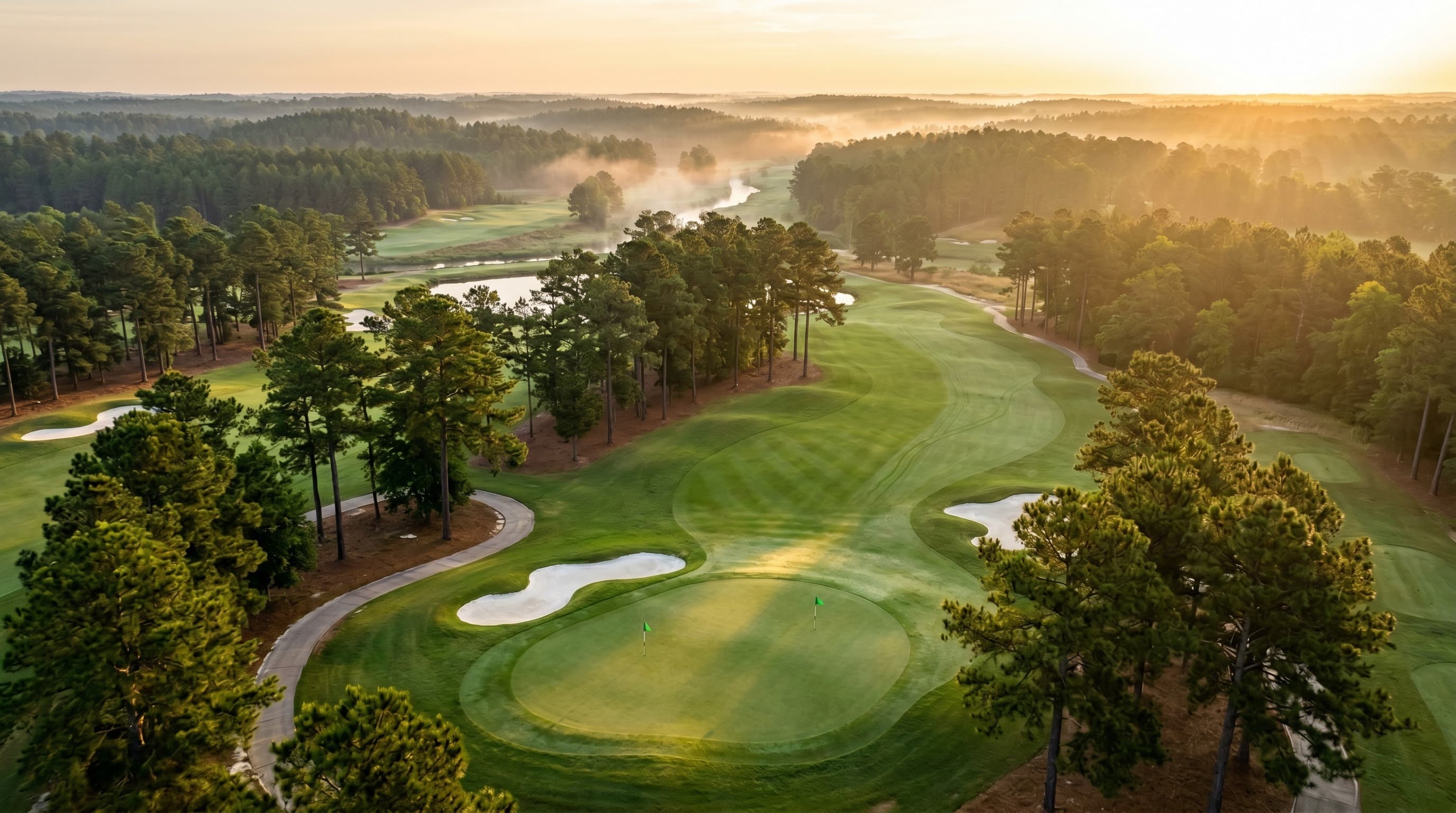
The May 2026 G-Score Heatmap: Where American Golf Peaks This Spring
May is the most underrated month on the American golf calendar. Five regions hit their annual peak this spring, three turn quietly hostile, and the data tells a clearer story than the brochures. Here is where to play, where to avoid, and how to time your booking window.
Read Story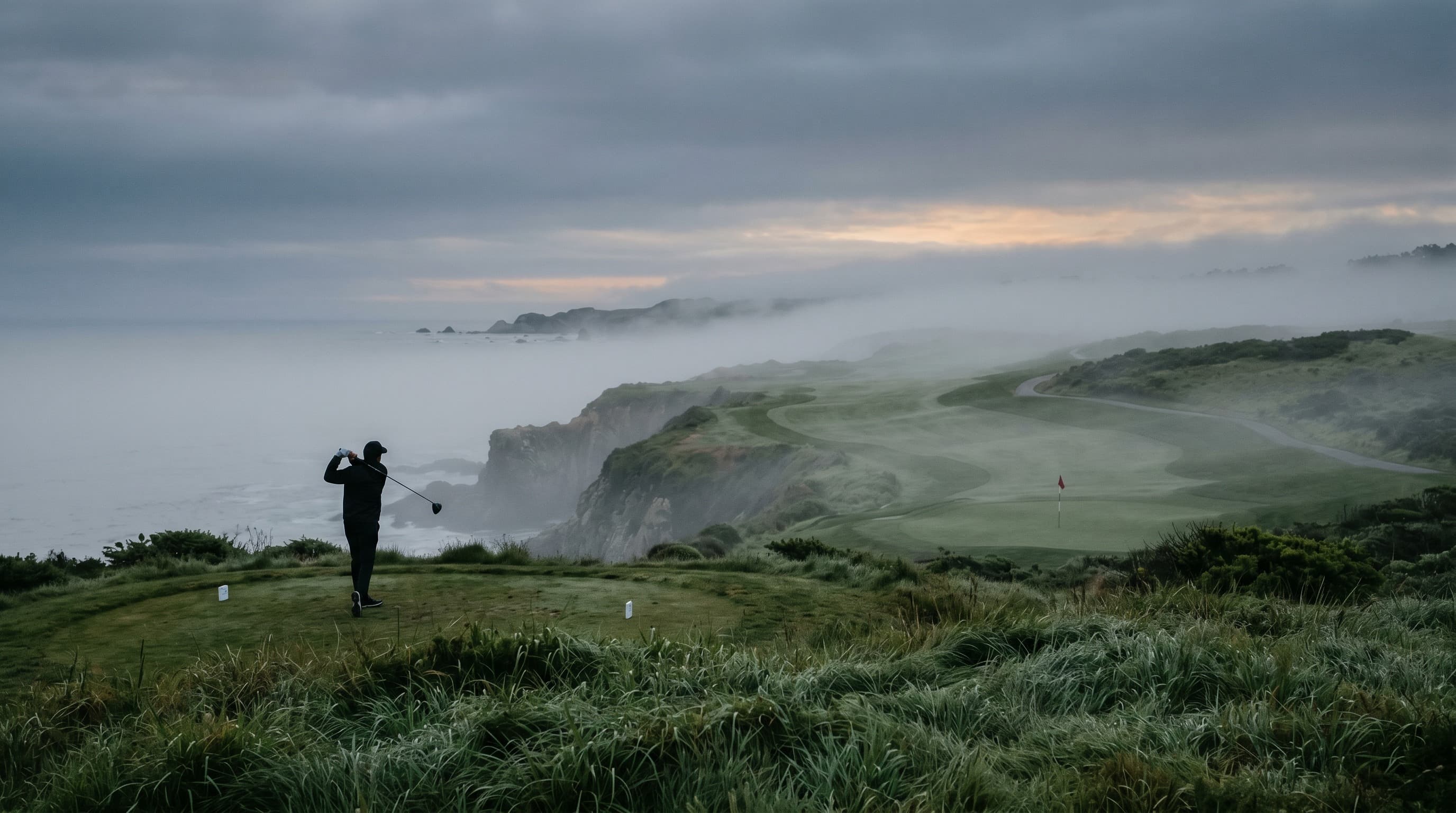
Reading Coastal Wind: How the Marine Layer Reshapes Pebble Beach, Bandon, and the Pacific Coast Game
Coastal golf does not play by inland rules. The marine layer suppresses wind in the morning, then releases it through midday in a thermal cycle that turns a calm 7am tee into a 22mph back nine. Here is the meteorology behind the pattern, the G-Score data that confirms it across the Pacific coast, and the morning workflow that turns the marine layer from a confusion into a competitive advantage.
Read StoryMinSu Kim
Founder & Golf Data Analyst
MinSu is a data analyst and golfer with 10+ years on the course. He built Golf Weather Score to answer one question: is today a good day to play? He combines weather data, course intelligence, and the proprietary G-Score algorithm to help golfers make smarter decisions.
Every Friday Morning
When Adobe Creek Golf Club plays best next weekend.
Friday 6am ET: peak G-Score windows for Adobe Creek Golf Club, wind direction by hour, and one gear call. Three minutes to read, save you the round.
One email a week. Unsubscribe in one click.
The Caddie's Oracle
Draw your luck before the tee off