
Caddie's Gear Advisor
Curated for today's 101°F · Clear
Ultralight Distance Drivers
Maximum carry in hot, low-drag conditions
UV Protection Apparel
UPF 50+ cooling fabrics for peak-sun rounds
Precision Rangefinders
Slope-adjusted yardage in any condition
Hydration & Cooling
Insulated bottles and cooling towels
Your Golf Trip, Handled
The Ultimate Golf Trip Planner
Everything you need to play Allen’s Golf Course — from booking your flight to checking in course-side.
Course-Side Stays
Luxury hotels, resorts, and stay-and-play packages just minutes from the first tee.
Flights
Compare fares across 700+ airlines for the best route to your tee time.
SUV Rentals for Golf Bags
Spacious vehicles with room for clubs, bags, and your foursome.
Travel Insurance
Coverage for medical, weather delays, and gear at your destination.
Allen’s Golf Course: Course Intelligence
Signature Setup
Redding heat is a real thing, and you feel it before you feel the golf course. I've driven up I-5 through the north end of the Sacramento Valley in July with the dashboard reading 104°F at four in the afternoon, and that single number explains more about scoring at Allen's than any yardage book. This is a short, walkable 9-hole course — par 31, just 1,706 yards — tucked into oak and pine on the southwest side of town near the river bottom. It is not a championship test. It is a placement-and-heat-management round, and the weather sets the terms.
Allen's Golf Course sits in Redding, California (zip 96001), a daily-fee 9-hole layout that locals walk in well under two hours. At 1,706 yards to a par of 31, the card is built from par-3s and short par-4s — the kind of course where wedge precision and green-reading decide your number, not driver distance.
Hole-by-Hole Wind & Playing Lines
Wind is rarely Redding's defining force the way it is on a coastal links — the valley is more often still and superheated than blustery. So the playing variable here is air density, not direction.
The #1-handicap par-4. With the whole course at 1,706 yards, the longest two-shot hole is still short. Don't reach for driver into the oak corridor; a controlled tee shot to a full-wedge distance beats a blocked recovery from the trees. On a 100°F afternoon, hot thin air adds noticeable carry — take one club less into the green than the yardage suggests.
The pinched par-3s. Several of the par-3s play through tree gaps. In the rare afternoon up-valley breeze, the gaps funnel and squirrel the ball; aim center-green and let the loft work rather than chasing a tucked pin.
The closing short two-shotter. Tempting to be aggressive when you're tired and hot. The smart play late is the same as early: club down, wedge in, two-putt, walk to the shade.
Green & Fairway Characteristics
The fairways run tree-lined under mature oak and pine, which is both shade and hazard — the canopy keeps you out of the worst of the sun but pinches your lines off the tee. The greens are compact and hold a well-struck short iron, which fits a par-31 routing where most approaches are wedges and short irons. There's little of the long-iron, run-up architecture you'd find on a links; this is a target-golf, spin-and-stop short course. Because it's so walkable and short, the real fatigue factor isn't the yardage — it's the heat load over nine holes in open valley sun.
Seasonal Weather Pattern
Redding is one of the hottest cities in the United States in summer. July and August average highs sit around 98–100°F, and the valley regularly pushes past 105°F; the all-time record is near 118°F. That heat, not wind or rain, is the dominant golf variable from June through September — and it makes a 1,706-yard course feel longer than the card by the back nine if you tee off late. Winters flip entirely: mild, wet, 50s–60s°F highs, with rainy spells and the occasional valley fog burning off by mid-morning. Spring and fall (April–May, October) are the comfortable, dry windows — warm days, cool mornings, ideal walking weather. Unlike the northern-tier courses, Allen's doesn't close for snow; the calendar is governed by summer heat avoidance and winter rain timing.
Local Play Tips
A limitation I'll own honestly: I haven't carded a personal round at Allen's specifically, so I won't invent a hole-by-hole scorecard I didn't earn — what I can tell you is grounded in the Redding climate I have driven and sweated through, and in the course's published 9-hole, par-31, 1,706-yard profile. The single best decision you'll make here isn't a club choice; it's a tee-time choice. Book the earliest slot, carry more water than you think you need, and use the shade of the oaks between shots. On a short course, the round is won by staying sharp through nine holes — and in Redding summer, sharpness is a hydration and heat problem before it's a golf problem.
Pre-Round Weather Workflow
Use the 7-day G-Score on this page the way I would for any Redding round. In summer, read the temperature and time-of-day panel first: a 7 a.m. tee time can be 30°F cooler than a 2 p.m. one, and the G-Score reflects that — expect an 8–12 point swing in your favor by going early. Check the windExposure panel for those occasional up-valley afternoon breezes that squirrel the par-3s through the tree gaps; if it's flagged, aim center-green. In winter, flip your attention to the precipitation and fog timing — a mild, rain-free 58°F morning here is genuinely pleasant walking golf. The course is short enough that the weather, not the yardage, is your real opponent. Tee off into the cool, club down for the thin hot air when the afternoon heat builds, and let the front-light G-Score pick your start time.
Related Reading
Before you tee off at Allen’s Golf Course
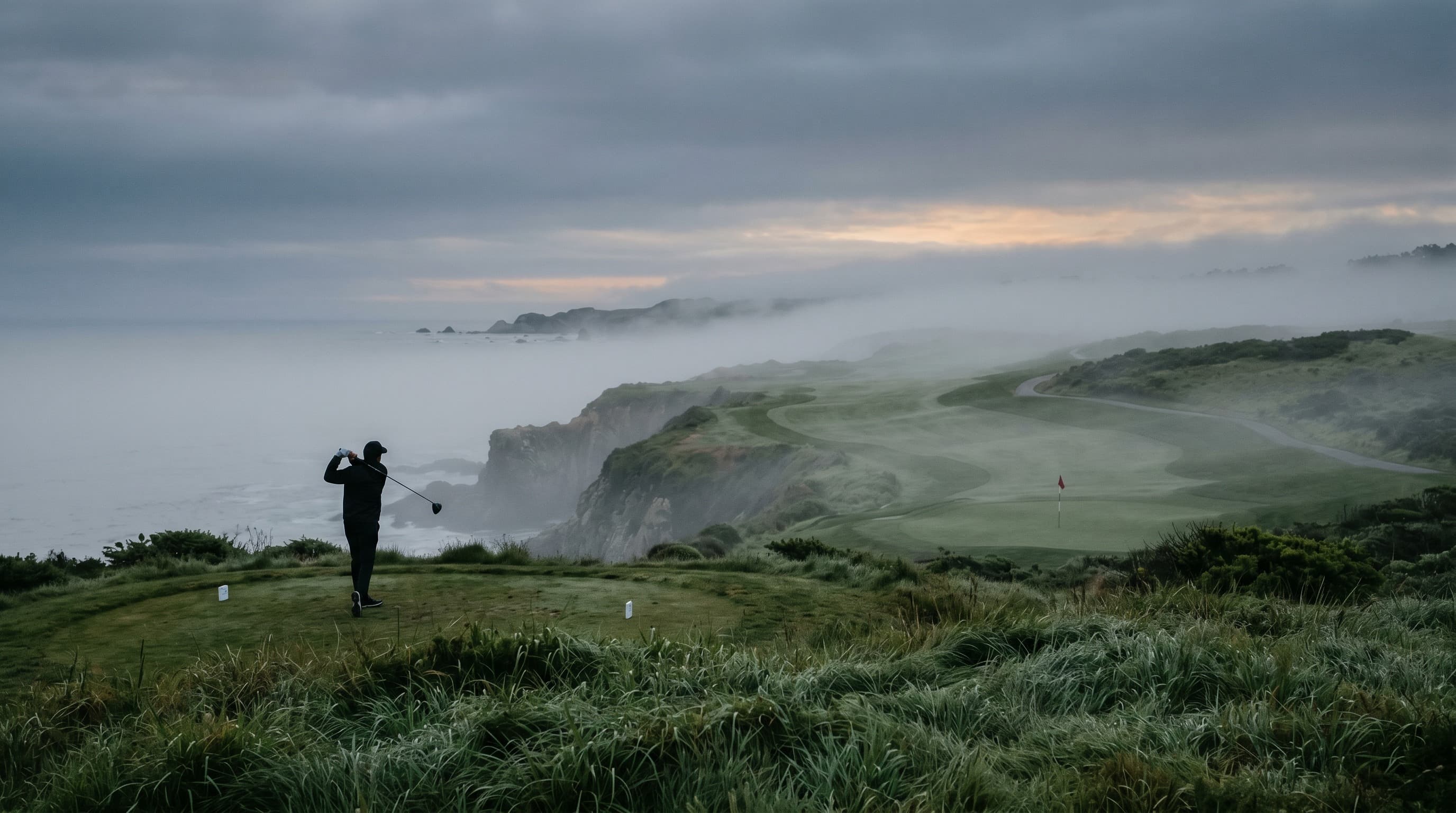
Reading Coastal Wind: How the Marine Layer Reshapes Pebble Beach, Bandon, and the Pacific Coast Game
Coastal golf does not play by inland rules. The marine layer suppresses wind in the morning, then releases it through midday in a thermal cycle that turns a calm 7am tee into a 22mph back nine. Here is the meteorology behind the pattern, the G-Score data that confirms it across the Pacific coast, and the morning workflow that turns the marine layer from a confusion into a competitive advantage.
Read Story
How to Read a G-Score: The 0–100 Golf Playability Number, Decoded
A G-Score on this site is a single 0–100 number that tells you whether today is worth tee-up. Here is exactly what each band means, what drives the calculation, and how to use it to plan a round you will actually score on.
Read StoryMinSu Kim
Founder & Golf Data Analyst
MinSu is a data analyst and golfer with 10+ years on the course. He built Golf Weather Score to answer one question: is today a good day to play? He combines weather data, course intelligence, and the proprietary G-Score algorithm to help golfers make smarter decisions.
Every Friday Morning
When Allen’s Golf Course plays best next weekend.
Friday 6am ET: peak G-Score windows for Allen’s Golf Course, wind direction by hour, and one gear call. Three minutes to read, save you the round.
One email a week. Unsubscribe in one click.
The Caddie's Oracle
Draw your luck before the tee off