
Caddie's Gear Advisor
Curated for today's 61°F · Clouds
Tour-Level Drivers
Engineered for maximum distance and forgiveness
Laser Rangefinders
Pin-seeking technology for precision approaches
Premium Golf Balls
Tour-caliber spin and distance performance
Performance Sunglasses
Polarized lenses optimized for reading greens
Your Golf Trip, Handled
The Ultimate Golf Trip Planner
Everything you need to play Allenmore Golf Course — from booking your flight to checking in course-side.
Course-Side Stays
Luxury hotels, resorts, and stay-and-play packages just minutes from the first tee.
Flights
Compare fares across 700+ airlines for the best route to your tee time.
SUV Rentals for Golf Bags
Spacious vehicles with room for clubs, bags, and your foursome.
Travel Insurance
Coverage for medical, weather delays, and gear at your destination.
Allenmore Golf Course: Course Intelligence
Signature Setup
Allenmore is a flat, mature parkland course in the heart of Tacoma, Washington, dating back to the Allenmore Public Golf Club era around 1929. It is one of the older daily-fee tracks in the South Sound, and it plays like it: tight tree lines of Douglas fir and bigleaf maple that have had nearly a century to grow into the corridors. This is not a long, modern bomber's course — at roughly 6,200 yards from the back tees it rewards position and a dry ball over raw distance. The central water feature and the par-3 carry over it are the course's calling card, and they are also where Tacoma's weather does the most damage to your scorecard.
Hole-by-Hole Wind & Playing Lines
Tacoma's prevailing surface flow runs from the southwest off Puget Sound, and on a flat course like Allenmore the wind is rarely blocked.
- The #1-handicap par-4: Into a WSW headwind — common on wet fronts moving in from the Sound — a 150-yard approach can stretch to 170. Club up one to two and aim at the dry right side; the left tree line collects pulled shots.
- The signature par-3 over the pond (~150y): A quartering SW wind pushes the ball toward the water short-left. Take the extra club and bail right of the green, not short.
- A doglegging mid par-4: When the marine layer hasn't burned off, the air is heavy and dead — distances play 5–8% shorter than a dry summer afternoon. Trust the number, not the temperature on your phone.
Green & Fairway Characteristics
The greens are mixed poa/bentgrass with modest contour — not severe, but they hold a lot of moisture. For most of the year (October through April) the fairways are soft and you should expect almost zero roll; plan your layups on carry distance alone. In the dry stretch of July and August the ground firms up and the same 6,200-yard course can suddenly play 6,400 in effective length because of roll-out. The flat routing makes it one of the more walkable courses in Tacoma, which matters when the turf is heavy.
Seasonal Weather Pattern
This is a marine west-coast climate (Köppen Cfb/Csb), and it is the single biggest variable in your score here. Tacoma averages roughly 38–40 inches of rain a year, and the overwhelming majority falls October through March. Winter rounds run 40–45°F with damp, dead air and waterlogged turf. The reward for patience is summer: July and August highs sit around 75–80°F with very little rain, low humidity, and the best playing conditions of the year. Spring and fall are a coin flip — bring rain gear regardless.
Local Play Tips
Because the fairways drain slowly, the smartest move is the earliest tee time you can get on a dry day — but counterintuitively, the ball travels farther in the afternoon once the surface firms and warms. If you're chasing a score, a late-morning slot after the marine layer lifts often gives you both firmer turf and lighter wind. I haven't played Allenmore in a hard winter freeze, so I won't claim how the greens roll in January frost — but the regional pattern says expect them slow and receptive any time outside high summer.
Pre-Round Weather Workflow
Allenmore is a course where the forecast decides your club selection more than your swing does. Before you book:
- Check the 7-day G-Score trend — back-to-back dry days matter more than a single sunny morning, because the turf needs time to drain and firm up.
- Read the windExposure rating for SW flow; on a flat, tree-lined course, a 10–12 mph Sound breeze meaningfully changes every approach.
- If the score shows heavy overnight rain clearing by mid-morning, target a late-morning tee time — you'll catch lighter wind and a firmer surface than the dawn group did.
Related Reading
Before you tee off at Allenmore Golf Course
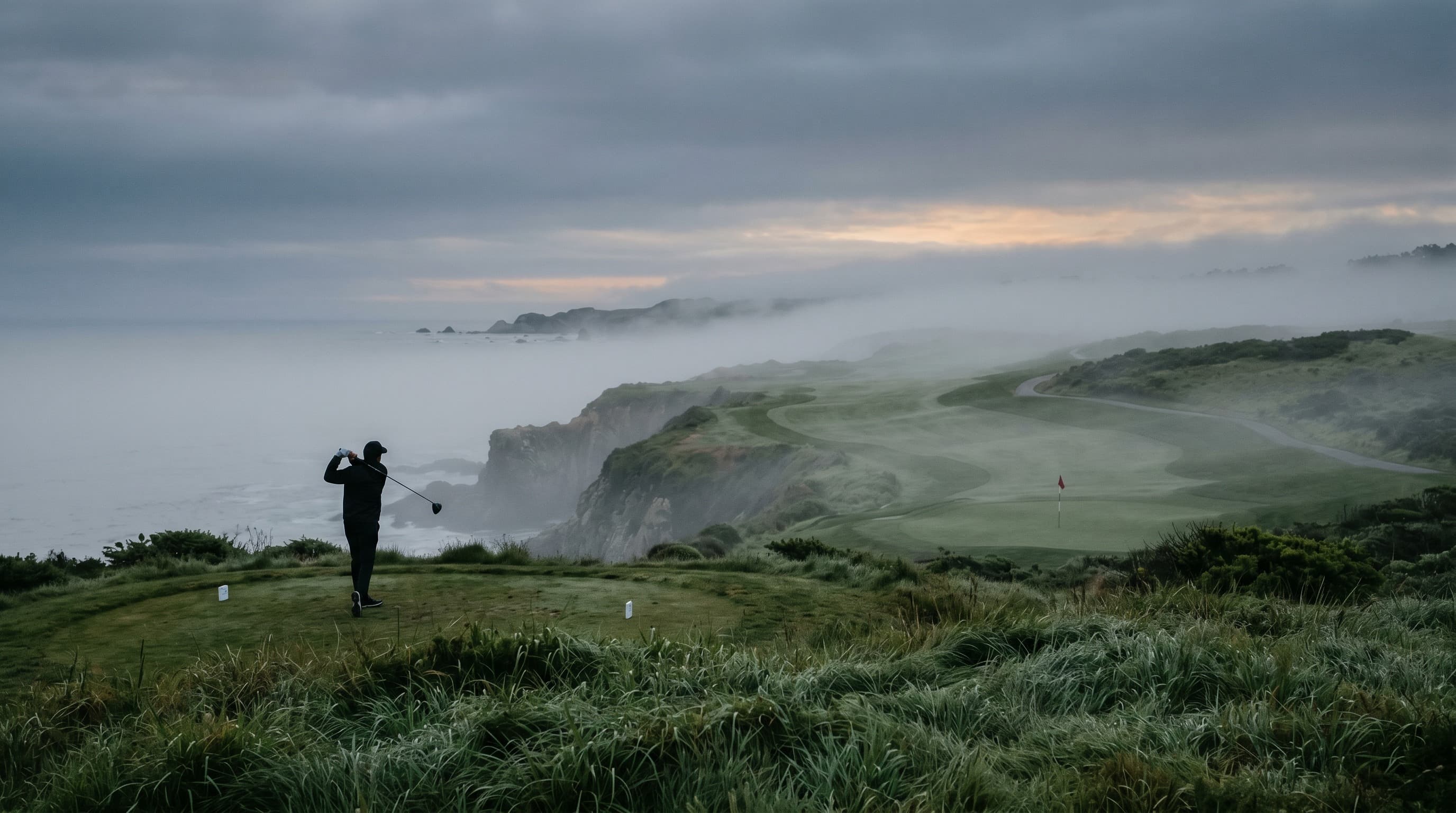
Reading Coastal Wind: How the Marine Layer Reshapes Pebble Beach, Bandon, and the Pacific Coast Game
Coastal golf does not play by inland rules. The marine layer suppresses wind in the morning, then releases it through midday in a thermal cycle that turns a calm 7am tee into a 22mph back nine. Here is the meteorology behind the pattern, the G-Score data that confirms it across the Pacific coast, and the morning workflow that turns the marine layer from a confusion into a competitive advantage.
Read Story
Saturday Morning Tee Time Decision Tree: How to Pick the Right Window in Six Minutes
You have Saturday open. Three courses on the shortlist, the weather is mixed, and your tee-time window is 6am to 4pm. Here is the six-minute decision tree we use to pick the right round, the right course, and the right hour — without overthinking.
Read StoryMinSu Kim
Founder & Golf Data Analyst
MinSu is a data analyst and golfer with 10+ years on the course. He built Golf Weather Score to answer one question: is today a good day to play? He combines weather data, course intelligence, and the proprietary G-Score algorithm to help golfers make smarter decisions.
Every Friday Morning
When Allenmore Golf Course plays best next weekend.
Friday 6am ET: peak G-Score windows for Allenmore Golf Course, wind direction by hour, and one gear call. Three minutes to read, save you the round.
One email a week. Unsubscribe in one click.
The Caddie's Oracle
Draw your luck before the tee off