
Caddie's Gear Advisor
Curated for today's 96°F · Clear
Ultralight Distance Drivers
Maximum carry in hot, low-drag conditions
UV Protection Apparel
UPF 50+ cooling fabrics for peak-sun rounds
Precision Rangefinders
Slope-adjusted yardage in any condition
Hydration & Cooling
Insulated bottles and cooling towels
Your Golf Trip, Handled
The Ultimate Golf Trip Planner
Everything you need to play Alpine Country Club — from booking your flight to checking in course-side.
Course-Side Stays
Luxury hotels, resorts, and stay-and-play packages just minutes from the first tee.
Flights
Compare fares across 700+ airlines for the best route to your tee time.
SUV Rentals for Golf Bags
Spacious vehicles with room for clubs, bags, and your foursome.
Travel Insurance
Coverage for medical, weather delays, and gear at your destination.
Alpine Country Club: Course Intelligence
Signature Setup
The first thing you notice at Alpine isn't the course — it's the wall of the Wasatch standing over the back nine, Lone Peak still holding snow into June. I've played enough Utah mountain golf to know what that backdrop does to your eye: it flattens distance and makes every uphill putt look shorter than it is.
Alpine Country Club opened in 1958 to a William H. Neff design, sitting in Highland at roughly 4,950 feet of elevation. It plays to par 72 at 7,031 yards from the tips. The bones are old-Utah parkland, but holes 11, 12, and 13 were rebuilt by John Fought in 2008–09, and those three play noticeably more modern — more shaping, more defined targets — than the holes around them.
Hole-by-Hole Wind & Playing Lines
The weather story here is altitude first, wind second. At 4,950 feet the air is thin enough that a well-struck iron carries roughly 6–8% farther than it would at sea level — call it close to a full club on a 170-yard shot. New players from lower elevations consistently fly greens for the first nine holes until they trust it.
The second factor is the canyon thermal. American Fork Canyon and the Wasatch slopes to the east drive a daytime upslope wind that builds through late morning. On the card's #1-handicap par-4, that wind comes across and into the approach by early afternoon, turning a mid-iron into a long-iron. The Fought stretch (11–13) is the most exposed to it — those holes sit higher and catch the breeze cleaner than the sheltered front-nine corridors.
Green & Fairway Characteristics
The greens are bentgrass and run firm and fast through the dry Utah summer. Combine quick bent with the optical pull of the mountains and you get the classic Wasatch misread: putts break toward the valley floor (away from the peaks) more than your eye wants to believe. Trust the low side. Fairways roll out hard in July and August once the high-desert sun bakes them, so factor extra rollout off the tee — the elevation gain you get in the air, you also get on the ground.
Seasonal Weather Pattern
This is high-desert mountain golf, not a year-round resort climate. The season runs roughly April through October. July and August days sit in the upper 80s to low 90s, but it's dry heat, and mornings start cool — often in the 50s before the sun clears the ridge. May and September are the sweet spots: comfortable afternoons, calmer thermals, and greens that haven't yet gone summer-firm. I haven't teed it up at Alpine in shoulder-season myself, so for the month-to-month detail I lean on regional Wasatch Front climate normals rather than my own card.
Local Play Tips
The single most useful thing I can tell a visitor: recalibrate your yardages on the range before you walk to the first tee. Hit a few wedges and a 7-iron, watch the carry, and bank the elevation adjustment in your head — guessing it hole-by-hole will cost you three or four greens. And carry a light layer even in summer; the gap between a 52°F dawn and a 90°F afternoon at this elevation is real, and the canyon wind has a bite to it before the valley warms.
Pre-Round Weather Workflow
Pull the 7-day G-Score for Highland and target the earliest morning slot with the lowest windExposure rating — at Alpine that means beating the late-morning canyon thermal and playing in the dense, still dawn air where your altitude math holds steadiest. If you can only get an afternoon time, add a half-club into the back-nine wind and expect firmer, faster greens. For more Mountain West timing notes, see our Utah golf weather hub.
Course facts (William H. Neff, 1958; par 72, 7,031 yards; holes 11–13 redesigned by John Fought, 2008–09) confirmed via Utah PGA / BlueGolf course records and GolfPass.
Related Reading
Before you tee off at Alpine Country Club
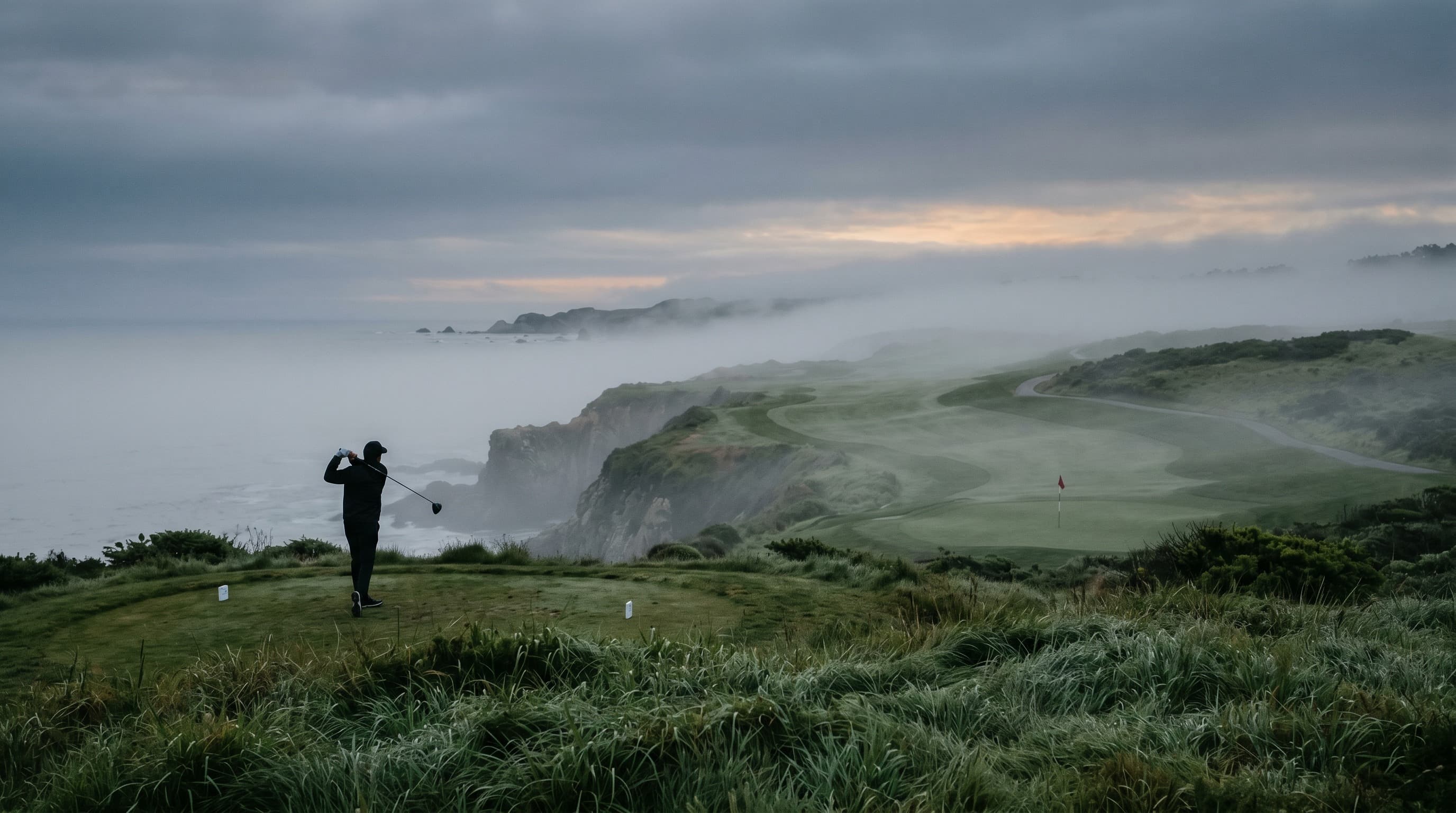
Reading Coastal Wind: How the Marine Layer Reshapes Pebble Beach, Bandon, and the Pacific Coast Game
Coastal golf does not play by inland rules. The marine layer suppresses wind in the morning, then releases it through midday in a thermal cycle that turns a calm 7am tee into a 22mph back nine. Here is the meteorology behind the pattern, the G-Score data that confirms it across the Pacific coast, and the morning workflow that turns the marine layer from a confusion into a competitive advantage.
Read Story
Saturday Morning Tee Time Decision Tree: How to Pick the Right Window in Six Minutes
You have Saturday open. Three courses on the shortlist, the weather is mixed, and your tee-time window is 6am to 4pm. Here is the six-minute decision tree we use to pick the right round, the right course, and the right hour — without overthinking.
Read StoryMinSu Kim
Founder & Golf Data Analyst
MinSu is a data analyst and golfer with 10+ years on the course. He built Golf Weather Score to answer one question: is today a good day to play? He combines weather data, course intelligence, and the proprietary G-Score algorithm to help golfers make smarter decisions.
Every Friday Morning
When Alpine Country Club plays best next weekend.
Friday 6am ET: peak G-Score windows for Alpine Country Club, wind direction by hour, and one gear call. Three minutes to read, save you the round.
One email a week. Unsubscribe in one click.
The Caddie's Oracle
Draw your luck before the tee off