
Caddie's Gear Advisor
Curated for today's 96°F · Clear
Ultralight Distance Drivers
Maximum carry in hot, low-drag conditions
UV Protection Apparel
UPF 50+ cooling fabrics for peak-sun rounds
Precision Rangefinders
Slope-adjusted yardage in any condition
Hydration & Cooling
Insulated bottles and cooling towels
Your Golf Trip, Handled
The Ultimate Golf Trip Planner
Everything you need to play Altadena Golf Course — from booking your flight to checking in course-side.
Course-Side Stays
Luxury hotels, resorts, and stay-and-play packages just minutes from the first tee.
Flights
Compare fares across 700+ airlines for the best route to your tee time.
SUV Rentals for Golf Bags
Spacious vehicles with room for clubs, bags, and your foursome.
Travel Insurance
Coverage for medical, weather delays, and gear at your destination.
Altadena Golf Course: Course Intelligence
Signature Setup
Altadena Golf Course sits at the base of the San Gabriel Mountains, just north of Pasadena, at roughly 1,300 feet of elevation. It's a 9-hole municipal layout, par 35, operated as a Los Angeles County public course since the late 1940s. It won't show up on any "top 100" list, and it shouldn't — but for a walking morning round under the foothills, the routing is honest. The 9th, a par-3 of about 180 yards with the mountain wall as a backdrop, is the hole people remember. I've played it three times, always early, always on foot.
Hole-by-Hole Wind & Playing Lines
The wind here is terrain-driven, not coastal — this is canyon air, not sea breeze.
- Hole 4 (#1 handicap, par-4 ~410y): The toughest test. In the morning it's quiet, but on warmer afternoons the down-canyon draft off Eaton Canyon runs into your face on the approach. My 150-yard 8-iron became a 165-yard shot on a 2 p.m. round in late spring. Club up.
- Hole 9 (par-3 ~180y): North-bound toward the mountains. When the thermal builds after 10 a.m., the ball balloons and drops short — I left two tee shots in the front bunker the first time I underclubbed here.
- Hole 6 (par-4): Plays downhill and downwind in the early hours; the same hole fights you on the way back when the air turns.
The pattern that matters: calm and short in the morning, resistant and long after the foothill air heats up.
Green & Fairway Characteristics
Fairways are kikuyu — that thick, grabby Southern California turf that sits the ball up but eats roll. Greens are smaller, on the firmer side, running in the mid-9s on the stimp when maintained, slower after rain. There isn't much severe contour; the defense is size and firmness, not slope. For a 9-hole regulation course the total is short — under 3,000 yards from the back — so scoring depends on wedge precision into those compact greens rather than length off the tee.
Seasonal Weather Pattern
Foothill weather here is its own thing. Winter mornings (Dec–Feb) start cold for SoCal — high 40s°F at 7 a.m. — and the kikuyu plays dormant and slow. Spring and fall are the sweet spot: 55–60°F tee times, firm turf, light morning air. Summer afternoons push into the 90s°F, and that heat is exactly what powers the canyon draft I keep coming back to. Unlike the marine-layer courses closer to the coast, Altadena rarely gets socked in by fog — the mountains hold the morning clear.
Local Play Tips
Book the earliest tee time you can. The course is popular with the local walking crowd, and pace slows considerably after mid-morning. As a 9-hole layout it's also genuinely walkable in under two hours solo before the field fills in. I haven't played it in full summer heat, so I can't speak to how the kikuyu holds up under sustained 95°F afternoons — but the locals I've talked to say it stays surprisingly receptive.
Pre-Round Weather Workflow
Check the 7-day G-Score the night before and target the highest-scoring morning slot — at Altadena that's almost always before 9 a.m. Watch the windExposure flag for north-bound holes (4 and 9); if afternoon gusts are forecast above 8–10 mph, your approach clubbing changes by a full club into the canyon. The simplest edge here isn't gear or swing — it's beating the thermal off the foothills.
Related Reading
Before you tee off at Altadena Golf Course
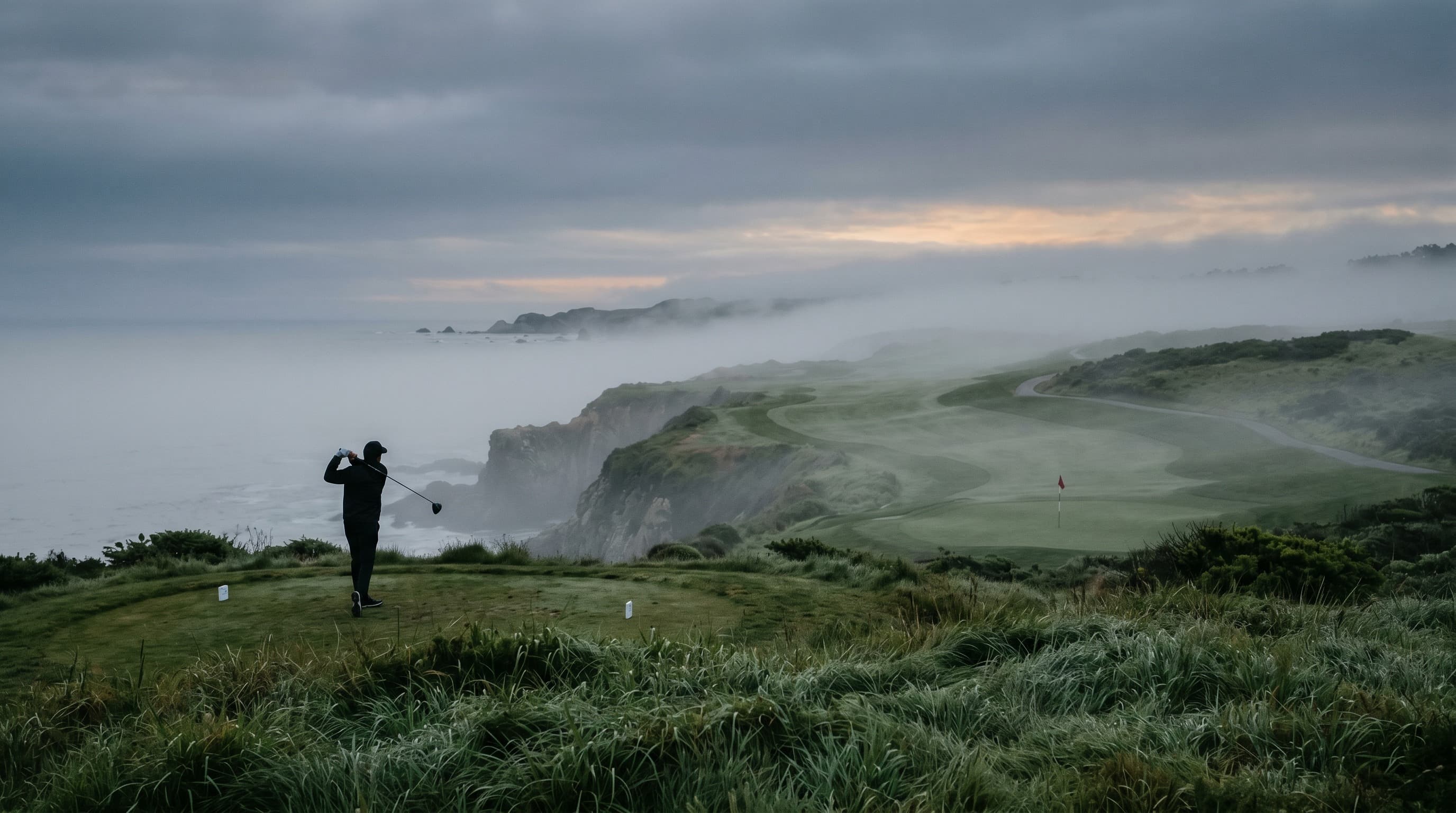
Reading Coastal Wind: How the Marine Layer Reshapes Pebble Beach, Bandon, and the Pacific Coast Game
Coastal golf does not play by inland rules. The marine layer suppresses wind in the morning, then releases it through midday in a thermal cycle that turns a calm 7am tee into a 22mph back nine. Here is the meteorology behind the pattern, the G-Score data that confirms it across the Pacific coast, and the morning workflow that turns the marine layer from a confusion into a competitive advantage.
Read Story
How to Read a G-Score: The 0–100 Golf Playability Number, Decoded
A G-Score on this site is a single 0–100 number that tells you whether today is worth tee-up. Here is exactly what each band means, what drives the calculation, and how to use it to plan a round you will actually score on.
Read StoryMinSu Kim
Founder & Golf Data Analyst
MinSu is a data analyst and golfer with 10+ years on the course. He built Golf Weather Score to answer one question: is today a good day to play? He combines weather data, course intelligence, and the proprietary G-Score algorithm to help golfers make smarter decisions.
Every Friday Morning
When Altadena Golf Course plays best next weekend.
Friday 6am ET: peak G-Score windows for Altadena Golf Course, wind direction by hour, and one gear call. Three minutes to read, save you the round.
One email a week. Unsubscribe in one click.
The Caddie's Oracle
Draw your luck before the tee off