
Caddie's Gear Advisor
Curated for today's 98°F · Clear
Ultralight Distance Drivers
Maximum carry in hot, low-drag conditions
UV Protection Apparel
UPF 50+ cooling fabrics for peak-sun rounds
Precision Rangefinders
Slope-adjusted yardage in any condition
Hydration & Cooling
Insulated bottles and cooling towels
Your Golf Trip, Handled
The Ultimate Golf Trip Planner
Everything you need to play Ancil Hoffman Golf Course — from booking your flight to checking in course-side.
Course-Side Stays
Luxury hotels, resorts, and stay-and-play packages just minutes from the first tee.
Flights
Compare fares across 700+ airlines for the best route to your tee time.
SUV Rentals for Golf Bags
Spacious vehicles with room for clubs, bags, and your foursome.
Travel Insurance
Coverage for medical, weather delays, and gear at your destination.
Ancil Hoffman Golf Course: Course Intelligence
Signature Setup
I have a note from an August round in the Sacramento Valley: 64°F at 7 a.m., the valley oaks throwing long shadows across the first fairway, and dead-still air that I knew wouldn't last past noon. By the time I made the turn it was 92°F and the delta breeze had started pushing up the river. That swing — cool calm dawn to hot windy afternoon — is the whole story of golf here, and Ancil Hoffman plays right into it.
Ancil Hoffman Golf Course is a municipal parkland layout in Carmichael, California, sitting inside Ancil Hoffman Park along the American River northeast of Sacramento. It opened in 1964 to a William F. Bell routing — par 72, a little under 6,800 yards from the back — and has held a reputation for decades as one of the better-conditioned public courses in Northern California. There's no water hazard drama and almost no elevation; the defense is mature valley oaks lining tight fairways and the valley's brutal afternoon heat-and-wind cycle.
Hole-by-Hole Wind & Playing Lines
The #1-handicap par-4 (~430–440y). Early it's a driver and a mid-iron. Once the delta breeze is up and quartering into you off the SW, that same hole stretches to a driver–hybrid second. The oaks pinch both sides, so there's no bailout long — take the extra club and aim center, not at a tucked pin.
The long par-3 on the back (mid-iron carry). With the afternoon SW wind it plays dead into your face, and the dense morning air earlier in the day already eats a few yards. Club up, start it at the fat side of the green, and accept a two-putt; short here leaves an awkward up-and-down between trees.
A back-nine dogleg under the oaks. The corridor between trunks is the read, not the yardage — roughly a 25-yard landing window. Position over power: lay back to a number you can fly cleanly through the gap rather than firing driver into the oak line.
Green & Fairway Characteristics
The greens are a poa/bent mix, rolling around 9.5–10.5 on a normal day and firming up quickly once the valley dries out from late spring on. They hold a well-struck iron in the cool morning and shed a thin one by hot mid-afternoon, so the same approach plays differently at 8 a.m. and 3 p.m. Fairways are a Bermuda base that turns board-firm and fast in July–August — a good drive that carries 250 can run out another 15–20 yards down the dry months, which actually helps offset the wind. The valley-oak corridors are the real test: this is a position course where being in the short grass on the correct side beats raw distance.
Seasonal Weather Pattern
Sacramento Valley is a Mediterranean climate with a hot, bone-dry summer and a cool, foggy winter — and Ancil Hoffman lives at both extremes. June through September brings 90–100°F+ afternoons, single-digit-percent humidity, and the daily delta breeze: a SW wind drawn off the Sacramento–San Joaquin Delta that usually fills in early-to-mid afternoon and stiffens toward evening. October and April–May are the sweet spot — 70s–80s, light wind, firm-but-fair turf. December and January flip to tule fog: dense, ground-hugging valley fog that can sit until late morning, soaking the turf, killing roll, and making cold dense air play every iron a club shorter. The fog is the off-season wildcard the way the breeze is the summer one.
Local Play Tips
Here's the read that won't show up on a scorecard: the American River corridor channels the afternoon delta breeze, so the holes that bend toward the river run most exposed while the tree-tucked interior holes stay calmer. Bank your scoring on the front, or on an early tee, before the breeze wakes up — then treat the late, exposed holes as club-up, aim-for-the-center situations. In winter, don't trust a posted tee time blindly: if tule fog is forecast, the first couple of hours can be a soaked, no-roll slog, and the fairways won't firm until the fog burns off. I haven't played it through a hard December fog myself, so I won't pretend to know exactly when it lifts on a given morning — I'd plan a winter round off the historical fog pattern and a later, post-burnoff tee.
Pre-Round Weather Workflow
Use the 7-day G-Score on this page the way I'd prep any valley round. Two to three days out, look at the afternoon wind trend in summer: a strengthening delta breeze means the river-side and exposed holes will play a club-plus longer after lunch, so book the earliest slot you can stand. The morning of, open the windExposure panel — if it flags a building SW breeze, add a club into it and stop aiming at tucked pins. In winter, check fog and dew-point first: a tule-fog morning means dense air (irons fly short) and zero fairway roll until burnoff, so a mid-morning tee often scores better than a frozen 8 a.m. start. Heat-wise, anything over 95°F, get out early not just for your swing but for the firm, fast greens before they bake out completely.
Related Reading
Before you tee off at Ancil Hoffman Golf Course
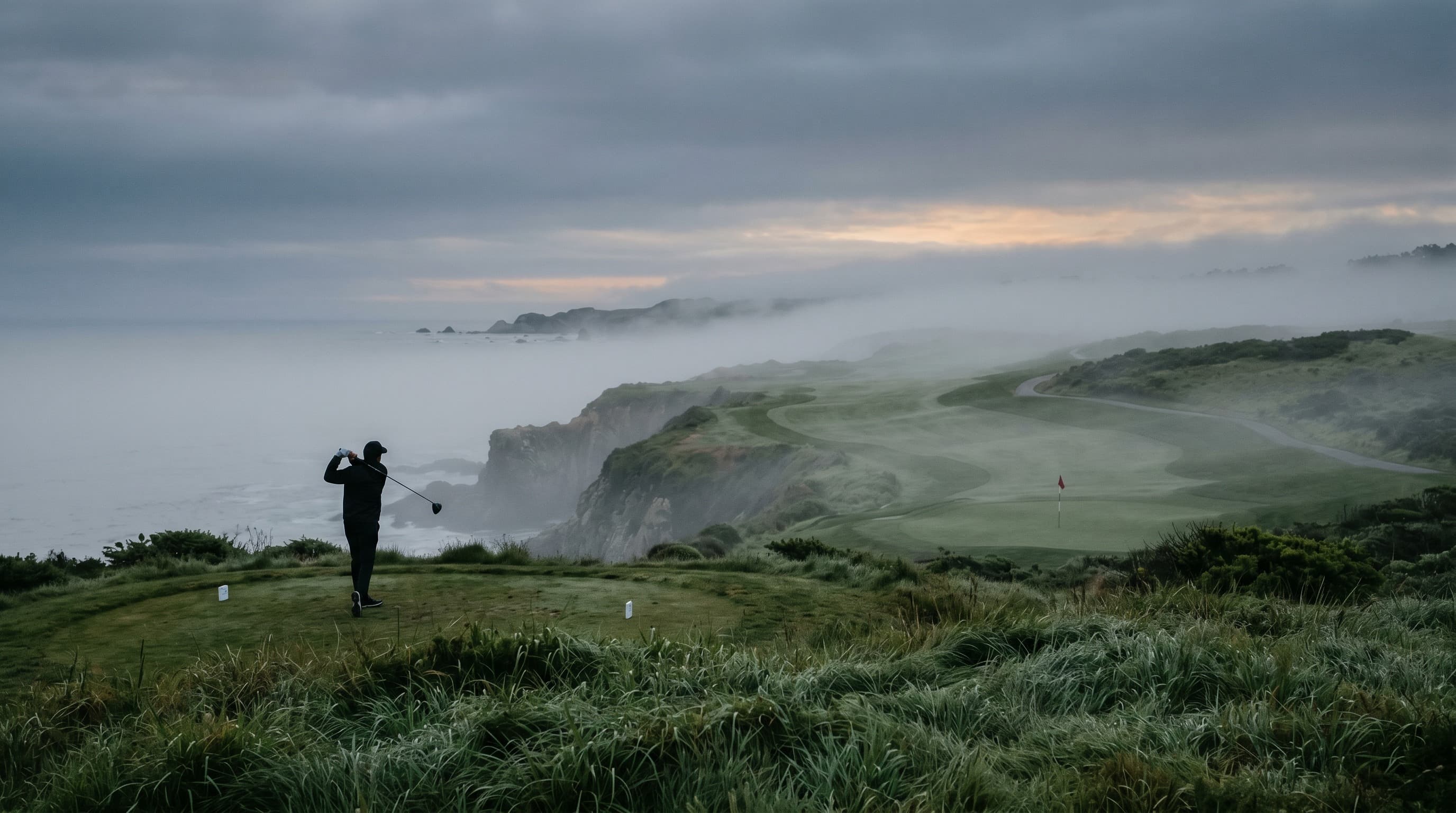
Reading Coastal Wind: How the Marine Layer Reshapes Pebble Beach, Bandon, and the Pacific Coast Game
Coastal golf does not play by inland rules. The marine layer suppresses wind in the morning, then releases it through midday in a thermal cycle that turns a calm 7am tee into a 22mph back nine. Here is the meteorology behind the pattern, the G-Score data that confirms it across the Pacific coast, and the morning workflow that turns the marine layer from a confusion into a competitive advantage.
Read Story
How to Read a G-Score: The 0–100 Golf Playability Number, Decoded
A G-Score on this site is a single 0–100 number that tells you whether today is worth tee-up. Here is exactly what each band means, what drives the calculation, and how to use it to plan a round you will actually score on.
Read StoryMinSu Kim
Founder & Golf Data Analyst
MinSu is a data analyst and golfer with 10+ years on the course. He built Golf Weather Score to answer one question: is today a good day to play? He combines weather data, course intelligence, and the proprietary G-Score algorithm to help golfers make smarter decisions.
Every Friday Morning
When Ancil Hoffman Golf Course plays best next weekend.
Friday 6am ET: peak G-Score windows for Ancil Hoffman Golf Course, wind direction by hour, and one gear call. Three minutes to read, save you the round.
One email a week. Unsubscribe in one click.
The Caddie's Oracle
Draw your luck before the tee off