
Caddie's Gear Advisor
Curated for today's 97°F · Clear
Ultralight Distance Drivers
Maximum carry in hot, low-drag conditions
UV Protection Apparel
UPF 50+ cooling fabrics for peak-sun rounds
Precision Rangefinders
Slope-adjusted yardage in any condition
Hydration & Cooling
Insulated bottles and cooling towels
Your Golf Trip, Handled
The Ultimate Golf Trip Planner
Everything you need to play Angeles National Golf Club — from booking your flight to checking in course-side.
Course-Side Stays
Luxury hotels, resorts, and stay-and-play packages just minutes from the first tee.
Flights
Compare fares across 700+ airlines for the best route to your tee time.
SUV Rentals for Golf Bags
Spacious vehicles with room for clubs, bags, and your foursome.
Travel Insurance
Coverage for medical, weather delays, and gear at your destination.
Angeles National Golf Club: Course Intelligence
Signature Setup
Angeles National Golf Club opened in 2004 as a Jack Nicklaus Signature design, laid out in the foothills of the San Gabriel Mountains above Sunland-Tujunga, on the southern edge of the Angeles National Forest north of Los Angeles. It plays to a par 72 and stretches past 7,100 yards from the tips, with elevation change that the scorecard never fully tells you. The closing par-5 18th runs back down toward the clubhouse to a peninsula-style green guarded by water — a genuine risk-reward finish where the long hitter can go for it but a bailout still has to carry. This is a daily-fee Nicklaus track, not a private retreat, and the mountain backdrop does most of the visual work.
TL;DR: A Nicklaus foothill course where elevation and afternoon down-canyon wind decide the number. Play it early before the valley heat builds, club up on the long front-nine par-4s, and respect firm summer bentgrass greens.
Hole-by-Hole Wind & Playing Lines
The wind here is mountain-and-valley terrain wind, not coastal. Cool air drains down off the San Gabriels in the morning; by afternoon the heated valley pulls a SW-to-W flow back up the canyon.
- Hole 4 (the #1-handicap par-4): Long on the card and longer in the afternoon, when the down-canyon SW breeze pushes into the approach. A 160-yard shot can play 180. I hold the drive up the left side and take one extra club into the green, landing short to release.
- Hole 18 (par-5 home hole over water): The decision hole. Into a still morning it is reachable in two for a strong player; into the afternoon up-canyon breeze the carry over water gets a full club longer and I lay up to a comfortable wedge rather than flirt with the hazard.
- A downhill mountain-facing par-3: Plays shorter than the yardage because of the drop, but the breeze that funnels along the slope pushes a high ball. On warm afternoons I take less club for the elevation, then add it back for the wind and start the ball at the safe bunker.
Green & Fairway Characteristics
The greens are bentgrass — a deliberate choice at altitude — and in the dry season they firm up and run quick, low-10s on the stimp on a baked afternoon, with enough internal contour that above-the-hole leaves are treacherous. Fairways are a ryegrass-over-kikuyu mix typical of inland Southern California: thick, grabby lies that kill backspin off the turf, so I land wedges 5–8 yards short and let them feed. The routing climbs and drops through the foothill grade, so flat stances are rare — most approaches are played with the ball above or below the feet, and several fairways cant back toward the canyon floor. Front and back nines both carry real length from the back markers; this is not a course you overpower from the tips.
Seasonal Weather Pattern
The foothills here run hot and dry in summer — valley afternoons routinely climb into the 90s°F, and the exposed back nine bakes with little shade. The morning is a different course: I have teed off in early fall around 60°F with dead-still mountain air draining downhill, the fairways still cool underfoot, before the heat switched on by 11 a.m. The risk season is the Santa Ana wind period, roughly late September into December, when dry offshore gusts pour down out of the San Gabriels and can reverse the normal flow with 30-mph downhill blasts — and the same dry, gusty pattern is why this corner of LA sits under elevated fire watch in fall. Winter brings the region's only meaningful rain and the occasional snow dusting on the peaks behind the course; the kikuyu base goes dormant and lies sit down.
Local Play Tips
The first tee already sits at foothill elevation, so the whole property plays a touch shorter through the air than a sea-level track of the same yardage — worth a half-club of thought on longer approaches once the ball is flying. Locals know the back nine is the hotter, more exposed half, so an even front-nine score is not the cushion it looks like once the afternoon sun is on you. I take a cart in summer without apology; the climb plus the heat is a lot to walk, and the cool months from November through March are when I'd consider walking it.
Pre-Round Weather Workflow
Use the 7-day G-Score on golfweatherscore before you book. For Angeles National, the biggest lever is tee time, not the day — the windExposure rating and the heat both climb through every afternoon as the valley warms and the down-canyon flow builds. Target a morning slot with a high G-Score and low afternoon wind, and in fall check the Santa Ana forecast: an offshore-wind day flips the normal pattern, adds two clubs into the front nine, and stacks heat with gusts. If the only tee time is afternoon, plan for the exposed back nine to play long and hot, carry extra water, and club up off every tee into the SW flow.
Related Reading
Before you tee off at Angeles National Golf Club
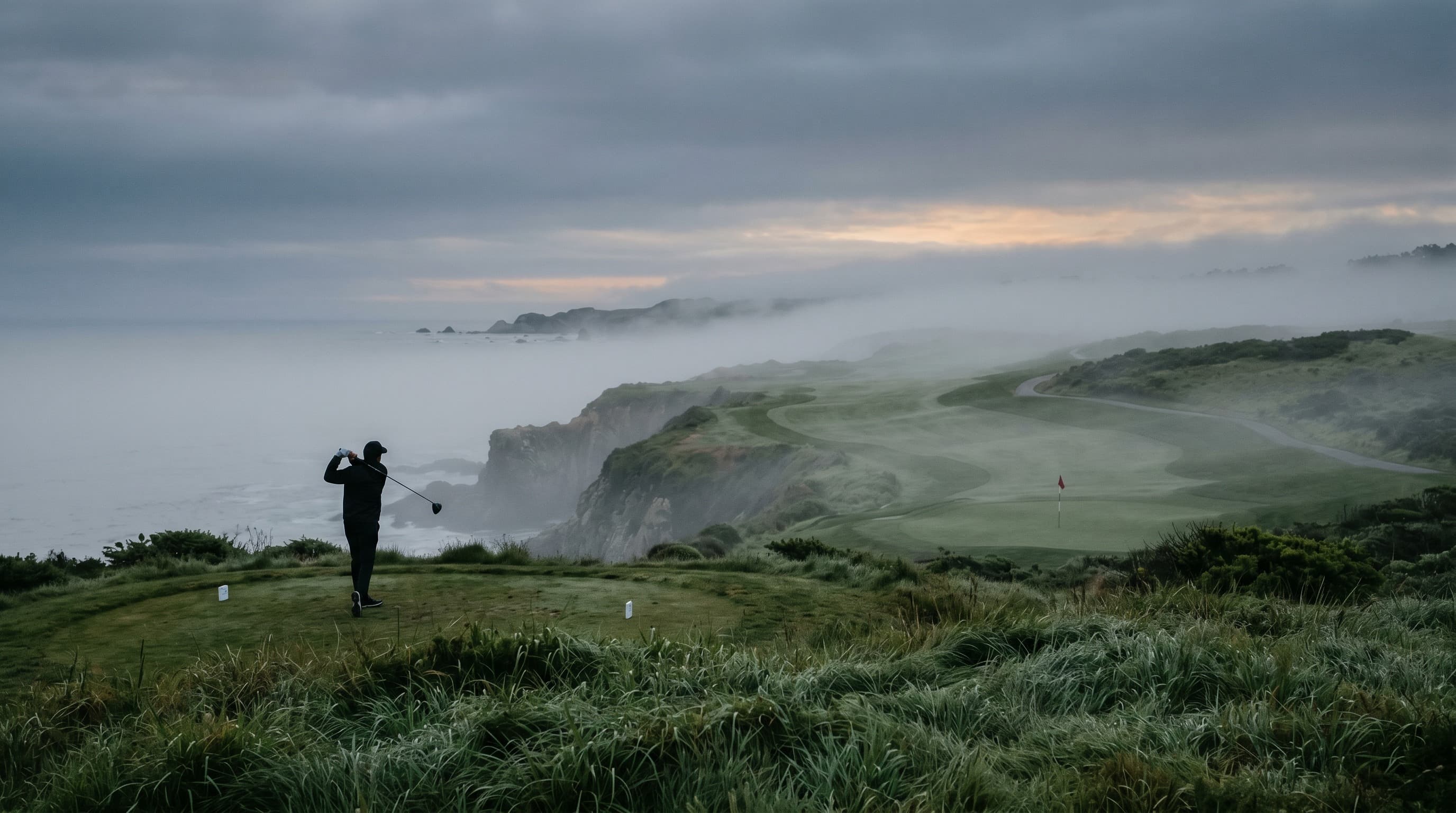
Reading Coastal Wind: How the Marine Layer Reshapes Pebble Beach, Bandon, and the Pacific Coast Game
Coastal golf does not play by inland rules. The marine layer suppresses wind in the morning, then releases it through midday in a thermal cycle that turns a calm 7am tee into a 22mph back nine. Here is the meteorology behind the pattern, the G-Score data that confirms it across the Pacific coast, and the morning workflow that turns the marine layer from a confusion into a competitive advantage.
Read Story
How to Read a G-Score: The 0–100 Golf Playability Number, Decoded
A G-Score on this site is a single 0–100 number that tells you whether today is worth tee-up. Here is exactly what each band means, what drives the calculation, and how to use it to plan a round you will actually score on.
Read StoryMinSu Kim
Founder & Golf Data Analyst
MinSu is a data analyst and golfer with 10+ years on the course. He built Golf Weather Score to answer one question: is today a good day to play? He combines weather data, course intelligence, and the proprietary G-Score algorithm to help golfers make smarter decisions.
Every Friday Morning
When Angeles National Golf Club plays best next weekend.
Friday 6am ET: peak G-Score windows for Angeles National Golf Club, wind direction by hour, and one gear call. Three minutes to read, save you the round.
One email a week. Unsubscribe in one click.
The Caddie's Oracle
Draw your luck before the tee off