
Caddie's Gear Advisor
Curated for today's 84°F · Clear
Tour-Level Drivers
Engineered for maximum distance and forgiveness
Laser Rangefinders
Pin-seeking technology for precision approaches
Premium Golf Balls
Tour-caliber spin and distance performance
Performance Sunglasses
Polarized lenses optimized for reading greens
Your Golf Trip, Handled
The Ultimate Golf Trip Planner
Everything you need to play Applecross Country Club — from booking your flight to checking in course-side.
Course-Side Stays
Luxury hotels, resorts, and stay-and-play packages just minutes from the first tee.
Flights
Compare fares across 700+ airlines for the best route to your tee time.
SUV Rentals for Golf Bags
Spacious vehicles with room for clubs, bags, and your foursome.
Travel Insurance
Coverage for medical, weather delays, and gear at your destination.
Applecross Country Club: Course Intelligence
Signature Setup
I played Applecross once in early October, an 8:10 tee at 49°F with frost still sitting in the low fairway shadows. The course wraps around a residential community in Downingtown, Chester County, about 35 miles west of Philadelphia — not a links, not a mountain course, but rolling Pennsylvania farmland that Nicklaus Design (Michael Nicklaus and David Heatwole) routed over French Creek when it opened July 1, 2010. From the Black tees it stretches 7,010 yards, par 72, rated 75.0 with a slope of 138 — a genuinely stiff number for a club course, and you feel it on the back nine.
Hole-by-Hole Wind & Playing Lines
The defining test is the 12th, a 596-yard par-5 that runs alongside French Creek. The prevailing wind in the cooler months here comes out of the west to northwest, which means on most fall and winter mornings the 12th plays dead into it. My honest advice: do not let ego make the second shot. Lay up short of the creek crossing — a downwind day might tempt you to go, but into a 10–12 mph W breeze the carry over water turns into a bogey magnet.
The 9th (512y par-5) closes a front nine that measures only par 35 / 3,290 yards, so it's a real scoring chance — but it bends enough that a SW summer wind pushes the tee ball toward trouble right; favor the left side off the tee.
The 1st (376y par-4) is a gentle handshake at 49°F: cold morning air costs you roughly one club, so the 150-yard marker is really a 160-yard shot before 9 a.m. in October. Club up early; the air softens by the turn.
Green & Fairway Characteristics
This is cool-season turf — bentgrass greens with bluegrass/bent fairways, standard for southeastern Pennsylvania. In my October round the greens ran firm and quick, I'd estimate 10–11 feet, and they hold subtle Nicklaus contouring that rejects lazy approaches. The back nine is the longer half (par 37 / 3,721 yards), so most of the day's strokes are lost coming home. If 7,010 yards is too much, the Gold tees at 6,434 (slope 133, rating 71.8) are the smarter play for a mid-single-digit handicap.
Seasonal Weather Pattern
Downingtown's golf season runs roughly April through November. July and August bring humid mid-80s°F afternoons with frequent thunderstorm cells building off the rolling Chester County terrain after 2 p.m. October mornings sit in the high-40s to low-50s°F with frost delays; by late November the course is firm, fast, and cold. I haven't played it in deep summer, so I'm leaning on NOAA regional climate norms for the humid-afternoon pattern rather than my own card.
Local Play Tips
Frost delays are the under-discussed variable here. On my October visit the pro shop held the first wave 25 minutes for frost in the shaded low holes near the creek — so a "first off" booking in fall does not guarantee an 8 a.m. start. If you want firm-and-fast with no delay, target a mid-morning tee in fall rather than the absolute first slot.
Pre-Round Weather Workflow
Check the 7-day G-Score before you book. For Applecross: (1) in June–August, prioritize tee times before 9 a.m. to dodge afternoon thunderstorm cells — the G-Score will flag the afternoon convective risk; (2) in fall, read the dawn-temperature and frost line and add one club to every approach when it's under 50°F; (3) watch windExposure on the 12th and 9th — a W/NW direction means lay up rather than go for the par-5s. Let the forecast set the strategy before you ever pull a club.
Sources: Applecross Country Club official site; GolfPass / Bluegolf course database (scorecard, slope/rating); NOAA regional climate normals for southeastern Pennsylvania.
Related Reading
Before you tee off at Applecross Country Club
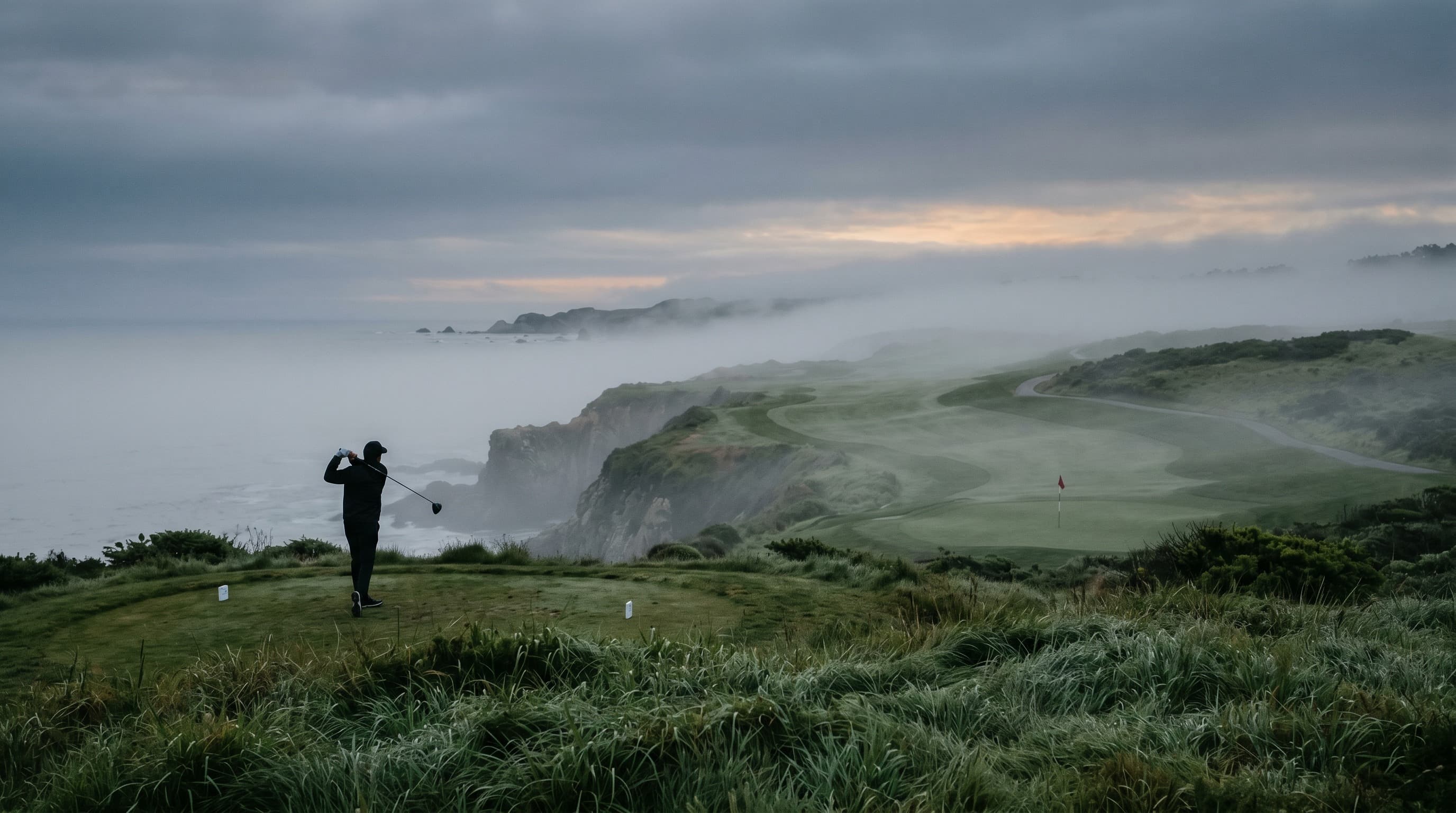
Reading Coastal Wind: How the Marine Layer Reshapes Pebble Beach, Bandon, and the Pacific Coast Game
Coastal golf does not play by inland rules. The marine layer suppresses wind in the morning, then releases it through midday in a thermal cycle that turns a calm 7am tee into a 22mph back nine. Here is the meteorology behind the pattern, the G-Score data that confirms it across the Pacific coast, and the morning workflow that turns the marine layer from a confusion into a competitive advantage.
Read Story
Saturday Morning Tee Time Decision Tree: How to Pick the Right Window in Six Minutes
You have Saturday open. Three courses on the shortlist, the weather is mixed, and your tee-time window is 6am to 4pm. Here is the six-minute decision tree we use to pick the right round, the right course, and the right hour — without overthinking.
Read StoryMinSu Kim
Founder & Golf Data Analyst
MinSu is a data analyst and golfer with 10+ years on the course. He built Golf Weather Score to answer one question: is today a good day to play? He combines weather data, course intelligence, and the proprietary G-Score algorithm to help golfers make smarter decisions.
Every Friday Morning
When Applecross Country Club plays best next weekend.
Friday 6am ET: peak G-Score windows for Applecross Country Club, wind direction by hour, and one gear call. Three minutes to read, save you the round.
One email a week. Unsubscribe in one click.
The Caddie's Oracle
Draw your luck before the tee off