
Caddie's Gear Advisor
Curated for today's 82°F · Thunderstorm
Storm-Ready Outerwear
Waterproof layers built for 18 holes in the rain
Tour-Grade Umbrellas
68" double-canopy wind-resistant coverage
Wet-Weather Gloves
All-weather grip that performs in the rain
Waterproof Golf Shoes
Keep your feet dry through every fairway
Your Golf Trip, Handled
The Ultimate Golf Trip Planner
Everything you need to play Austin Country Club — from booking your flight to checking in course-side.
Best time to golf in TexasCourse-Side Stays
Luxury hotels, resorts, and stay-and-play packages just minutes from the first tee.
Flights
Compare fares across 700+ airlines for the best route to your tee time.
SUV Rentals for Golf Bags
Spacious vehicles with room for clubs, bags, and your foursome.
Travel Insurance
Coverage for medical, weather delays, and gear at your destination.
Austin Country Club: Course Intelligence
Signature Setup
I played Austin Country Club on a March morning two years back, 54°F at the first tee with the Pennybacker Bridge still in shadow. This is the club's third home — Pete Dye routed the current course along the Colorado River below Loop 360 and it opened in 1984. The name carries more weight than the yardage suggests: Harvey Penick taught here for decades, and Ben Crenshaw and Tom Kite both grew up on these practice tees. From 2016 to 2023 it hosted the WGC-Dell Technologies Match Play, so the back nine you walk is the one that decided world-ranking matches.
Hole-by-Hole Wind & Playing Lines
The course splits in character: a tight, tree-lined front in the canyon and an exposed back along the water.
- Hole 2 (par-4, 455y, #1 handicap): Plays into the prevailing SSE wind most mornings spring through fall. My 150-yard club here became a 170-yard shot; I clubbed up two and still came in short. Aim down the left center and accept a long-iron approach.
- Hole 13 (par-4, 375y): The river hole. On a south wind it helps off the tee but quarters across the approach — the green sits hard against Lake Austin and anything pushed right is wet. I laid back to a full wedge rather than chasing the green.
- Hole 17 (par-3, ~135y): Short but the wind funnels off the water. On a gusting afternoon I watched a playing partner's 9-iron balloon and come up ten yards short. Take more club than the number says.
Green & Fairway Characteristics
Fairways and greens are Bermuda, overseeded with ryegrass for winter play, so the surface you get in January rolls slower and softer than the firm summer Bermuda. I noted greens stimping in the low-to-mid 11s in spring — quick but readable, with the river pulling most breaks toward the water. The front nine fairways are narrow with elevation change through the canyon; the back opens up but brings water into play repeatedly. The total plays around 7,100 yards from the back tees, but the member tees near 6,400 are the honest play for a single-digit.
Seasonal Weather Pattern
Austin summers are the real test: June through August routinely runs 95–100°F by early afternoon with high humidity, and the south wind builds through the day. Spring (March–April) gives the best scoring window — 50s at dawn, light wind, firm greens. Fall is similar but with a higher chance of a sudden norther dropping the temperature 20°F in an hour. Winter rounds are mild, often 60s, but the overseeded turf plays longer.
Local Play Tips
The canyon front nine holds dead, still air until mid-morning, then the south wind off the river switches on and the back nine plays a full two clubs longer into it. I booked a 7:40 tee time specifically to finish the river holes before that turn — it's worth the early alarm.
Pre-Round Weather Workflow
Check the 7-day G-Score and the windExposure rating the night before. For Austin CC, prioritize wind direction over temperature: a morning SSE forecast means holes 2 and 13 will eat strokes, so plan to club up and aim below the hole. If the G-Score is 8+ points higher in the morning slot than the afternoon, take the early tee time — the river holes are a different course once the south wind builds.
Related Reading
Before you tee off at Austin Country Club

The May 2026 G-Score Heatmap: Where American Golf Peaks This Spring
May is the most underrated month on the American golf calendar. Five regions hit their annual peak this spring, three turn quietly hostile, and the data tells a clearer story than the brochures. Here is where to play, where to avoid, and how to time your booking window.
Read Story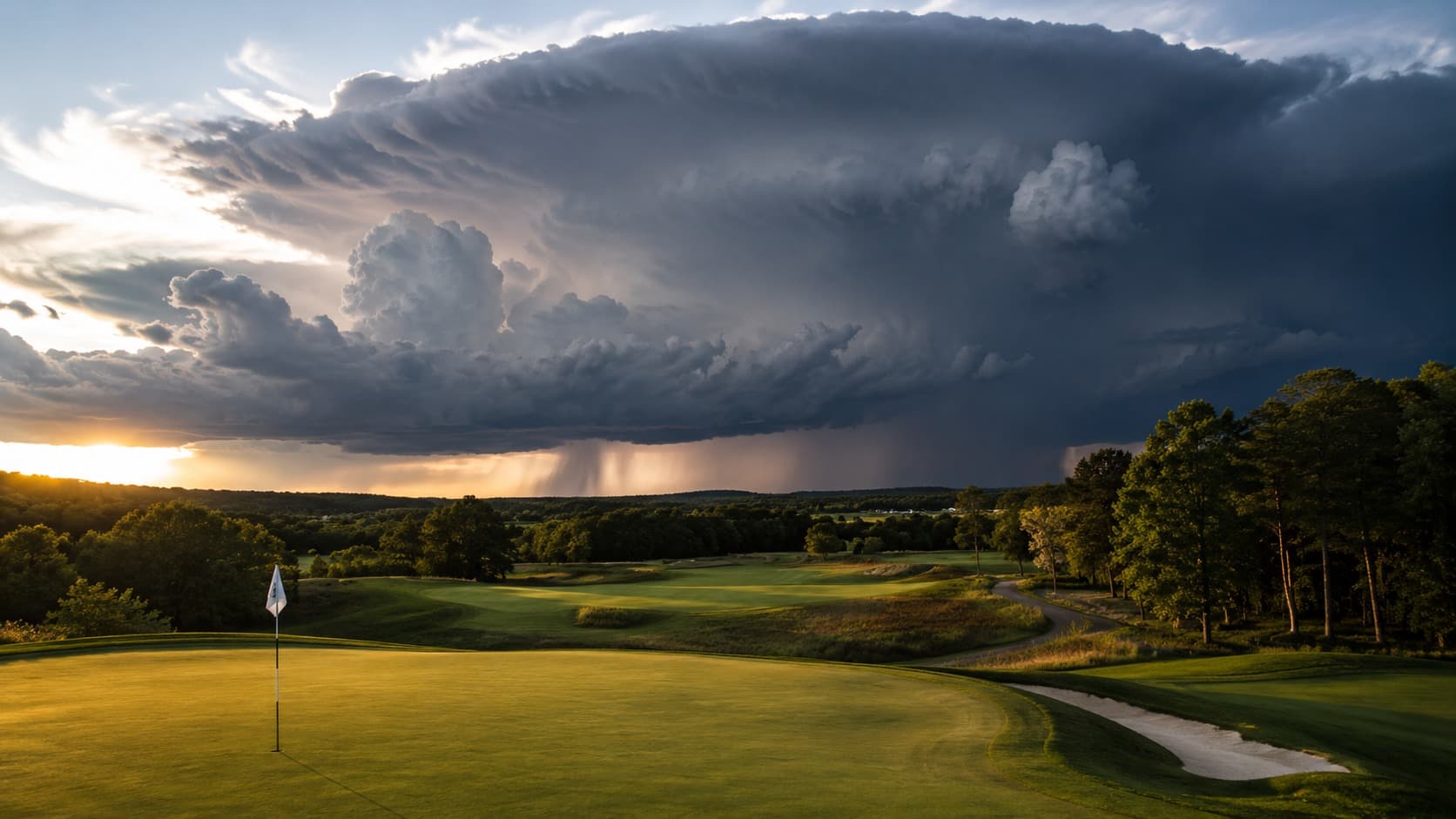
The Three O’Clock Storm: Reading Summer’s Convective Cycle to Protect Your Round
A 40% chance of afternoon thunderstorms does not mean a 40% chance of getting rained on. In the summer convective season it means the morning is nearly clear and the afternoon carries a fast-building, high-energy storm risk driven by a daily heating cycle. Here is the meteorology behind the pattern, the G-Score data on how the storm cycle punishes afternoon tee times across the Southeast, Midwest, and desert Southwest, the lightning-safety decision tree that actually matters, and the workflow that gets you off the course before the first bolt.
Read StoryDanorie
Editorial & Data
Golf Weather Score is built by Danorie. We compute the G-Score — our own playability rating — from live NOAA forecasts and published course scorecards, so any US course can be compared on any day with a single number. Methodology and data sources are documented on every page.
Every Friday Morning
When Austin Country Club plays best next weekend.
Friday 6am ET: peak G-Score windows for Austin Country Club, wind direction by hour, and one gear call. Three minutes to read, save you the round.
One email a week. Unsubscribe in one click.
The Caddie's Oracle
Draw your luck before the tee off