
Caddie's Gear Advisor
Curated for today's 81°F · Mist
Tour-Level Drivers
Engineered for maximum distance and forgiveness
Laser Rangefinders
Pin-seeking technology for precision approaches
Premium Golf Balls
Tour-caliber spin and distance performance
Performance Sunglasses
Polarized lenses optimized for reading greens
Your Golf Trip, Handled
The Ultimate Golf Trip Planner
Everything you need to play Aviara Golf Club — from booking your flight to checking in course-side.
Course-Side Stays
Luxury hotels, resorts, and stay-and-play packages just minutes from the first tee.
Flights
Compare fares across 700+ airlines for the best route to your tee time.
SUV Rentals for Golf Bags
Spacious vehicles with room for clubs, bags, and your foursome.
Travel Insurance
Coverage for medical, weather delays, and gear at your destination.
Aviara Golf Club: Course Intelligence
Signature Setup
Let me be honest about my vantage first: I live up the freeway in Irvine and I've played enough North San Diego County coastal golf to know how the marine air behaves here, but I'm writing Aviara from the scorecard, the resort's own materials, and Carlsbad climate records rather than dressing up a single round as memory. What I can tell you cleanly is the pedigree. Aviara Golf Club is an Arnold Palmer Signature design, built with his longtime partner Ed Seay and opened in 1991 as the centerpiece of what is now the Park Hyatt Aviara Resort in Carlsbad, California. It plays to a par of 72 and stretches to roughly 7,007 yards from the Champions tees, draped across hillsides above the Batiquitos Lagoon. For the better part of a decade it hosted the LPGA's Kia Classic, so the surfaces and the routing have been tournament-tested under tour conditions.
TL;DR: Arnold Palmer Signature course (1991) at Park Hyatt Aviara, Carlsbad CA. ~7,007y, par 72, slope in the high-130s. Coastal Southern California — the defense is the afternoon onshore sea breeze off the Pacific and firm, sloped greens, not length. Beat the marine-layer burn-off and play position over power.
Hole-by-Hole Wind & Playing Lines
I won't assign hole numbers and yardages I can't verify from a card in front of me, so here is the wind logic that actually decides scoring on a coastal layout this shape:
- The longer par-4s running toward the coast into a building WSW breeze: Once the onshore flow is up at 10–15 mph in the afternoon, a flushed 150-yard club behaves like 165–170. Club up one, flight the ball low, and aim for the safe side — these greens are firm enough that a ballooned shot into the wind both comes up short and won't hold.
- The downhill par-3s: Elevation change and a quartering sea breeze fight each other here. The drop wants less club; the into/across wind wants more. On a calm marine-layer morning trust the yardage; by afternoon, the wind wins — take the longer read and let it ride.
- Any hole turning along the lagoon: The water and the open lagoon corridor give the wind a clean runway, so a player who can hold a shaped ball into a crosswind scores better than one who just hits it far. Length is the cheap yard at Aviara; ball flight is the expensive one.
The habit that travels: read the flags on the first exposed hole, decide whether the marine layer has burned off yet, and re-club for the sea breeze all the way in.
Green & Fairway Characteristics
The fairways are a kikuyu/Bermuda base overseeded with rye for winter color, so footing and roll stay reliable nearly year-round — firm and fast in a dry Santa Ana spell, softer and more receptive under a heavy marine layer. The greens run quick and on the firm side, with plenty of internal slope; from the tips the slope rating sits up in the high-130s, which tells you the trouble is in the angles and the putting surfaces, not the card length. Approach these greens below the hole. A short-sided miss on the wrong tier here is a guaranteed bogey, and on a firm, breezy afternoon a long-iron that lands hot will release straight off the back.
Seasonal Weather Pattern
Carlsbad is mild and maritime, moderated by the Pacific all year — but the day's texture changes by season. Late spring (May–Jun): the famous "May Gray / June Gloom" marine layer parks low cloud over the coast through mid-morning; mornings are cool (often upper-50s to low-60s°F), calm, and soft, then the burn-off brings sun and the onshore breeze. Summer (Jul–Aug): warmer and drier inland-edge days, highs commonly in the mid-70s near the coast, with a dependable afternoon sea breeze. Fall (Sep–Oct): prime conditions — the marine layer thins, and the firmest, fastest greens of the year, occasionally spiked by a hot, dry offshore Santa Ana that flips the wind to the east and bakes the surfaces. Winter (Dec–Feb): the mildest U.S. golf going, 60s°F, but the season's rain windows soften everything and slow the greens.
Local Play Tips
The one thing a desert or inland golfer's instinct gets wrong at Aviara: here you're not racing the heat, you're racing the marine layer. A gray, foggy first tee time is a gift — the air is calm, the greens are receptive, and your stock yardages hold. The mistake is reading that gloom as bad golf weather and waiting for the sun; by the time it burns off late morning, the onshore wind has come up and the same approach plays a club longer and firmer. Tee off into the gray, accept slightly damp morning fairways with less roll, and you'll catch the course at its most scorable. And watch for the rare Santa Ana day — when the wind swings offshore from the east, everything reverses: hot, dry, fast, and the holes that normally play downwind now play into it.
Pre-Round Weather Workflow
Treat golfweatherscore's 7-day G-Score and windExposure as your go/no-go and your timing tool — read it as a coastal course:
- Three days out: scan the G-Score trend, but watch the marine-layer pattern as much as the rain. A run of "Gloom" mornings means soft, calm, scorable early windows.
- The night before: lock in wind direction and timing. A standard WSW onshore flow means calm mornings and breezy afternoons — book the early slot. An offshore (E) Santa Ana flag means a hot, fast, reversed-wind day; play it firm and aim for more green.
- Round morning: if windExposure flags the afternoon onshore breeze climbing past ~15 mph, accept that the coast-running holes play a full club longer after lunch — let position-golf below the hole, not heroics into firm greens, protect your number.
Related Reading
Before you tee off at Aviara Golf Club

Reading Coastal Wind: How the Marine Layer Reshapes Pebble Beach, Bandon, and the Pacific Coast Game
Coastal golf does not play by inland rules. The marine layer suppresses wind in the morning, then releases it through midday in a thermal cycle that turns a calm 7am tee into a 22mph back nine. Here is the meteorology behind the pattern, the G-Score data that confirms it across the Pacific coast, and the morning workflow that turns the marine layer from a confusion into a competitive advantage.
Read Story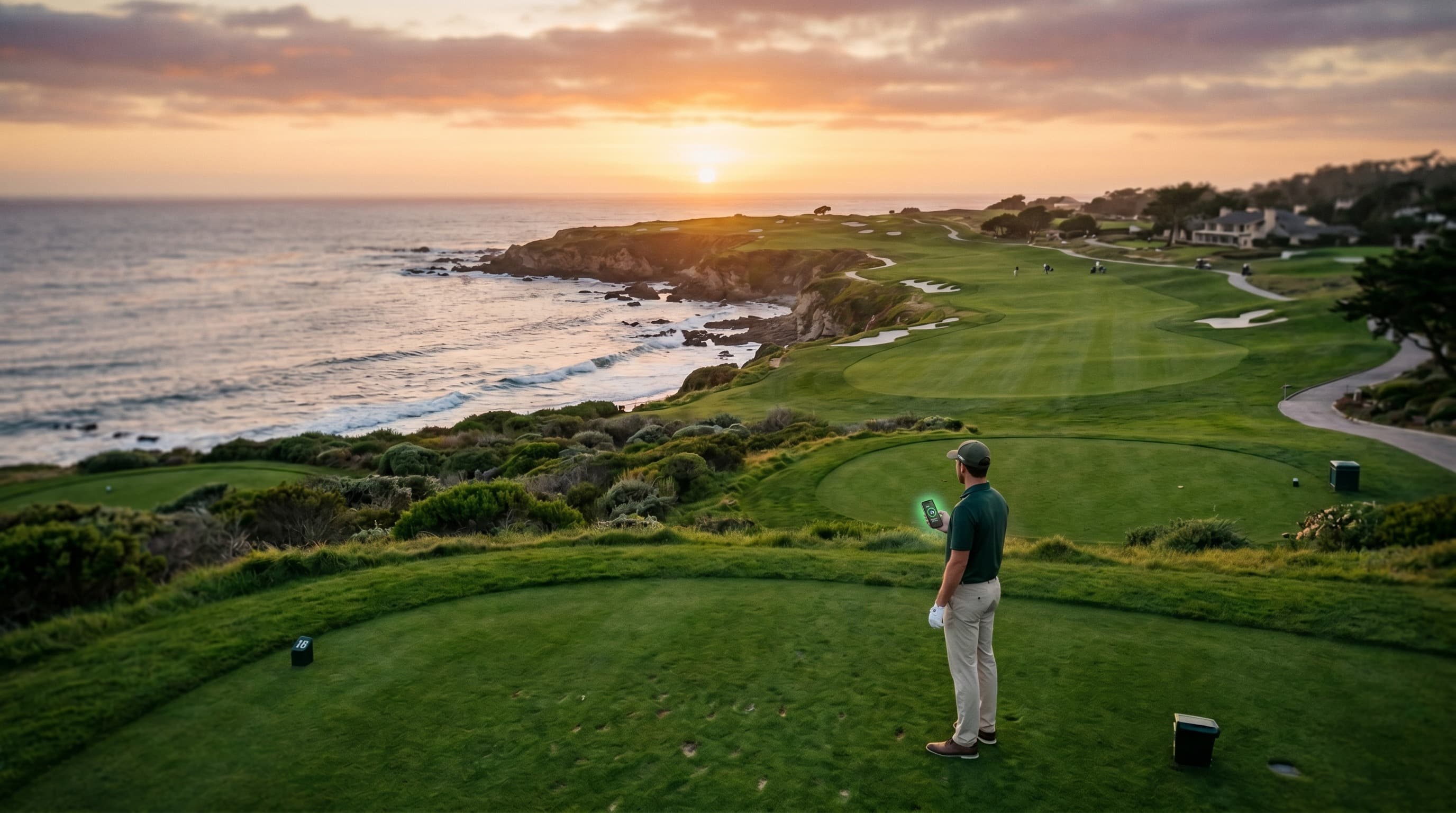
How to Read a G-Score: The 0–100 Golf Playability Number, Decoded
A G-Score on this site is a single 0–100 number that tells you whether today is worth tee-up. Here is exactly what each band means, what drives the calculation, and how to use it to plan a round you will actually score on.
Read StoryMinSu Kim
Founder & Golf Data Analyst
MinSu is a data analyst and golfer with 10+ years on the course. He built Golf Weather Score to answer one question: is today a good day to play? He combines weather data, course intelligence, and the proprietary G-Score algorithm to help golfers make smarter decisions.
Every Friday Morning
When Aviara Golf Club plays best next weekend.
Friday 6am ET: peak G-Score windows for Aviara Golf Club, wind direction by hour, and one gear call. Three minutes to read, save you the round.
One email a week. Unsubscribe in one click.
The Caddie's Oracle
Draw your luck before the tee off