
Caddie's Gear Advisor
Curated for today's 102°F · Clear
Ultralight Distance Drivers
Maximum carry in hot, low-drag conditions
UV Protection Apparel
UPF 50+ cooling fabrics for peak-sun rounds
Precision Rangefinders
Slope-adjusted yardage in any condition
Hydration & Cooling
Insulated bottles and cooling towels
Your Golf Trip, Handled
The Ultimate Golf Trip Planner
Everything you need to play Bakersfield Country Club — from booking your flight to checking in course-side.
Course-Side Stays
Luxury hotels, resorts, and stay-and-play packages just minutes from the first tee.
Flights
Compare fares across 700+ airlines for the best route to your tee time.
SUV Rentals for Golf Bags
Spacious vehicles with room for clubs, bags, and your foursome.
Travel Insurance
Coverage for medical, weather delays, and gear at your destination.
Bakersfield Country Club: Course Intelligence
Signature Setup
Bakersfield Country Club opened in 1950, laid out by William P. Bell and his son William F. Bell — the same family hand behind much of postwar Southern California golf. It runs 6,822 yards, par 72 (36-36) from the Blue tees, with a 72.6 rating and a 131 slope. The club briefly hit the national radar when it hosted the Bakersfield Open Invitational on the PGA Tour in 1961 and 1962. What sets it apart physically: it sits in the foothills of northeast Bakersfield, making it one of the few naturally hilly courses in all of Kern County — most of the valley floor is dead flat.
Hole-by-Hole Wind & Playing Lines
The defining variable here is heat and the valley's afternoon wind, not coastal gusts. The back nine climbs into the foothills, and those uphill approaches are where rounds come apart. A 150-yard uphill approach in 102°F July air does not play 150 — the heat thins your contact and the gradient eats the rest, so I'd treat it as a 160-165 shot and take the extra club. On afternoons when the valley breeze kicks up out of the NW (common from about 2 p.m. onward), the exposed upper holes turn into a grind; the foothill terrain offers little tree shelter. Note: BCC does not publish hole-by-hole handicap indices, so I won't pretend to know the exact #1 stroke hole — but the uphill foothill stretch is where your card bleeds.
Green & Fairway Characteristics
Fairways and greens are Bermuda, which means firm, fast run-out in the dry summer months and a grainier roll that you have to read with the grain, not just the slope. Because the property is hilly, you rarely get a flat stance — expect side-hill and downhill lies that the flat-valley public courses nearby never throw at you. Bermuda greens in peak heat get crusty and quick; in winter they slow noticeably. The 338-yard gap between the Blue (6,822) and the Gold tees (6,194) is mostly carry and forced uphill yardage, so picking the right tee matters more here than on a flat layout.
Seasonal Weather Pattern
Bakersfield is one of the hottest golf markets in California. July and August highs sit around 98-100°F and routinely punch past 105°F; the city averages only about 6 inches of rain a year, almost none of it May through September. Winters are mild — December and January highs near 58°F — but the Central Valley's Tule fog is the real story. From December into February, dense ground fog can drop visibility to under a quarter mile on still mornings and won't lift until late morning. I haven't played BCC in the dead of a Bakersfield summer — I work the Central Valley in spring and fall — so my summer notes lean on historical NOAA temperature data, not a card I posted in August.
Local Play Tips
In summer, the only sane tee time is the first wave at sunrise; by 11 a.m. the foothill holes are an oven and the afternoon wind hasn't even arrived yet. In winter, do the opposite — book mid-to-late morning, because a Tule-fog dawn means you'll stand on the first tee unable to see your landing zone, and frost/fog delays are routine. Spring (March-April) is the quiet sweet spot: highs in the low 70s, greens still holding moisture, and the foothills briefly green before the valley browns out.
Pre-Round Weather Workflow
Pull the 7-day G-Score before you book. For Bakersfield, two flags matter most: the afternoon high (anything over 95°F drops your effective G-Score sharply and argues for the earliest slot) and morning visibility in winter (fog days tank the early G-Score — shift later). Check windExposure for the back-nine foothill holes; on high-wind afternoons, the exposed upper stretch is where the model and your scorecard will agree. Match your tee time to the green band, hydrate for valley heat, and let the forecast pick your start window.
Related Reading
Before you tee off at Bakersfield Country Club
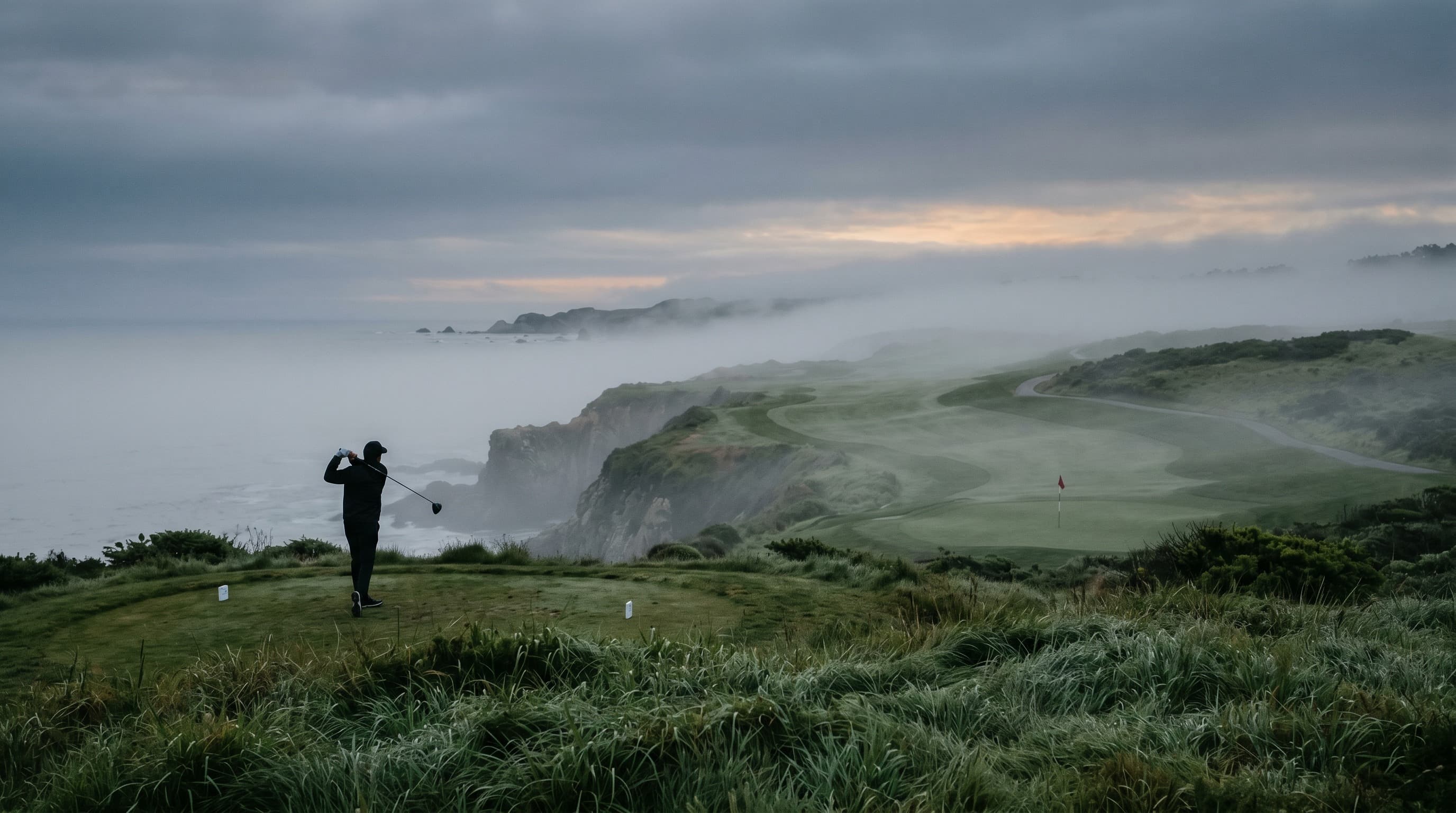
Reading Coastal Wind: How the Marine Layer Reshapes Pebble Beach, Bandon, and the Pacific Coast Game
Coastal golf does not play by inland rules. The marine layer suppresses wind in the morning, then releases it through midday in a thermal cycle that turns a calm 7am tee into a 22mph back nine. Here is the meteorology behind the pattern, the G-Score data that confirms it across the Pacific coast, and the morning workflow that turns the marine layer from a confusion into a competitive advantage.
Read Story
How to Read a G-Score: The 0–100 Golf Playability Number, Decoded
A G-Score on this site is a single 0–100 number that tells you whether today is worth tee-up. Here is exactly what each band means, what drives the calculation, and how to use it to plan a round you will actually score on.
Read StoryMinSu Kim
Founder & Golf Data Analyst
MinSu is a data analyst and golfer with 10+ years on the course. He built Golf Weather Score to answer one question: is today a good day to play? He combines weather data, course intelligence, and the proprietary G-Score algorithm to help golfers make smarter decisions.
Every Friday Morning
When Bakersfield Country Club plays best next weekend.
Friday 6am ET: peak G-Score windows for Bakersfield Country Club, wind direction by hour, and one gear call. Three minutes to read, save you the round.
One email a week. Unsubscribe in one click.
The Caddie's Oracle
Draw your luck before the tee off