
Caddie's Gear Advisor
Curated for today's 58°F · Rain
Storm-Ready Outerwear
Waterproof layers built for 18 holes in the rain
Tour-Grade Umbrellas
68" double-canopy wind-resistant coverage
Wet-Weather Gloves
All-weather grip that performs in the rain
Waterproof Golf Shoes
Keep your feet dry through every fairway
Your Golf Trip, Handled
The Ultimate Golf Trip Planner
Everything you need to play Balboa Executive 9-hole Course — from booking your flight to checking in course-side.
Best time to golf in CaliforniaCourse-Side Stays
Luxury hotels, resorts, and stay-and-play packages just minutes from the first tee.
Flights
Compare fares across 700+ airlines for the best route to your tee time.
SUV Rentals for Golf Bags
Spacious vehicles with room for clubs, bags, and your foursome.
Travel Insurance
Coverage for medical, weather delays, and gear at your destination.
Balboa Executive 9-hole Course: Course Intelligence
TL;DR: A par-32, 2,175-yard executive nine on the Balboa Park mesa, laid out by Billy Bell Sr. in 1930. Wind and the marine layer decide your morning here far more than the short yardage suggests. I stood on the first tee one June morning with the downtown towers half-swallowed by gray and 61°F on my watch — the kikuyu was damp enough that nothing released.
Signature Setup
Balboa Park's golf complex sits on the mesa just east of downtown San Diego, and the 9-hole executive course is the quieter sibling to the championship 18. The full property was shaped by William P. "Billy" Bell Sr., the Southern California architect behind much of the region's early municipal work, with this short course dating to 1930. The executive nine runs par 32 over roughly 2,175 yards — a mix that I read as one par-5, three par-4s, and five par-3s. It is a walking course in the truest sense: you can finish a loop in well under two hours, which is why it draws early risers, juniors, and players grinding on wedges and the short irons.
Hole-by-Hole Wind & Playing Lines
The defining wind here is the afternoon sea breeze off the Pacific, roughly WSW at 8–15 mph by early afternoon. On the longest par-4, that breeze comes left-to-right and into you; I club up one and aim for the fat left portion of the green rather than flirting with the canyon edge on the right. The skyline par-3 plays the opposite way — a downhill shot where the same WSW wind hunts anything that drifts right. In the marine-layer morning, with the air dead-calm and heavy, that hole gives back about half a club; in the dry afternoon it plays its full ~140 and then some. The shorter par-3s reward a stock three-quarter swing over a hero strike, because the firm kikuyu around the greens releases unpredictably once the layer lifts.
Green & Fairway Characteristics
Kikuyu covers tees, fairways, and the green surrounds, and it behaves differently than the bent or poa most U.S. visitors expect. Damp from the marine layer it grabs the ball; baked dry by mid-afternoon it gets fast and grainy, and chips run out. The greens are modestly contoured and the slope rating sits on the lower end for the area — this is an executive layout, not a championship test. Fairways are generous, so the scoring pressure comes from green firmness and wind, not from tight driving corridors.
Seasonal Weather Pattern
San Diego's coastal pattern dominates. May Gray and June Gloom bring thick morning marine layers that often don't clear until 10–11 a.m., holding temps in the low 60s°F. July through September mornings start clear and warm into the upper 70s°F by afternoon with the steady sea breeze. Winter (Dec–Feb) is the driest playing window most days, with cool 55–65°F rounds and only the occasional Pacific front. Rain is rare and usually brief.
Local Play Tips
Book the earliest tee time you can get. The marine-layer hours are the secret weapon on a kikuyu course — soft fairways and grips, no glare on the skyline-facing holes, and almost no wind. I have not played it in true Santa Ana conditions, so I won't pretend to know how the offshore wind reshapes these holes; on those rare dry-east days, expect the greens to firm up fast and plan for more roll than you want.
Pre-Round Weather Workflow
Check the 7-day G-Score the night before and aim your tee time at the calmest, coolest block — almost always before 9 a.m. here. Use the windExposure reading: if afternoon WSW is forecast above ~12 mph, move your round earlier rather than fighting it on the longer par-4 and the downhill par-3. On marine-layer mornings, expect soft surfaces and quieter scoring; once the layer burns off, recalculate for firmer kikuyu and an extra half-club into the breeze.
Related Reading
Before you tee off at Balboa Executive 9-hole Course

The Mental Game: Sports Psychology Research Behind Golf's Greatest Clutch Performers
Science-backed sports psychology research reveals why golf's greatest clutch performers master pressure through routines, visualization, and focus.
Read Story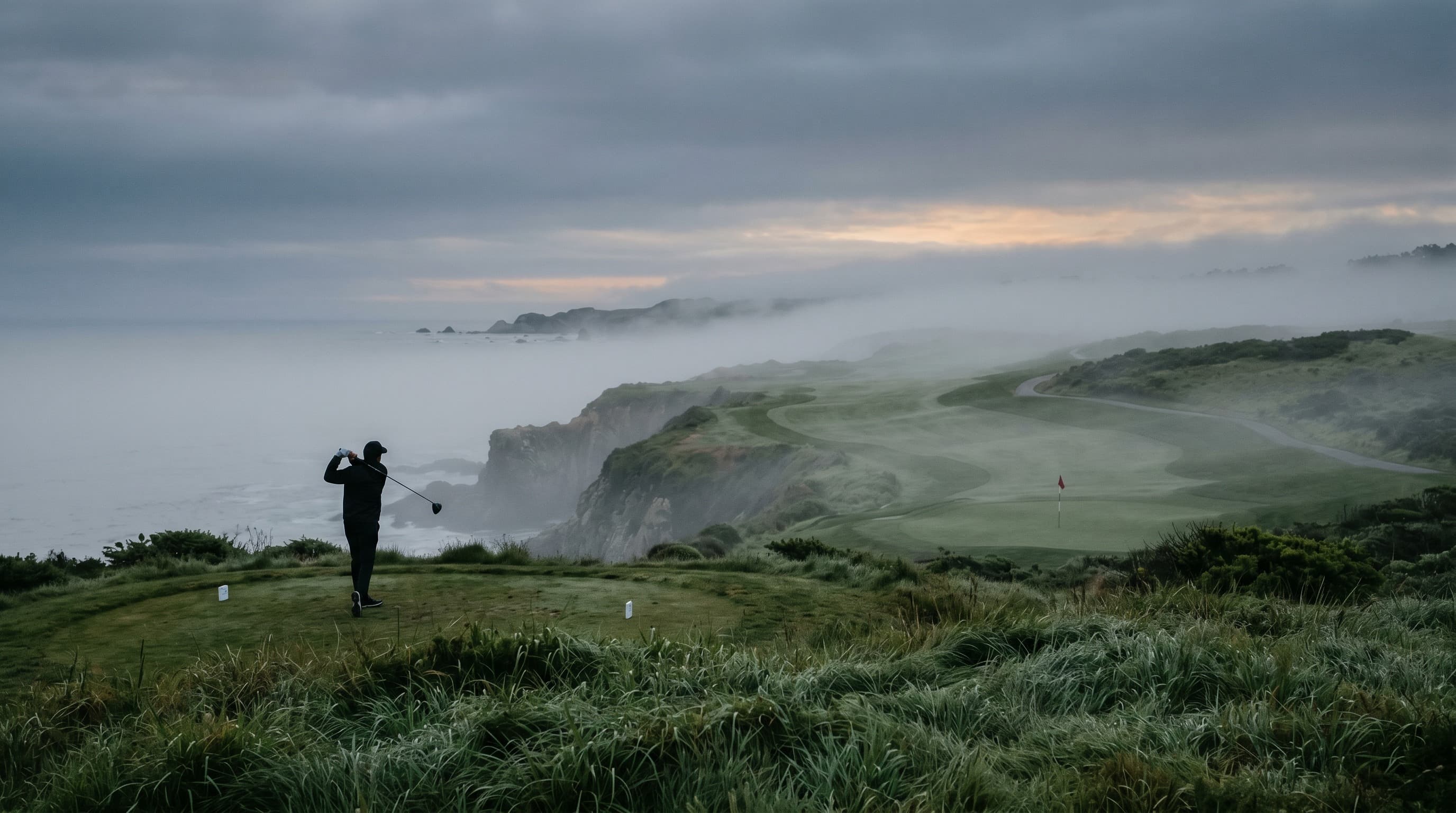
Reading Coastal Wind: How the Marine Layer Reshapes Pebble Beach, Bandon, and the Pacific Coast Game
Coastal golf does not play by inland rules. The marine layer suppresses wind in the morning, then releases it through midday in a thermal cycle that turns a calm 7am tee into a 22mph back nine. Here is the meteorology behind the pattern, the G-Score data that confirms it across the Pacific coast, and the morning workflow that turns the marine layer from a confusion into a competitive advantage.
Read StoryDanorie
Editorial & Data
Golf Weather Score is built by Danorie. We compute the G-Score — our own playability rating — from NOAA forecasts and published course scorecards, so any US course can be compared on any day with a single number. Methodology and data sources are documented on every page.
Every Friday Morning
When Balboa Executive 9-hole Course plays best next weekend.
Friday 6am ET: peak G-Score windows for Balboa Executive 9-hole Course, wind direction by hour, and one gear call. Three minutes to read, save you the round.
One email a week. Unsubscribe in one click.
The Caddie's Oracle
Draw your luck before the tee off