
Caddie's Gear Advisor
Curated for today's 53°F · Mist
Cold-Weather Performance Layers
Thermal mid-layers that move with your swing
Tour Hand Warmers
Rechargeable warmers trusted by caddies
Thermal Base Layers
Lightweight compression that traps heat
Winter Golf Headwear
Beanies and ear warmers built for the links
Your Golf Trip, Handled
The Ultimate Golf Trip Planner
Everything you need to play Bandon Trails — from booking your flight to checking in course-side.
Course-Side Stays
Luxury hotels, resorts, and stay-and-play packages just minutes from the first tee.
Flights
Compare fares across 700+ airlines for the best route to your tee time.
SUV Rentals for Golf Bags
Spacious vehicles with room for clubs, bags, and your foursome.
Travel Insurance
Coverage for medical, weather delays, and gear at your destination.
Bandon Trails: Course Intelligence
Signature Setup
The thing nobody tells you about Bandon Trails is that you barely see the ocean. I teed off here on a late-September morning, 53°F with the marine layer still sitting low, and spent most of the front nine walking away from the water into a corridor of shore pine and fir. That is the whole identity of this course — the only one at the resort that turns its back on the Pacific and routes inland through three completely different landscapes.
Bill Coore and Ben Crenshaw built Bandon Trails in 2005, the third course to open at Bandon Dunes Golf Resort near Bandon, Oregon. It plays par 71, roughly 6,765 yards from the back (Trails) tees. The routing is its signature: it opens in exposed sand dunes, drops into dense coastal forest through the middle stretch, and climbs back out into open meadow for the finish. Each zone plays in a different wind.
Hole-by-Hole Wind & Playing Lines
Hole 6 (par-4, ~387y). This is where the course bites. It's a long uphill par-4 climbing out of the lower forest back toward open ground, and it points into the prevailing NW summer wind. On my round a 12 mph breeze turned a normal mid-iron approach into a hybrid; I came up short twice before learning to take two extra clubs. Favor front-left — the green tilts away from you and a strong shot runs through the back.
Hole 14 (short par-4, ~325y). The signature hole and the most tempting tee shot here. The green is benched into a fir hillside, and the trees on the right kill most of the wind off the tee, so it plays shorter than the number. But the second the ball climbs to green level it catches the open NW breeze — a stock pitch I expected to stop spun back off the front twice. Land it past the flag.
Hole 5 (par-3, ~220y). A long downhill one-shotter in the dunes section, fully exposed. A left-to-right NW wind here is the killer — it pushes a long iron toward the right bunkering. I aimed at the left edge and let the wind walk it back to center.
Green & Fairway Characteristics
Like everything at the resort, Trails is fine fescue tee to green, firm and fast underfoot. What sets it apart from the cliff courses isn't the grass, it's the gradient: this is far and away the hilliest routing at Bandon, so almost no shot is dead level — you're working uphill or downhill all day, and on that firm fescue a downhill approach simply won't sit unless you land it well short and let it trundle on. The greens are big targets but seriously contoured, with slope numbers in the low-130s from the Trails tees. My first instinct on every approach here is the bump-and-run: a ball fed up a slope holds its line where a high wedge gets shoved off course by the breeze the moment it climbs above the trees. The homeward meadow holes (15–18) hand you the widest fairways of the day; the forest stretch is tighter than the eye admits.
Seasonal Weather Pattern
The one climate fact that shapes Trails differently is its forest: the tree cover creates a wet-day microclimate the open courses never feel. Bandon's marine setting keeps playing-season highs in the mid-50s to low-60s°F with no genuine heat even in August, and the dry, reliable window runs June through September. Outside that, the SW Pacific storm track drives the rain, with annual totals near 60 inches stacked into November through March. On a soaked morning the tree-lined middle (8–12) stays soft and sluggish while the exposed dune and meadow holes dry and firm up far quicker in any wind — so the same round can play two different speeds. I've never teed it up here in the dead of winter, so I'll leave the firsthand January verdict to a walker who has; the NOAA record alone tells me it stays green and thoroughly drenched, and Trails runs all year for anyone dressed for it.
Local Play Tips
Here's the local read no yardage book gives you: the forest holes trick you into forgetting the wind. Through holes 8 to 12 the firs block almost everything and you settle into calm-day rhythm — then 13 spits you back into open ground and the NW breeze you stopped accounting for is suddenly two clubs of difference. I started re-checking the treetops on every forest tee just to stay honest about the wind waiting on the next open hole. Also: this is the most physically demanding walk at the resort with the elevation, so bank your energy for the uphill 6 and the climb on 18.
Pre-Round Weather Workflow
Start with the 7-day G-Score at the top of this page. Around three days out I check the obvious thing first — does my tee time fall ahead of the midday onshore build or behind it? Because even at a course that hides half its holes in trees, that timing swings the number 8–12 points. Trails rewards a more tactical morning read than the cliff courses, though: when windExposure shows NW, the open holes (5, 6, 13, 14) are getting it full force while the forest middle stays calm, so I deliberately load my aggressive clubs into 8–12 and play conservative through the exposed dune and meadow stretches. Rain plus wind under 55°F flips me to the ground game everywhere — low approaches, expect the firm meadow and dune greens to release rather than grab, and never forget the extra club every uphill hole demands.
Related Reading
Before you tee off at Bandon Trails
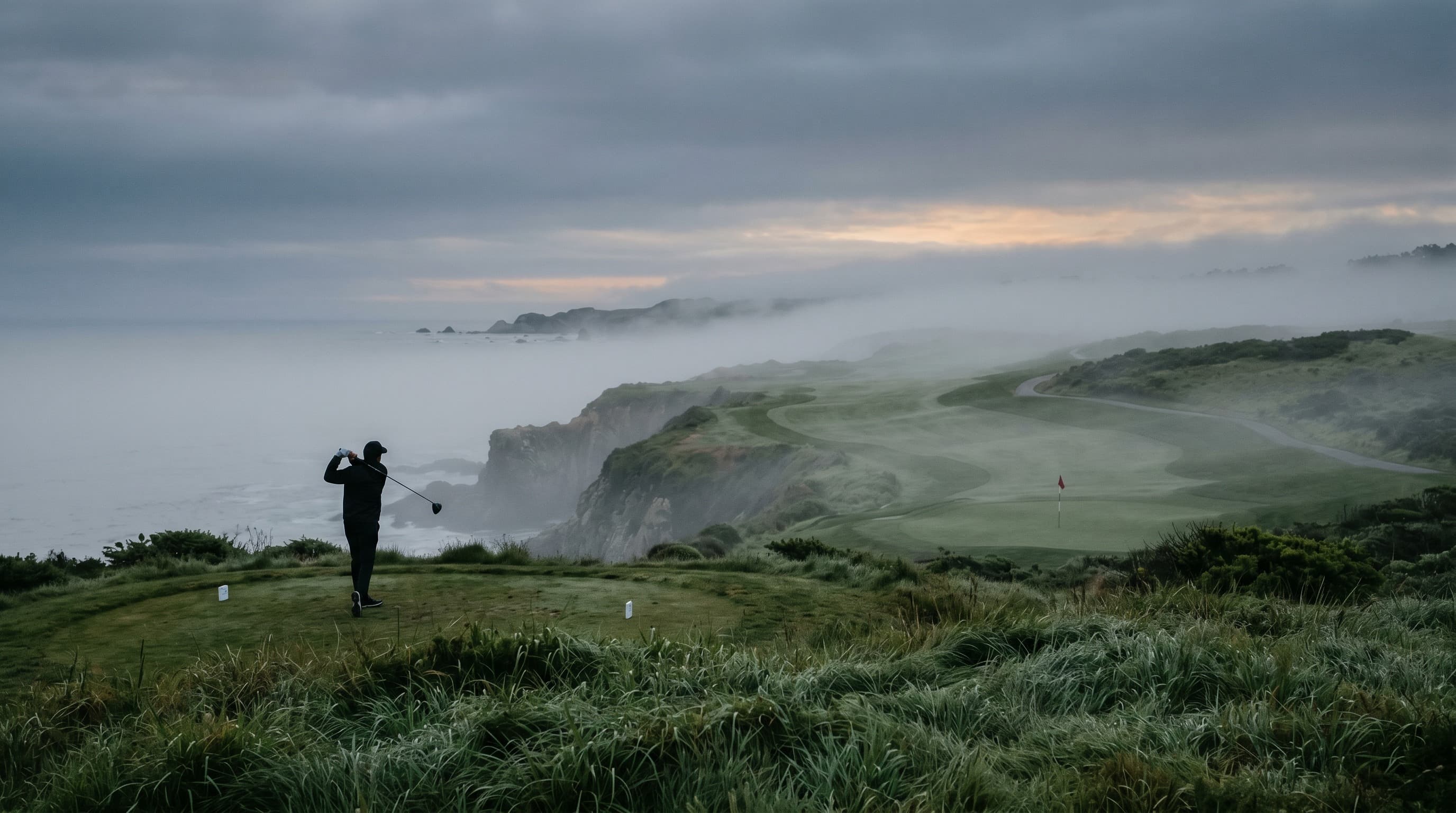
Reading Coastal Wind: How the Marine Layer Reshapes Pebble Beach, Bandon, and the Pacific Coast Game
Coastal golf does not play by inland rules. The marine layer suppresses wind in the morning, then releases it through midday in a thermal cycle that turns a calm 7am tee into a 22mph back nine. Here is the meteorology behind the pattern, the G-Score data that confirms it across the Pacific coast, and the morning workflow that turns the marine layer from a confusion into a competitive advantage.
Read Story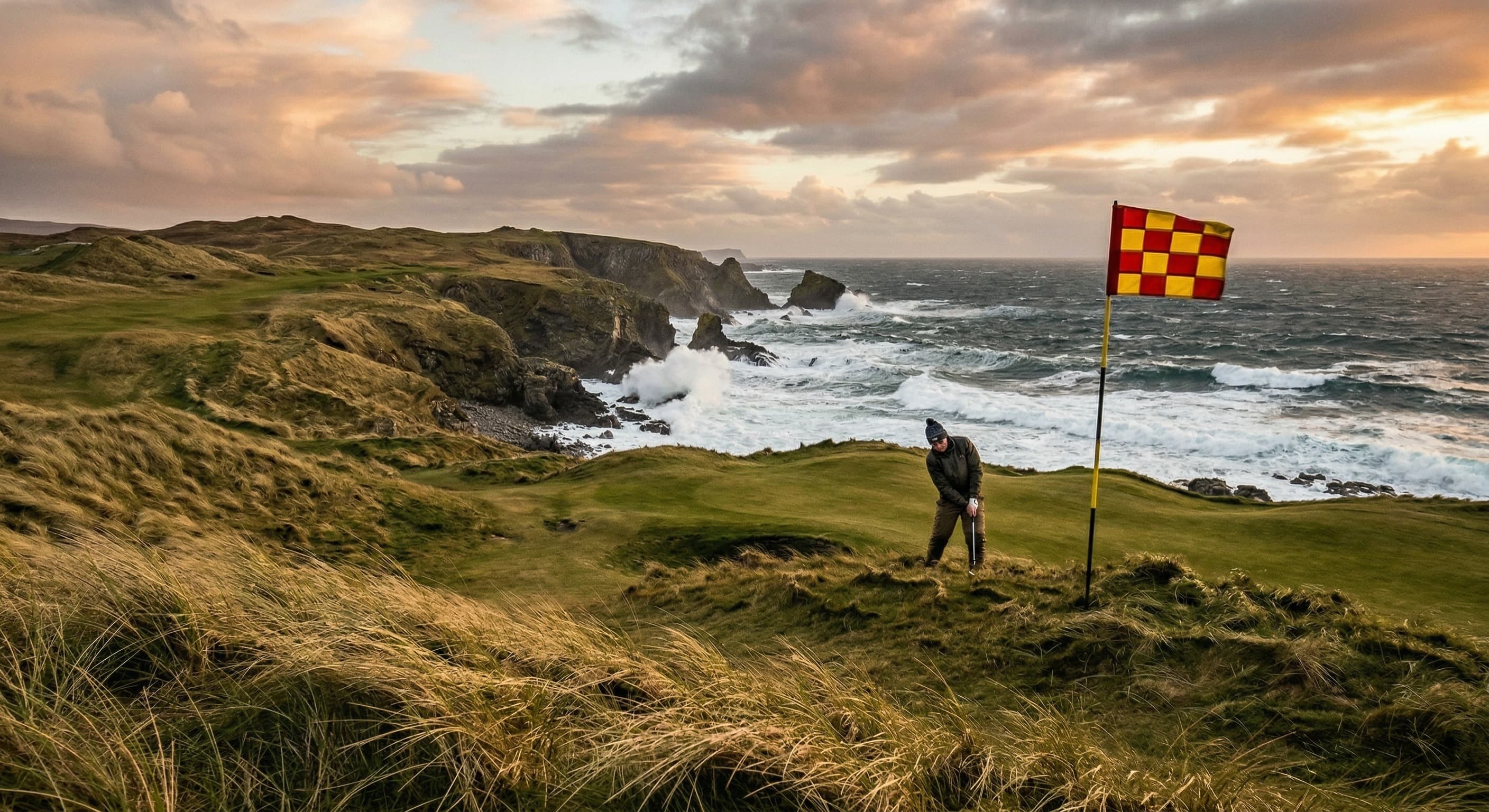
America's 20 Windiest Golf Courses: A G-Score Wind Analysis
We ranked America's 20 windiest golf courses using G-Score wind penalty data. See how coastal gusts and prairie gales reshape playability scores.
Read StoryDanorie
Editorial & Data
Golf Weather Score is built by Danorie. We compute the G-Score — our own playability rating — from live NOAA forecasts and published course scorecards, so any US course can be compared on any day with a single number. Methodology and data sources are documented on every page.
Every Friday Morning
When Bandon Trails plays best next weekend.
Friday 6am ET: peak G-Score windows for Bandon Trails, wind direction by hour, and one gear call. Three minutes to read, save you the round.
One email a week. Unsubscribe in one click.
The Caddie's Oracle
Draw your luck before the tee off