
Caddie's Gear Advisor
Curated for today's 77°F · Clear
Tour-Level Drivers
Engineered for maximum distance and forgiveness
Laser Rangefinders
Pin-seeking technology for precision approaches
Premium Golf Balls
Tour-caliber spin and distance performance
Performance Sunglasses
Polarized lenses optimized for reading greens
Your Golf Trip, Handled
The Ultimate Golf Trip Planner
Everything you need to play Barker Lake Golf Course — from booking your flight to checking in course-side.
Course-Side Stays
Luxury hotels, resorts, and stay-and-play packages just minutes from the first tee.
Flights
Compare fares across 700+ airlines for the best route to your tee time.
SUV Rentals for Golf Bags
Spacious vehicles with room for clubs, bags, and your foursome.
Travel Insurance
Coverage for medical, weather delays, and gear at your destination.
Barker Lake Golf Course: Course Intelligence
Signature Setup
I have not teed it up at Barker Lake myself — it's a 9-hole course tucked into Winter, Wisconsin, about as far from my Irvine home as American golf gets — so I'll be straight about what comes from the scorecard and the record versus my own legs. What pulled me to write it up is the history: the course was built in 1920 by Joe Soltis, a Chicago figure from the Prohibition era, and it has run as a lakeside nine on Barker Lake in the Hayward Lakes region ever since.
It plays to par 35 over 2,824 yards from the white tees (2,325 from the red), with a course rating of 33.6 and a slope of 113. The greens are Scottish-style and elevated, which in a place this far north — short season, cool air, lake on the doorstep — is the detail that actually decides your card.
Hole-by-Hole Wind & Playing Lines
A note on honesty: I'm reasoning the wind lines from the scorecard and the lake's position, not from having stood on these tees. Treat them as starting reads, not gospel.
Hole 4 (par-4, 400y, #1 handicap). The hardest hole on the course and the longest par-4 by a wide margin. At 400 yards to an elevated green, this is already a full two-shotter; add the open northern air coming off the water and a stock approach becomes a long iron or hybrid you have to fly up onto a raised surface that won't take a low runner. Favor the wide side off the tee and club up — short and below the green here is a guaranteed bogey.
Hole 6 (par-5, 475y, #5 handicap). The signature and the only par-5, running the longest line on the property down toward the Barker Lake shoreline. At 475 yards it's reachable in a calm window, but a lake breeze quartering across the second shot is the difference between going for it and laying back. When the water is moving, take the lay-up and a full wedge over a half-committed long shot that leaks toward trouble.
Hole 7 (par-3, 180y). The longer of the two par-3s (the other, the 1st, is 165y). 180 yards to an elevated green is a long-iron test on a still morning and a fairway-wood test once the afternoon breeze fills in. Aim at the front edge and let the ball release up — going long over a raised green leaves the worst chip on the course.
Green & Fairway Characteristics
The defining feature is the elevated greens. On a 1920s Scottish-style nine in cool, often damp northern Wisconsin, those raised surfaces stay receptive in the morning but firm up through a dry afternoon, and they reject the low running approach that works on flatter heartland courses. The slope of 113 from the white tees tells you it's not a brute on paper — at 2,824 yards the yardage is modest — but the green complexes are where strokes leak. Plan to fly approaches to the putting surface rather than chase them on. The card also runs short-to-long in a useful way: holes like the 290-yard 5th and 243-yard 8th give you breathing room, while 4, 6, and the 351-yard 9th (the #3 handicap) demand your best ball-striking. Bank a stroke on the short holes so you can spend it on the long ones.
Seasonal Weather Pattern
Winter, Wisconsin sits in Sawyer County, and the name is not a joke about the golf calendar — this is a genuinely short-season course, realistically playable from May into September. Summer daytime highs run mid-70s°F with mornings often in the 45–55°F range; even in July you'll want a layer at an 8 a.m. tee time. The course's whole personality is tied to Barker Lake: open water means morning calm that builds into an afternoon breeze, and the cool air keeps greens soft early. I haven't seen the shoulder months here firsthand, so I won't pretend to know late-September firmness — but the pattern in this part of northern Wisconsin is clear that the dry, stable mornings of mid-summer are your best scoring window, and any front moving through drops both temperature and tempo fast.
Local Play Tips
Here's the read that matters and won't show on a yardage sheet: the lake is your clock. On a 9-hole lakeside course like this, the morning is calm and the open water hasn't started pushing air yet — that's when the elevated greens are softest and most receptive. By early afternoon the breeze builds across the water and the longer holes (4, 6, 7) gain a club or more. If you're playing a two-loop 18, your front nine and back nine will not play the same, and it's worth treating the morning loop as your aggressive scoring half. Also: this is a country-lodge nine, not a championship track — manage it as a placement course, keep the driver holstered on the short par-4s, and save your energy for the elevated approaches.
Pre-Round Weather Workflow
Use the 7-day G-Score on this course page the way I would plan a trip up north. Three days out, check whether your tee window lands in the calm morning or the built-up afternoon breeze off Barker Lake — on an exposed lakeside nine, that swing alone can move your score 8–12 points. The morning of, read the windExposure panel: a north or onshore breeze means the long holes (4 and 6) and the 180-yard 7th play into or across it, so plan those as your conservative, club-up holes and stay aggressive on the sheltered short ones. If the forecast shows temperatures under 55°F with any wind, accept that the cool air kills carry — take one extra club on every approach and commit to flying the ball onto the elevated greens rather than running it up.
Related Reading
Before you tee off at Barker Lake Golf Course

How to Read a G-Score: The 0–100 Golf Playability Number, Decoded
A G-Score on this site is a single 0–100 number that tells you whether today is worth tee-up. Here is exactly what each band means, what drives the calculation, and how to use it to plan a round you will actually score on.
Read Story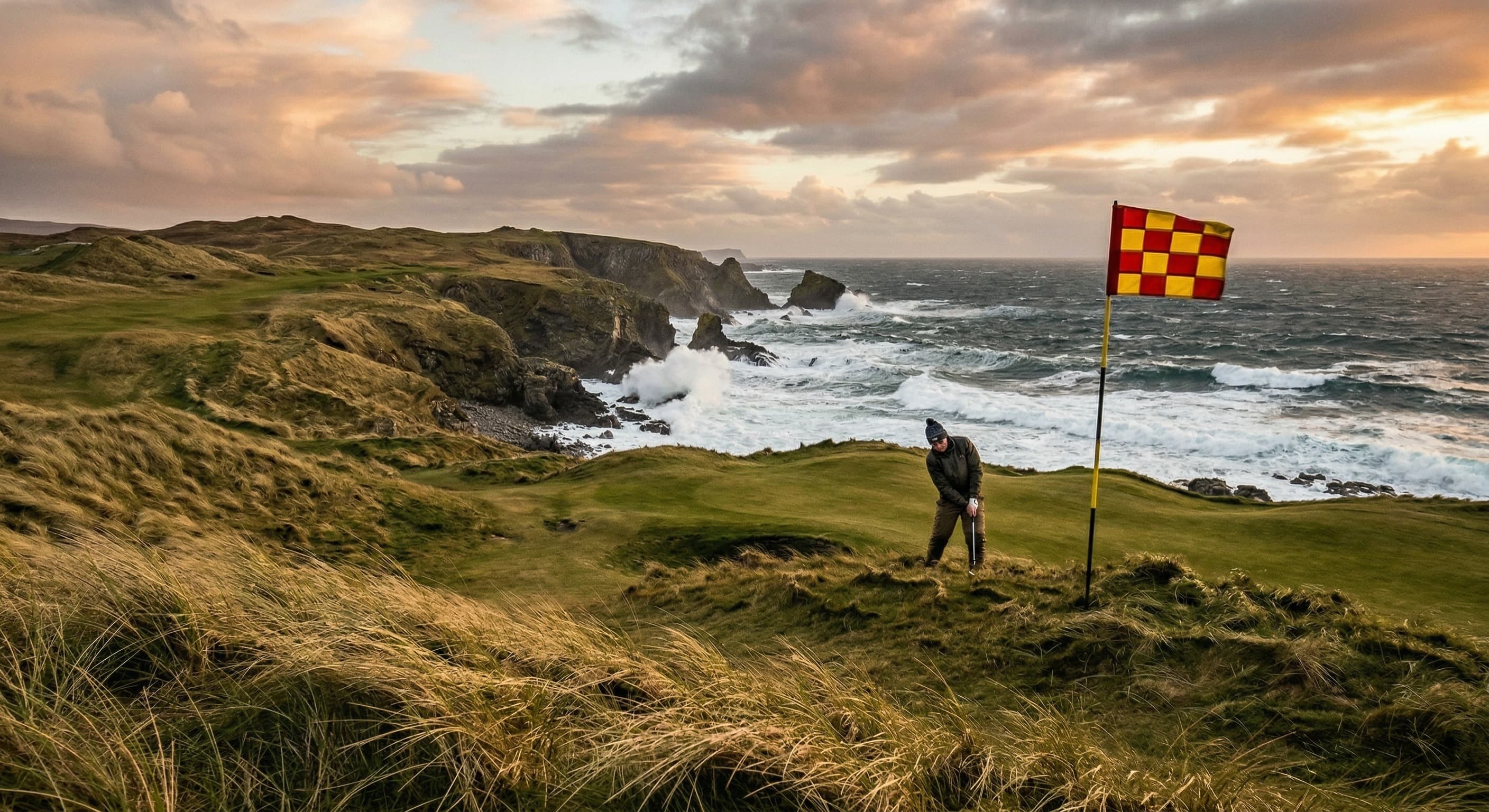
America's 20 Windiest Golf Courses: A G-Score Wind Analysis
We ranked America's 20 windiest golf courses using G-Score wind penalty data. See how coastal gusts and prairie gales reshape playability scores.
Read StoryMinSu Kim
Founder & Golf Data Analyst
MinSu is a data analyst and golfer with 10+ years on the course. He built Golf Weather Score to answer one question: is today a good day to play? He combines weather data, course intelligence, and the proprietary G-Score algorithm to help golfers make smarter decisions.
Every Friday Morning
When Barker Lake Golf Course plays best next weekend.
Friday 6am ET: peak G-Score windows for Barker Lake Golf Course, wind direction by hour, and one gear call. Three minutes to read, save you the round.
One email a week. Unsubscribe in one click.
The Caddie's Oracle
Draw your luck before the tee off