
Caddie's Gear Advisor
Curated for today's 60°F · Clear
Tour-Level Drivers
Engineered for maximum distance and forgiveness
Laser Rangefinders
Pin-seeking technology for precision approaches
Premium Golf Balls
Tour-caliber spin and distance performance
Performance Sunglasses
Polarized lenses optimized for reading greens
Your Golf Trip, Handled
The Ultimate Golf Trip Planner
Everything you need to play Bartley Cavanaugh Golf Course — from booking your flight to checking in course-side.
Course-Side Stays
Luxury hotels, resorts, and stay-and-play packages just minutes from the first tee.
Flights
Compare fares across 700+ airlines for the best route to your tee time.
SUV Rentals for Golf Bags
Spacious vehicles with room for clubs, bags, and your foursome.
Travel Insurance
Coverage for medical, weather delays, and gear at your destination.
Bartley Cavanaugh Golf Course: Course Intelligence
Signature Setup
Bartley Cavanaugh sits on the wrong side of every TV broadcast — it's a Sacramento muni on Freeport Boulevard, tucked behind the levee on the Sacramento River, not a resort name. Perry Dye built it in 1995 as a Scottish-links experiment on dead-flat valley floor: low mounding, native rough, almost no trees on the river holes. Par is 71, and from the back tees it runs only about 6,037 yards, which fools people. It is operated by Morton Golf, the same group that runs Haggin Oaks and Bing Maloney across town. The yardage says easy; the wind and the firm turf say otherwise.
Hole-by-Hole Wind & Playing Lines
The defining variable here is the Delta breeze — a southwest-to-west afternoon wind that funnels up from the Sacramento–San Joaquin Delta most spring and summer days. It changes which course you play.
- The #1-handicap par-4 (~410y): Into a 12–18 mph SW Delta breeze, this is the hardest tee shot on the property. A morning 7-iron approach becomes a hold-it-flat 5-iron by 3 p.m. Favor the left mounding off the tee — the right side leaks toward native rough that the wind pushes you into.
- Back-nine river par-3s (~150–175y): These run closest to the levee with the least tree cover. With the breeze quartering left-to-right off the river, the ball drifts hard right; I aim at the left edge and let it ride.
- The closing par-5: Downwind in the afternoon it's reachable for a long hitter; dead into the morning calm it's a true three-shotter. Same hole, two different scorecards.
Green & Fairway Characteristics
The fairways play firm and fast — this is valley clay that bakes hard from June onward, so you get more roll than the 6,037-yard card suggests. Greens are mid-sized, on the slower-to-medium side for a muni (I'd estimate Stimp in the 9 range most days, not glassy), with subtle valley-floor break rather than dramatic tiers. The mounding around the greens is the real defense: short-side yourself and you're chipping off a downslope into firm putting surface. Front nine and back nine play similar total yardage, but the back is more exposed to the river wind.
Seasonal Weather Pattern
Sacramento summers are brutal and dry — July and August routinely hit 95–102°F by mid-afternoon, with single-digit humidity. That's why the Delta breeze matters: it's the only relief, arriving late afternoon and dropping temps 10–15°F. Winters are mild and wet (rain Dec–Feb, lows in the low 40s°F), and the riverside holes can stay soft and slow for days after a storm. Spring and fall are the honest scoring windows: calm mornings, firm turf, 70s°F.
Local Play Tips
The thing you won't find on a tee sheet: the levee and river create a microclimate where the breeze arrives earlier and stronger on the back nine than the weather app shows for downtown Sacramento. I plan my round so I'm making the turn before the wind stands up. Book an early weekday morning, and the firm fairways plus calm air can give back two or three strokes versus a 4 p.m. tee time on the same day.
Pre-Round Weather Workflow
Check the 7-day G-Score here the night before, but the single number to watch is afternoon wind direction and speed. If the forecast shows SW winds climbing past 12 mph after 1 p.m., move your tee time to the morning if you can — the windExposure on the open river holes is the whole story at Bartley Cavanaugh. In summer, also read the heat: an 8 a.m. start beats a 1 p.m. start by both temperature and wind. Treat the morning calm as a scoring asset and the Delta breeze as the course's real architect.
Related Reading
Before you tee off at Bartley Cavanaugh Golf Course
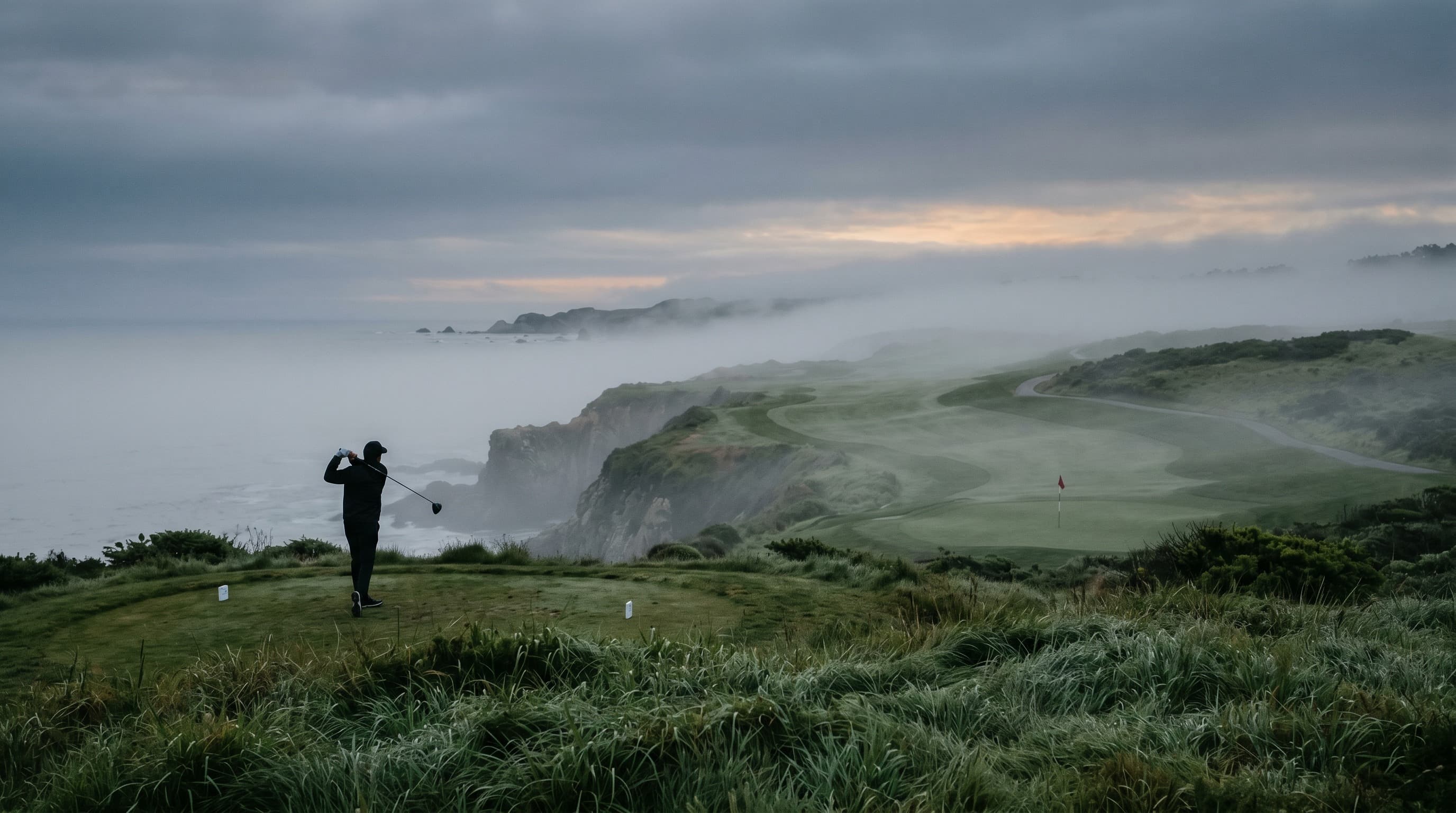
Reading Coastal Wind: How the Marine Layer Reshapes Pebble Beach, Bandon, and the Pacific Coast Game
Coastal golf does not play by inland rules. The marine layer suppresses wind in the morning, then releases it through midday in a thermal cycle that turns a calm 7am tee into a 22mph back nine. Here is the meteorology behind the pattern, the G-Score data that confirms it across the Pacific coast, and the morning workflow that turns the marine layer from a confusion into a competitive advantage.
Read Story
How to Read a G-Score: The 0–100 Golf Playability Number, Decoded
A G-Score on this site is a single 0–100 number that tells you whether today is worth tee-up. Here is exactly what each band means, what drives the calculation, and how to use it to plan a round you will actually score on.
Read StoryMinSu Kim
Founder & Golf Data Analyst
MinSu is a data analyst and golfer with 10+ years on the course. He built Golf Weather Score to answer one question: is today a good day to play? He combines weather data, course intelligence, and the proprietary G-Score algorithm to help golfers make smarter decisions.
Every Friday Morning
When Bartley Cavanaugh Golf Course plays best next weekend.
Friday 6am ET: peak G-Score windows for Bartley Cavanaugh Golf Course, wind direction by hour, and one gear call. Three minutes to read, save you the round.
One email a week. Unsubscribe in one click.
The Caddie's Oracle
Draw your luck before the tee off