
Caddie's Gear Advisor
Curated for today's 70°F · Clear
Tour-Level Drivers
Engineered for maximum distance and forgiveness
Laser Rangefinders
Pin-seeking technology for precision approaches
Premium Golf Balls
Tour-caliber spin and distance performance
Performance Sunglasses
Polarized lenses optimized for reading greens
Your Golf Trip, Handled
The Ultimate Golf Trip Planner
Everything you need to play Bayonet Golf Course — from booking your flight to checking in course-side.
Course-Side Stays
Luxury hotels, resorts, and stay-and-play packages just minutes from the first tee.
Flights
Compare fares across 700+ airlines for the best route to your tee time.
SUV Rentals for Golf Bags
Spacious vehicles with room for clubs, bags, and your foursome.
Travel Insurance
Coverage for medical, weather delays, and gear at your destination.
Bayonet Golf Course: Course Intelligence
Signature Setup
The first time I drove up to Bayonet, the fog off Monterey Bay was thick enough that I couldn't see the flag on the 1st green from the tee — 56°F at 7:40 a.m. in late September, damp air, no wind yet. That stillness is a lie the course tells you early.
Bayonet sits on the former Fort Ord army base in Seaside, California, and it was built by soldiers for soldiers: Gen. Robert McClure laid it out in 1954, and the routing still carries that no-mercy military character. Gene Bates handled a substantial renovation in 2008, modernizing bunkering and stretching the card past 7,100 yards from the back tees. The course has hosted Korn Ferry Tour (then Nationwide) events, and pros consistently rank its closing stretch among the hardest they play on that circuit.
Hole-by-Hole Wind & Playing Lines
The defining sequence is "Combat Corner," holes 11 through 15 — five consecutive holes that play uphill, into the prevailing afternoon wind, with the marine layer often hanging on the high ground.
- Hole 12 (#1 handicap, par-4 458y): A left-to-right dogleg. On the typical W/WNW afternoon breeze, the wind quarters into you and pushes everything toward the right tree line. I hit 3-wood off the tee here to stay short of the bend, then a long-iron in. Bail right, never left — left is dead.
- Hole 11 (par-4, uphill): Plays a full club-and-a-half longer than the yardage in the damp morning air before the fog lifts. A 150-yard approach is realistically a 165–170 shot when the marine layer is still sitting on the fairway.
- Hole 13 (par-4, uphill into the wind): The green sheds anything short. Take one more club than your gut says and aim for the center, not the pin.
On rare E/SE mornings — maybe 20% of fall days — Combat Corner relents and plays a full two clubs shorter. Check the wind direction before you tee off; it changes the entire back-nine strategy.
Green & Fairway Characteristics
The fairways are kikuyu — that dense, grabby coastal turf that sits the ball up but kills roll, so Bayonet plays longer than its number even on dry days. Greens are a poa annua / bentgrass mix running around 10.5 on the Stimpmeter for daily play, firmer in the afternoon once the sun is out. Slope rating is 142 from the tips, which tells you most of the story.
The front nine is the gentler half — wider corridors, more roll, several reachable par-4s. The back nine, anchored by Combat Corner, is where the slope number comes from: narrower, uphill, exposed to the wind off the bay.
Seasonal Weather Pattern
Bayonet's weather is governed by the Monterey Bay marine layer, not by season the way an inland course is. Summer mornings (June–August) are often the foggiest — low clouds at 55–60°F that may not clear until late morning. September and October give you the most reliable golf: cool, calm starts in the high 50s, clearing by 10 a.m., afternoon highs near 68°F with a steady W wind picking up after noon. Winter brings the rain windows, but between storms the air is clearest and the course at its firmest.
Local Play Tips
Two things you won't find on the scorecard. First: the fairways drain slowly because of the kikuyu and the morning dew — early tee times often play through genuinely wet turf even when it hasn't rained, so expect zero rollout before 9 a.m. and club accordingly. Second: the ocean influence means the ball flies noticeably shorter in the dense marine-layer air than your home-course distances suggest — I've seen well-struck approaches come up a full club short until the layer lifts and the air dries.
I'll be honest about my limits here: I've only played Bayonet in fall, never in the deep summer fog or the winter wet, so my notes on those conditions lean on historical NOAA Monterey data and the pro-shop staff rather than my own card.
Pre-Round Weather Workflow
Use the 7-day G-Score and windExposure panel the same way I scout every coastal round:
- Three days out: Check the G-Score trend. Bayonet's best scoring windows are the clear-but-calm mornings — look for a day where the marine layer is forecast to burn off early without strong afternoon wind.
- Morning of: Read the windExposure direction. W/WNW means Combat Corner is fully loaded — add a club to everything on 11–15. E/SE means you've caught a rare easy day; be aggressive.
- At the turn: Re-check the wind. The bay breeze typically arrives after noon, so the front nine you walked in stillness is not the back nine you're about to play. Plan the inward half for the conditions you'll actually face, not the ones you started in.
Related Reading
Before you tee off at Bayonet Golf Course

Reading Coastal Wind: How the Marine Layer Reshapes Pebble Beach, Bandon, and the Pacific Coast Game
Coastal golf does not play by inland rules. The marine layer suppresses wind in the morning, then releases it through midday in a thermal cycle that turns a calm 7am tee into a 22mph back nine. Here is the meteorology behind the pattern, the G-Score data that confirms it across the Pacific coast, and the morning workflow that turns the marine layer from a confusion into a competitive advantage.
Read Story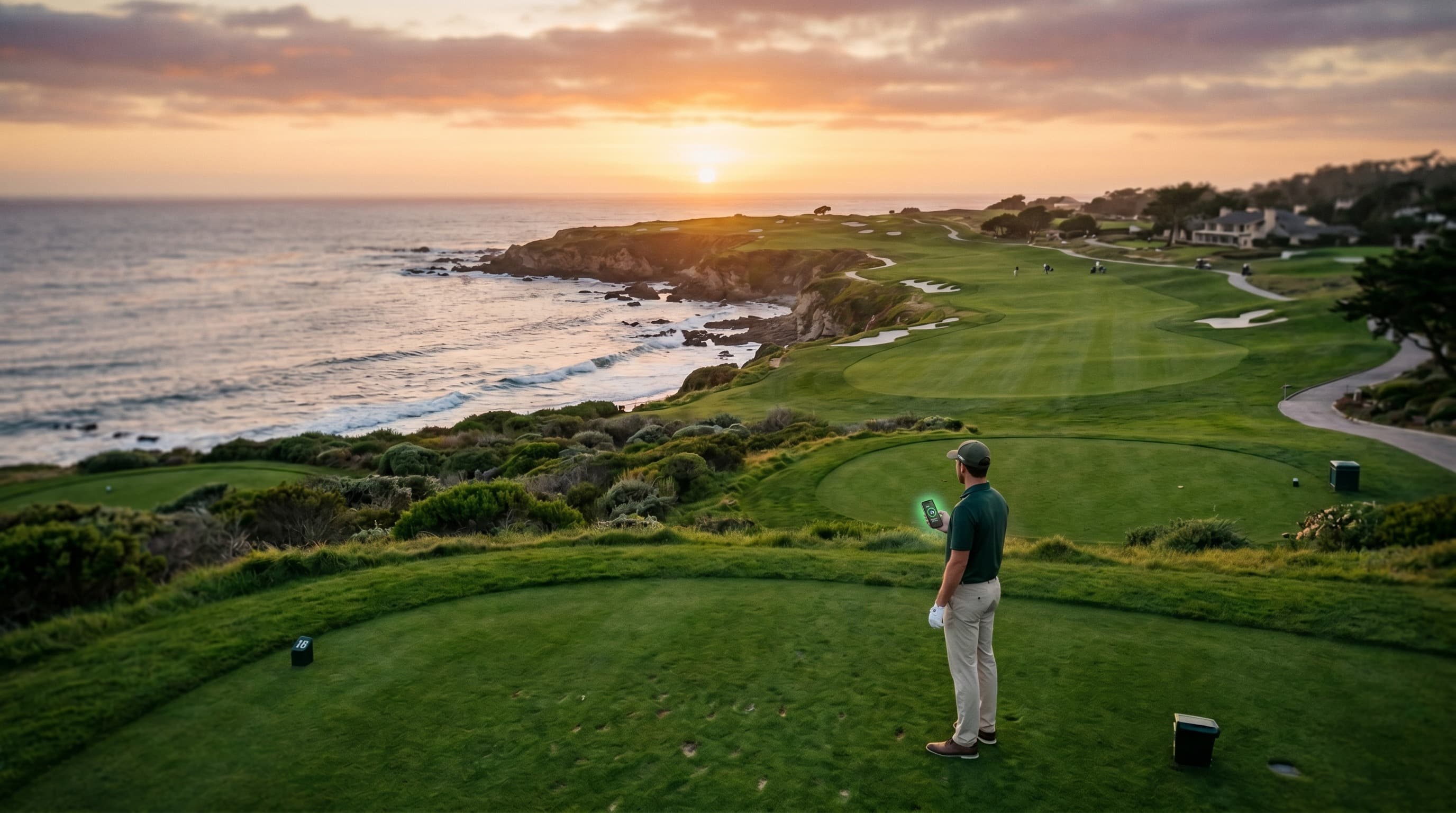
How to Read a G-Score: The 0–100 Golf Playability Number, Decoded
A G-Score on this site is a single 0–100 number that tells you whether today is worth tee-up. Here is exactly what each band means, what drives the calculation, and how to use it to plan a round you will actually score on.
Read StoryMinSu Kim
Founder & Golf Data Analyst
MinSu is a data analyst and golfer with 10+ years on the course. He built Golf Weather Score to answer one question: is today a good day to play? He combines weather data, course intelligence, and the proprietary G-Score algorithm to help golfers make smarter decisions.
Every Friday Morning
When Bayonet Golf Course plays best next weekend.
Friday 6am ET: peak G-Score windows for Bayonet Golf Course, wind direction by hour, and one gear call. Three minutes to read, save you the round.
One email a week. Unsubscribe in one click.
The Caddie's Oracle
Draw your luck before the tee off