
Caddie's Gear Advisor
Curated for today's 84°F · Clear
Tour-Level Drivers
Engineered for maximum distance and forgiveness
Laser Rangefinders
Pin-seeking technology for precision approaches
Premium Golf Balls
Tour-caliber spin and distance performance
Performance Sunglasses
Polarized lenses optimized for reading greens
Your Golf Trip, Handled
The Ultimate Golf Trip Planner
Everything you need to play Bayou Golf Club — from booking your flight to checking in course-side.
Course-Side Stays
Luxury hotels, resorts, and stay-and-play packages just minutes from the first tee.
Flights
Compare fares across 700+ airlines for the best route to your tee time.
SUV Rentals for Golf Bags
Spacious vehicles with room for clubs, bags, and your foursome.
Travel Insurance
Coverage for medical, weather delays, and gear at your destination.
Bayou Golf Club: Course Intelligence
Signature Setup
Bayou Golf Club sits in McMinnville, on the wet floor of Oregon's Willamette Valley. William Sander laid it out in 1964 for the White family, who intended a full 18 but built it as two nines: a regulation 9 at 3,154 yards, par 36 (rating 35, slope 116), and a separate par-3 nine running 70 to 165 yards. In 2021 the property and its manor house were sold and rebranded "The Nines," but the routing and the bayou that gives the club its name are unchanged. I have not walked all 18 here in person — for the hole-level numbers below I'm working from the scorecard and regional weather records, and I'll say so where it matters.
Hole-by-Hole Wind & Playing Lines
The defining hazard at Bayou is water, not length. The par-3 nine threads tee shots over a wetland slough, and the short holes (70–165y) play far harder than their yardage when the valley breeze is up. The regulation nine's longest par-4 is the one to respect: on summer afternoons a SW valley wind builds off the coast range gap, and a 150-yard approach plays closer to 165. Club up one and favor the dry, right-hand side away from the bayou. On still mornings — the common condition here — the same hole is a wedge in. The par-3 carries are the scorecard wreckers: into wind, a 140-yard club becomes a 155-yard commitment, and bailing short leaves you wet.
Green & Fairway Characteristics
Greens are modest in size and run on a bentgrass/poa mix typical of valley courses of this era — medium pace, holding well because the subsoil stays damp. The slope rating of 116 tells the truth: this is a fair, walkable layout, not a brute. Fairways are the real variable. Built on bottomland, they drain slowly; outside high summer expect soft turf, mud-ball lies, and almost no roll. The regulation nine's 3,154 yards therefore plays longer than the number because you're carrying the ball the full distance most of the year.
Seasonal Weather Pattern
McMinnville's climate is the engine here. Summers (July–August) are warm and dry, highs in the low-to-mid 80s°F with single-digit rainfall — the only stretch the fairways firm up. From November through March the valley is genuinely wet: 6–8 inches of rain a month, highs in the 40s, and standing water on the low holes near the slough. Spring and fall are playable but cool and damp, with frequent morning marine-layer fog that burns off by 10 a.m.
Local Play Tips
Two things the booking page won't tell you. First, the par-3 nine is the better value and the better test in wind — use it to dial in your wedge-to-7-iron carries before committing money on the regulation side. Second, in the wet half of the year, the holes nearest the bayou hold water longest; a mid-morning tee time gives the low ground a couple of hours to drain after overnight rain.
Pre-Round Weather Workflow
Use the 7-day G-Score on this page as your scheduling filter, not just a forecast glance. For Bayou specifically: (1) check 48-hour rainfall — anything over half an inch means cart-path-only conditions and plugged lies on the low holes; (2) read the windExposure indicator for the afternoon SW valley breeze and tee off before it builds if you want the regulation par-4s short; (3) on shoulder-season mornings, expect fog until ~10 a.m. and plan your first tee accordingly. The single highest-scoring window most of the year is a dry July morning — firm fairways, calm air, and the bayou at its least punishing.
Related Reading
Before you tee off at Bayou Golf Club

Reading Coastal Wind: How the Marine Layer Reshapes Pebble Beach, Bandon, and the Pacific Coast Game
Coastal golf does not play by inland rules. The marine layer suppresses wind in the morning, then releases it through midday in a thermal cycle that turns a calm 7am tee into a 22mph back nine. Here is the meteorology behind the pattern, the G-Score data that confirms it across the Pacific coast, and the morning workflow that turns the marine layer from a confusion into a competitive advantage.
Read Story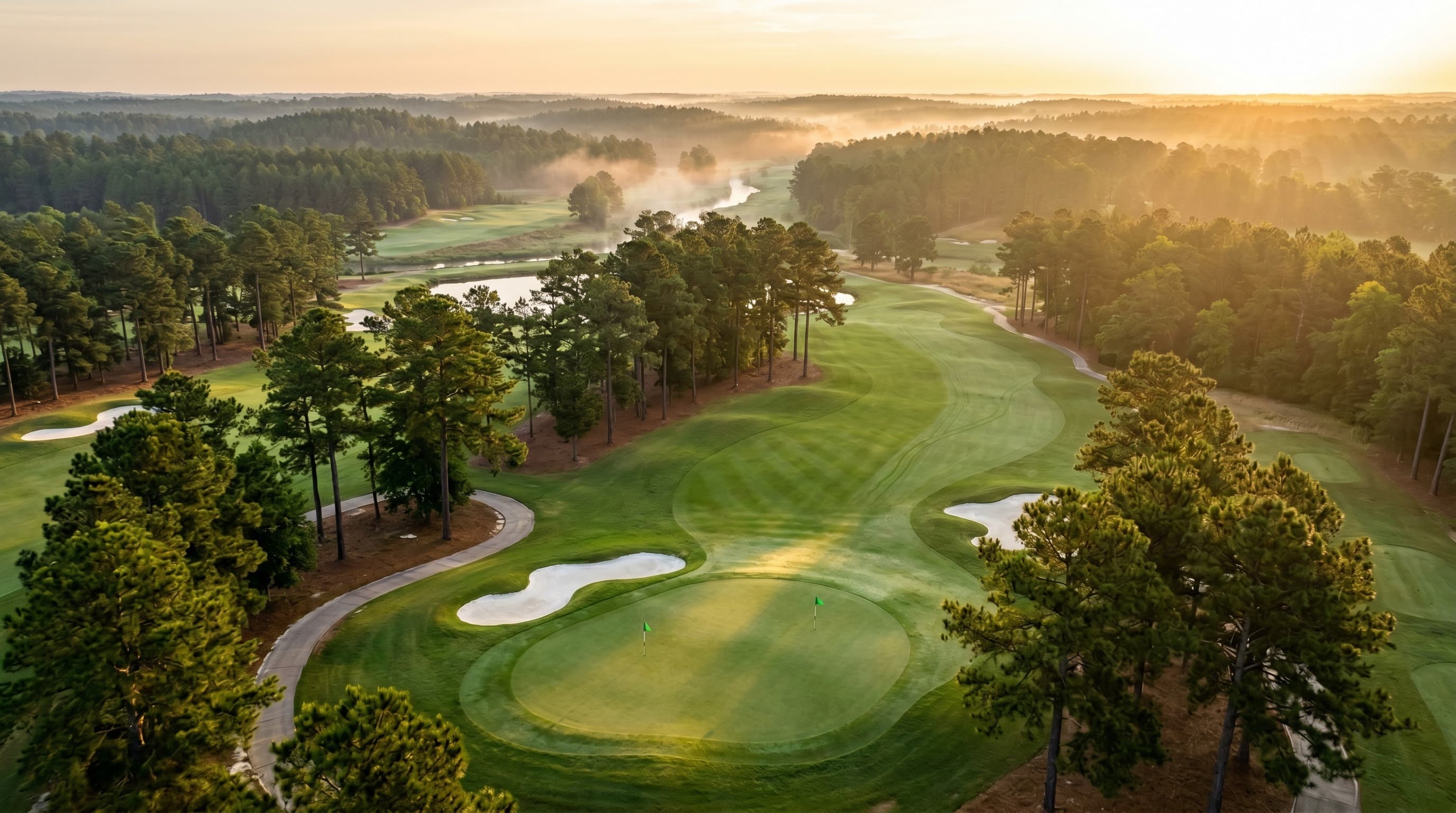
The May 2026 G-Score Heatmap: Where American Golf Peaks This Spring
May is the most underrated month on the American golf calendar. Five regions hit their annual peak this spring, three turn quietly hostile, and the data tells a clearer story than the brochures. Here is where to play, where to avoid, and how to time your booking window.
Read StoryMinSu Kim
Founder & Golf Data Analyst
MinSu is a data analyst and golfer with 10+ years on the course. He built Golf Weather Score to answer one question: is today a good day to play? He combines weather data, course intelligence, and the proprietary G-Score algorithm to help golfers make smarter decisions.
Every Friday Morning
When Bayou Golf Club plays best next weekend.
Friday 6am ET: peak G-Score windows for Bayou Golf Club, wind direction by hour, and one gear call. Three minutes to read, save you the round.
One email a week. Unsubscribe in one click.
The Caddie's Oracle
Draw your luck before the tee off