
Caddie's Gear Advisor
Curated for today's 62°F · Clouds
Tour-Level Drivers
Engineered for maximum distance and forgiveness
Laser Rangefinders
Pin-seeking technology for precision approaches
Premium Golf Balls
Tour-caliber spin and distance performance
Performance Sunglasses
Polarized lenses optimized for reading greens
Bear Trace: Course Intelligence
Signature Setup
Bear Trace at Harrison Bay is a Jack Nicklaus Signature design that opened in 1999 inside Harrison Bay State Park, about 15 miles northeast of Chattanooga, Tennessee. It runs roughly 7,140 yards from the tips, par 72, with a course rating near 74.0 and a slope around 135 — numbers that put it among the stiffer public tests in the state. It is the anchor of the original "Bear Trace" collection of Nicklaus state-park courses, and Golf Digest has ranked it at or near the top of Tennessee's public list more than once. The defining feature is the setting: the routing wraps along the shoreline of Chickamauga Lake (the bay gives the park and course their name), and a nesting pair of bald eagles on the property has been livestreamed for years — a genuinely unusual local fact, not a marketing line.
Hole-by-Hole Wind & Playing Lines
The lake is the wind engine here, and the prevailing breeze is out of the southwest. Hole 4, the #1 handicap at 444 yards, plays dead into that wind on a typical morning-to-midday shift — your 150-yard approach becomes a 165–170-yard shot. Favor right-center off the tee and club up; the green rejects anything landing hot and long.
Hole 18, the 455-yard par-4 finisher, bends left along the water with the lake hard down the left side. On a left-to-right SW wind, the safe miss is right, but that lengthens an already long approach. I'd rather take bogey from the right rough than feed a ball into Chickamauga.
The par-3s are exposed: when the wind is up, a cross-breeze off the open water can move a mid-iron a full club's worth of distance — pick your number for the gust, not the lull.
Green & Fairway Characteristics
Fairways are Bermuda, firm and fast-running in summer, which adds roll but also feeds slightly errant tee shots toward the Nicklaus-typical bunkering. The greens were bentgrass at opening; Harrison Bay sits squarely in the brutal turf transition zone, where many courses have since moved to ultradwarf Bermuda surfaces — so confirm the current cultivar with the pro shop rather than trusting an old scorecard. Either way, expect firm, well-contoured putting surfaces that demand approaches from below the hole. The back nine is the more exposed, water-adjacent stretch; the front works through more tree-lined, sheltered corridors, so the two nines play to noticeably different wind exposure.
Seasonal Weather Pattern
This is a humid-subtropical, transition-zone climate, and it shapes when the course plays best. Spring (April–May) and fall (late September–October) are the sweet spots: daytime highs in the 60s–70s°F, firmer turf, and lighter wind early. Tennessee summers are hot and sticky — July and August highs in the upper 80s to low 90s°F with high humidity and frequent afternoon thunderstorms building off the lake and the nearby Cumberland Plateau. Winter golf is playable but cold and often wet; the Bermuda fairways go dormant and play much shorter on roll. The single biggest weather variable round-to-round is that midday SW lake breeze, which strengthens the exposed back nine.
Local Play Tips
Two things worth knowing before you go. First, the eagle nest is real and the park takes it seriously — there can be seasonal viewing and access notes around nesting periods, so it's a genuine local quirk that distinguishes this from a generic resort track. Second, because this is a state-park course, weekend morning tee sheets fill early with local play; an early slot buys you both calmer wind and better pace. I'll be honest about my limits here — I've spent far more time on West Coast courses than on Tennessee transition-zone golf, so for current green speeds and the exact turf surface I'd lean on the pro shop the morning of, not on year-old reviews.
Pre-Round Weather Workflow
Check the 7-day G-Score for Bear Trace at Harrison Bay the night before and again at dawn. Prioritize a morning slot when the score peaks — at this course that almost always means before the SW lake breeze fills in and before summer afternoon storms build. Watch the windExposure rating closely: it matters far more on the open, water-adjacent back nine (especially Holes 4 and 18) than on the sheltered front. If the afternoon G-Score drops sharply between June and August, treat it as the thunderstorm signal — get out early and don't gamble on a 2 p.m. finish on an exposed lakeside layout.
Sources: course design and yardage via the Tennessee State Parks Bear Trace at Harrison Bay listing (tnstateparks.com); Tennessee public-course rankings via Golf Digest; climate norms via NOAA/NWS Chattanooga-area data.
Related Reading
Before you tee off at Bear Trace
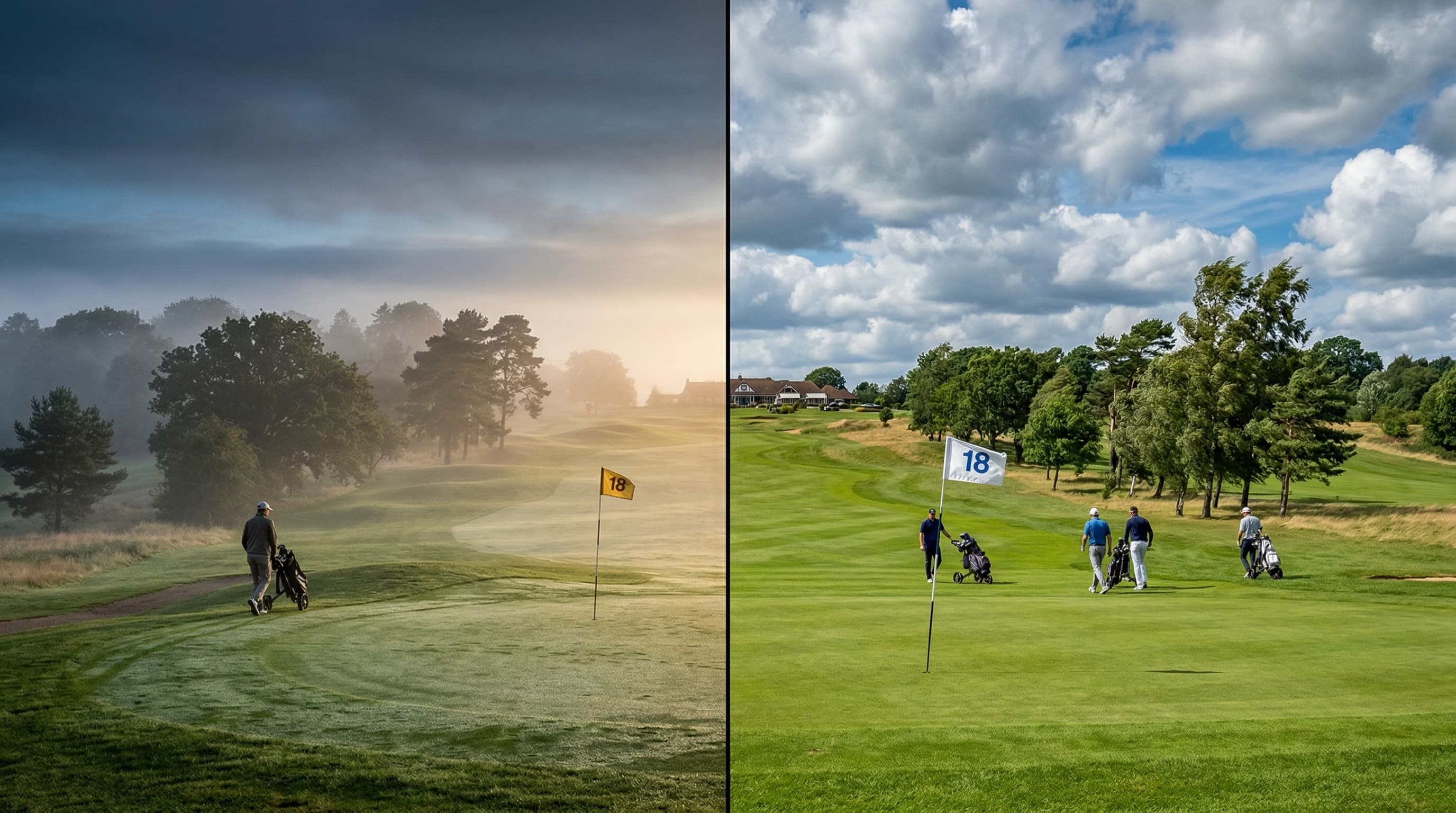
Morning vs Afternoon Tee Times: What Weather Data Reveals About When to Play
Hourly weather data reveals morning tee times score 8-12 G-Score points higher than afternoon slots. Here is what the numbers say about optimal timing.
Read Story
Best Golf Weather by State: Ranking America by Average G-Score
We ranked all 50 US states by average G-Score golf playability. California tops the list, but the results beyond the top five may surprise you.
Read StoryDanorie
Editorial & Data
Golf Weather Score is built by Danorie. We compute the G-Score — our own playability rating — from live NOAA forecasts and published course scorecards, so any US course can be compared on any day with a single number. Methodology and data sources are documented on every page.
Every Friday Morning
When Bear Trace plays best next weekend.
Friday 6am ET: peak G-Score windows for Bear Trace, wind direction by hour, and one gear call. Three minutes to read, save you the round.
One email a week. Unsubscribe in one click.
The Caddie's Oracle
Draw your luck before the tee off