
Caddie's Gear Advisor
Curated for today's 59°F · Clouds
Tour-Level Drivers
Engineered for maximum distance and forgiveness
Laser Rangefinders
Pin-seeking technology for precision approaches
Premium Golf Balls
Tour-caliber spin and distance performance
Performance Sunglasses
Polarized lenses optimized for reading greens
Your Golf Trip, Handled
The Ultimate Golf Trip Planner
Everything you need to play Beaver Dam Country Club — from booking your flight to checking in course-side.
Course-Side Stays
Luxury hotels, resorts, and stay-and-play packages just minutes from the first tee.
Flights
Compare fares across 700+ airlines for the best route to your tee time.
SUV Rentals for Golf Bags
Spacious vehicles with room for clubs, bags, and your foursome.
Travel Insurance
Coverage for medical, weather delays, and gear at your destination.
Beaver Dam Country Club: Course Intelligence
Signature Setup
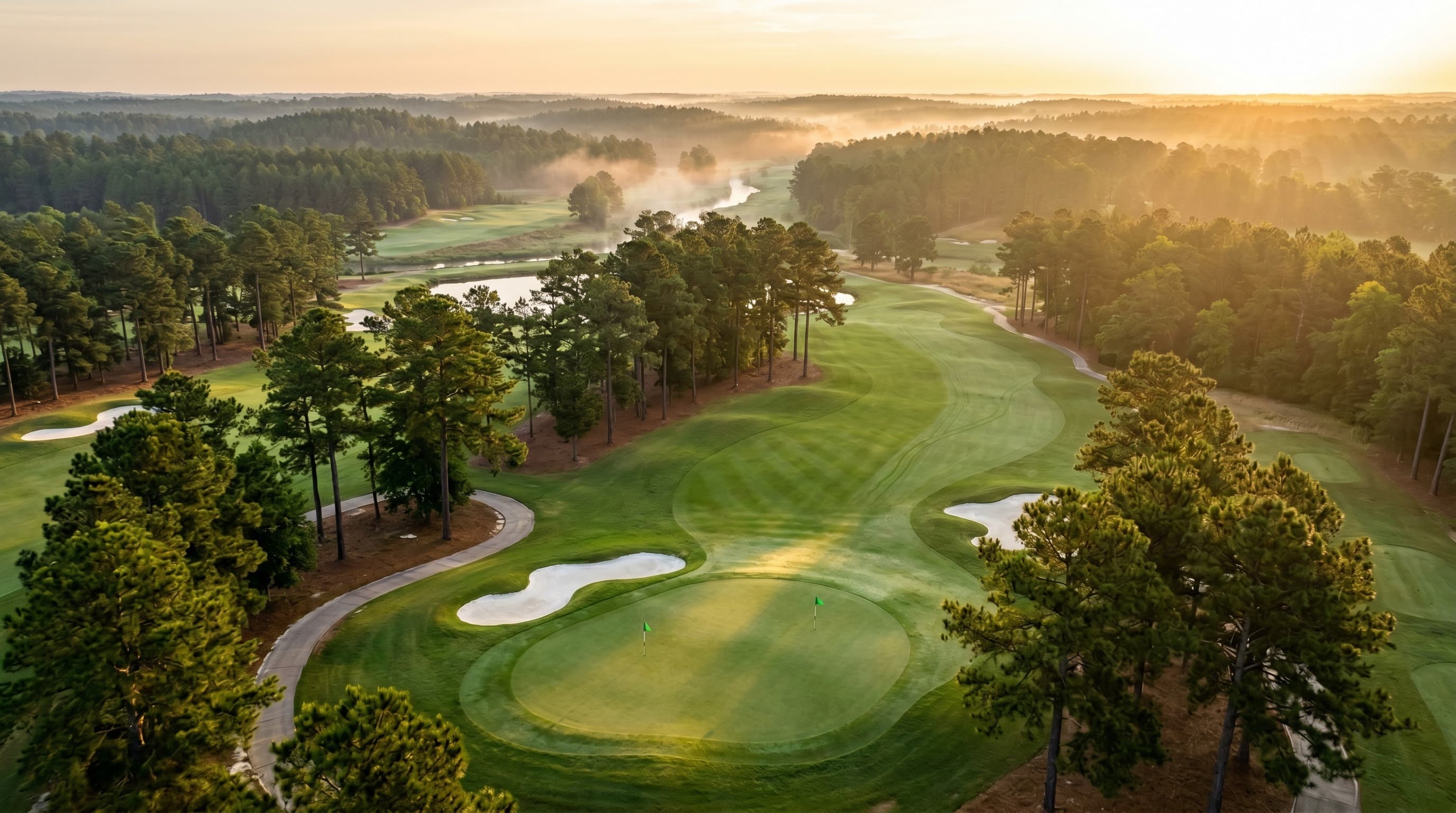
The 8th at Beaver Dam is a drivable par-4, and that single fact tells you what kind of course this is — short on the card, long on decisions. I have not teed it up here myself; I live in California and my Wisconsin golf has been farther north, so I am reconstructing this from the club's own notes, the state course records, and what a south-central Wisconsin autumn does to a parkland layout I have walked nearby on a 54°F October morning with fog still sitting in the low ground. What I can tell you honestly is that the appeal is not length.
Beaver Dam Country Club opened as a nine-hole course in the 1960s and was later expanded to a full 18, playing to a par of 72 at just over 6,000 yards. The original architect is not recorded in the club's history or the state archives — sources conflict, so I will not put a name on it I cannot verify. The course sits on rolling hills a few miles from Horicon Marsh and along Beaver Dam Lake, with small elevated "turtle-back" greens and tree-lined fairways that make position off the tee matter far more than raw distance.
Hole-by-Hole Wind & Playing Lines
Hole 8 (signature, short par-4). Drivable, but the green is a turtle-back ringed by strategically placed bunkers. Into the prevailing NW wind it stops being reachable for most players, and the smart line is a long iron to the flat below the green, leaving a full wedge that can hold the crown. Downwind on a summer SW breeze it tempts a driver — but a tee shot that carries the green spins off the back slope into trouble, so even with the wind you are landing short and letting it climb.
Hole 3 (short par-4, drivable). The course's other eagle look. Same trade as the 8th: the reward is real only when the wind is behind you and the ground is firm enough to feed a running ball up onto the elevated surface. Into the wind, lay back.
The long home stretch (#1 handicap par-4). The hardest hole runs into the NW wind that builds across the open lakeside terrain. A hole that reads in the low-400s plays a full two clubs longer. I would club up, aim at the center of the elevated green, and accept that the turtle-back will shed anything not landed dead center.
Green & Fairway Characteristics
The greens are the defining feature: small, elevated, and crowned — turtle-backs that repel approaches landing on the shoulders and funnel mishits into the surrounding bunkers. That geometry means missing on the fat side and chipping up is almost always better than a short-sided bunker shot from a tight downhill lie. Fairways are tree-lined and tilt with the rolling terrain, so flat lies are not guaranteed even in the short grass. At just over 6,000 yards the course never overpowers you, which is the point — strategic positioning beats length here, and the premium is on controlling spin and trajectory into greens that will not accept a flat, hot iron.
Seasonal Weather Pattern
South-central Wisconsin is a true four-season continental climate with a short, decisive golf window. Summer (June–August) brings highs in the low-80s°F with humidity and afternoon thunderstorm risk; the SW wind is the warm-season default. The prime stretch is May–June and again September–October, when highs settle into the 60s°F, the air dries, and the turtle-back greens firm up and quicken. Spring and fall mornings carry a local quirk: fog off Horicon Marsh and Beaver Dam Lake hangs in the low ground past sunrise and can hide the fairway bunkering on the drivable holes until it lifts. Winters are cold enough (Dec–Feb highs in the 20s–30s°F) that the course closes and the greens go dormant. I have not played here in midsummer, so I will not pretend to know how the afternoon storms reshape the lakeside holes — my read is built on the shoulder seasons.
Local Play Tips
Here is the read no scorecard gives you: at Beaver Dam the two drivable par-4s (3 and 8) are a wind-and-fog gamble, not a free eagle. In the early hours, fog off the marsh and the lake can sit thick enough that you cannot see the greenside bunkering from the tee — swing blind at a turtle-back green and you are gambling against hazards you cannot read. Wait for the fog to lift, then judge the wind: only attempt the green when a SW summer breeze is behind you and the ground is firm. Into the prevailing NW wind, both holes are better played as two-shot wedges. The other piece of local knowledge — those crowned greens stay receptive longest in the cool, damp shoulder-season mornings and turn brick-firm by a dry afternoon, so an early tee time is worth several strokes on approach play alone.
Pre-Round Weather Workflow
Use the 7-day G-Score on this course page to pick your tee window. Three days out, check the morning humidity and dew-point trend — high overnight moisture near the marsh and lake means fog, and on a course with two drivable par-4s and hidden bunkering that single factor changes whether the aggressive line is even playable. The morning of, read the windExposure panel for direction: a NW wind means the long #1-handicap home stretch and the lakeside holes play into the breeze, so bank your strokes early and club up two on the uphill approaches; a SW summer wind opens the door to attacking the drivable holes. If the forecast shows a calm, humid dawn, expect marsh fog to delay clear sightlines — book a slightly later slot or plan to play the early drivable holes conservatively until it burns off. After rain, the rolling fairways won't give you a flat lie, and the elevated greens stay soft, so trust an aggressive number into the crowns while they will still hold.
Related Reading
Before you tee off at Beaver Dam Country Club
The May 2026 G-Score Heatmap: Where American Golf Peaks This Spring
May is the most underrated month on the American golf calendar. Five regions hit their annual peak this spring, three turn quietly hostile, and the data tells a clearer story than the brochures. Here is where to play, where to avoid, and how to time your booking window.
Read Story
Reading Coastal Wind: How the Marine Layer Reshapes Pebble Beach, Bandon, and the Pacific Coast Game
Coastal golf does not play by inland rules. The marine layer suppresses wind in the morning, then releases it through midday in a thermal cycle that turns a calm 7am tee into a 22mph back nine. Here is the meteorology behind the pattern, the G-Score data that confirms it across the Pacific coast, and the morning workflow that turns the marine layer from a confusion into a competitive advantage.
Read StoryMinSu Kim
Founder & Golf Data Analyst
MinSu is a data analyst and golfer with 10+ years on the course. He built Golf Weather Score to answer one question: is today a good day to play? He combines weather data, course intelligence, and the proprietary G-Score algorithm to help golfers make smarter decisions.
Every Friday Morning
When Beaver Dam Country Club plays best next weekend.
Friday 6am ET: peak G-Score windows for Beaver Dam Country Club, wind direction by hour, and one gear call. Three minutes to read, save you the round.
One email a week. Unsubscribe in one click.
The Caddie's Oracle
Draw your luck before the tee off