
Caddie's Gear Advisor
Curated for today's 70°F · Clear
Tour-Level Drivers
Engineered for maximum distance and forgiveness
Laser Rangefinders
Pin-seeking technology for precision approaches
Premium Golf Balls
Tour-caliber spin and distance performance
Performance Sunglasses
Polarized lenses optimized for reading greens
Your Golf Trip, Handled
The Ultimate Golf Trip Planner
Everything you need to play Berkeley Country Club — from booking your flight to checking in course-side.
Course-Side Stays
Luxury hotels, resorts, and stay-and-play packages just minutes from the first tee.
Flights
Compare fares across 700+ airlines for the best route to your tee time.
SUV Rentals for Golf Bags
Spacious vehicles with room for clubs, bags, and your foursome.
Travel Insurance
Coverage for medical, weather delays, and gear at your destination.
Berkeley Country Club: Course Intelligence
Signature Setup
I went to Cal, so the El Cerrito hills are home turf for me — I learned that Bay Area golf is really a fog-and-wind problem before it is a swing problem. Berkeley Country Club stays private, so I have not posted a score here, but I have stood on this hillside in August at 9 a.m. with the marine layer still sitting on the bay, 56°F and gray, and watched it all change by noon.
Berkeley Country Club sits in the El Cerrito hills, in the East Bay above Richmond, with the slope falling toward San Francisco Bay and the Golden Gate to the west. The club dates to 1920; the original course is commonly credited to Robert Hunter, the Berkeley-based architect who later collaborated with Alister MacKenzie in Northern California. The routing has been revised across a century, so treat the modern card — not the 1920 one — as your reference.
Hole-by-Hole Wind & Playing Lines
The long uphill par-4 (~410y, the card's hardest two-shotter). This is a wind hole, not a length hole. From roughly 1 p.m. on, the westerly funnels in off the Golden Gate and climbs the hillside, so an uphill 410-yard hole plays closer to 440. Take an extra club into the green, favor the fat side away from the bunkering, and accept that bogey is a fine number on the breezy afternoons.
The ridge-top par-3 (~165–185y, signature view). Played across the slope with the bay behind it. On a calm late-morning the yardage is the yardage; once the afternoon W/WNW wind is up it is a left-to-right, into-and-across shot that pushes everything toward the low side. Aim at the high (windward) edge and let the breeze bring it back.
A downhill par-4 toward the bay. Running down the slope with the wind often helping, this is where you make up a stroke — but the helping wind also kills your spin into a firm green, so land it short and let it release rather than flying a number that will not hold.
Green & Fairway Characteristics
This is hillside golf, not flat parkland — the fairways tumble with the El Cerrito terrain, so stance and lie matter more than raw distance. The greens are the Poa annua / bentgrass mix typical of older Northern California clubs; in the cool, damp morning they are receptive and a touch slower, then firm up and quicken through the afternoon once the sun is on them. Read the slope: on a hillside course like this, almost every putt carries a subtle pull toward the downhill, bay-facing side, and first-timers consistently under-read that break. Plan for elevation change on both nines rather than a steady, level walk.
Seasonal Weather Pattern
El Cerrito lives in the classic East Bay microclimate, and it does not behave like the rest of the country. Summer (June–August) is the foggy, cool season here: marine-layer mornings of 54–58°F that often do not clear until 10–11 a.m., then mid-60s to low-70s by afternoon — Bay golf's famous "coldest summer" effect. The strongest, most reliable sea breeze comes through the Golden Gate on summer afternoons, frequently 10–18 mph out of the west to WNW from about 2 p.m. Autumn (September–October) is the secret-best stretch: warmer, drier, less fog, 68–78°F, and calmer mornings. Winter (December–February) brings the region's rain, soft turf, and no roll. The Western Regional Climate Center's Richmond/Oakland records show this fog-then-afternoon-westerly pattern repeating most summer days.
Local Play Tips
Honest limitation first: the club is private, so I have not played it inside the ropes — these reads come from a lifetime in the East Bay fog and from the regional weather record, not from my own scorecard here. The local knowledge that no yardage book prints: this course is governed by a clock, not a calendar. The fog and the afternoon westerly are so dependable that a morning-versus-afternoon tee time changes the playing length of the whole course more than the season does. Locals who know it book the late-morning slot on purpose.
Pre-Round Weather Workflow
Use the 7-day G-Score on this page the way I would for any El Cerrito tee time. Three days out, look at your start window: a slot that lands after the fog burns off (~10–11 a.m.) but before the 2 p.m. sea breeze is worth several strokes over an exposed mid-afternoon time. The morning of, read the windExposure panel — a W or WNW reading means the uphill par-4 and the ridge par-3 both play into the breeze, so club up and aim windward, while the downhill bay-facing holes turn into release-and-run shots. If the forecast shows a thick marine layer holding past mid-morning, expect soft, slower greens early; if it shows a clear, warm autumn day, expect firm and fast — and trust less club into every green.
Related Reading
Before you tee off at Berkeley Country Club
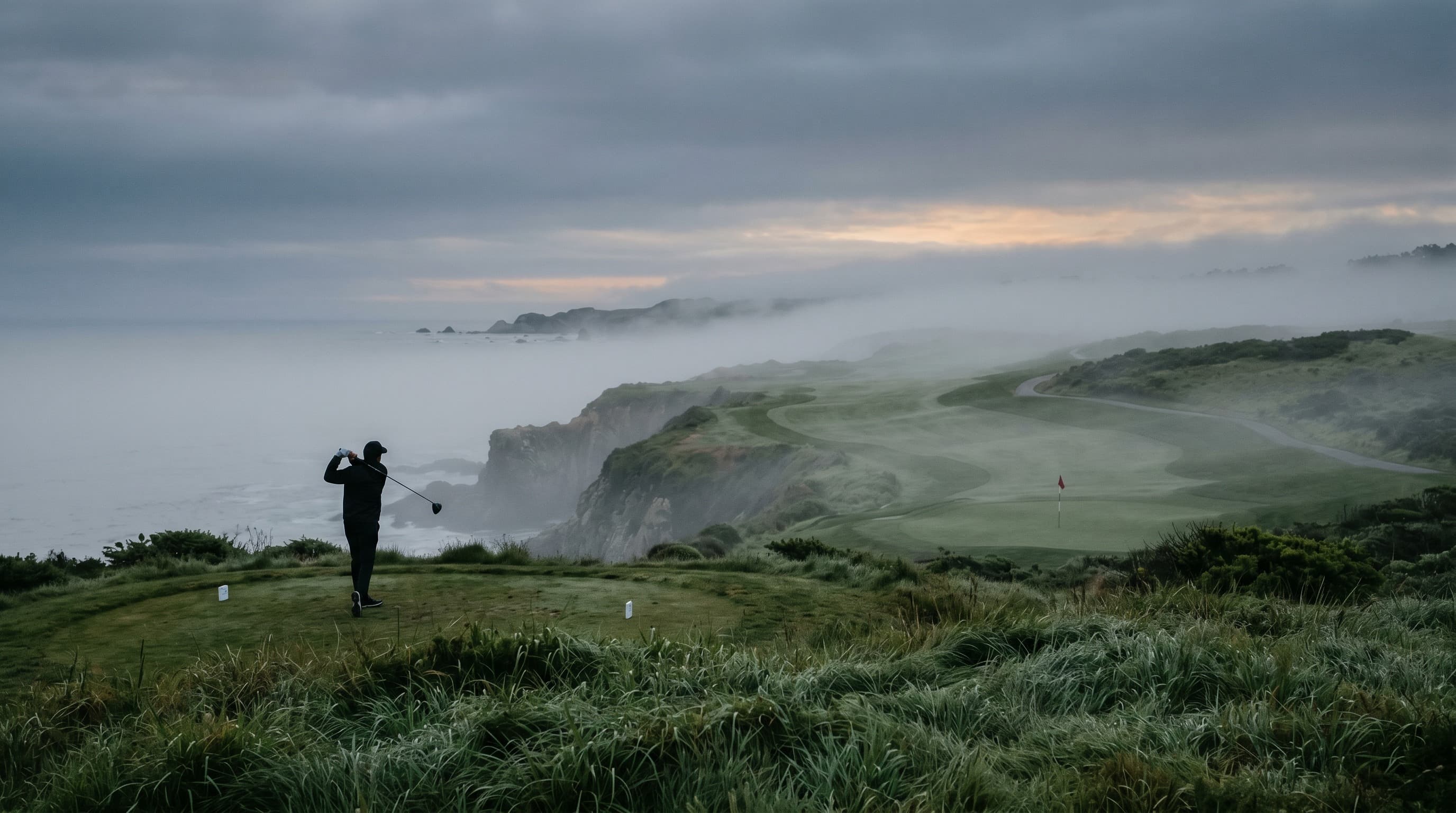
Reading Coastal Wind: How the Marine Layer Reshapes Pebble Beach, Bandon, and the Pacific Coast Game
Coastal golf does not play by inland rules. The marine layer suppresses wind in the morning, then releases it through midday in a thermal cycle that turns a calm 7am tee into a 22mph back nine. Here is the meteorology behind the pattern, the G-Score data that confirms it across the Pacific coast, and the morning workflow that turns the marine layer from a confusion into a competitive advantage.
Read Story
How to Read a G-Score: The 0–100 Golf Playability Number, Decoded
A G-Score on this site is a single 0–100 number that tells you whether today is worth tee-up. Here is exactly what each band means, what drives the calculation, and how to use it to plan a round you will actually score on.
Read StoryMinSu Kim
Founder & Golf Data Analyst
MinSu is a data analyst and golfer with 10+ years on the course. He built Golf Weather Score to answer one question: is today a good day to play? He combines weather data, course intelligence, and the proprietary G-Score algorithm to help golfers make smarter decisions.
Every Friday Morning
When Berkeley Country Club plays best next weekend.
Friday 6am ET: peak G-Score windows for Berkeley Country Club, wind direction by hour, and one gear call. Three minutes to read, save you the round.
One email a week. Unsubscribe in one click.
The Caddie's Oracle
Draw your luck before the tee off