
Caddie's Gear Advisor
Curated for today's 93°F · Clear
Ultralight Distance Drivers
Maximum carry in hot, low-drag conditions
UV Protection Apparel
UPF 50+ cooling fabrics for peak-sun rounds
Precision Rangefinders
Slope-adjusted yardage in any condition
Hydration & Cooling
Insulated bottles and cooling towels
Your Golf Trip, Handled
The Ultimate Golf Trip Planner
Everything you need to play Bethel Island Golf Course — from booking your flight to checking in course-side.
Course-Side Stays
Luxury hotels, resorts, and stay-and-play packages just minutes from the first tee.
Flights
Compare fares across 700+ airlines for the best route to your tee time.
SUV Rentals for Golf Bags
Spacious vehicles with room for clubs, bags, and your foursome.
Travel Insurance
Coverage for medical, weather delays, and gear at your destination.
Bethel Island Golf Course: Course Intelligence
Signature Setup
Bethel Island sits inside the Sacramento–San Joaquin Delta, a patch of reclaimed land ringed by levees and floating, for the most part, below sea level. The golf course here is a flat public layout, the kind of place where the land itself was farmland before it was fairways. I'll be honest about a limit up front: I haven't found reliable records for the original architect or the exact opening year, and I won't invent one — most small Delta-island courses from the mid-20th century were never formally credited. What I can speak to is the thing that actually governs play out here, which is not the routing but the wind.
This is a walking-friendly, unpretentious course. There is no dramatic elevation, no signature waterfall hole staged for a camera. The signature, if you want one, is the levee line and the way the Delta air comes over it in the afternoon.
Hole-by-Hole Wind & Playing Lines
The dominant wind in the Delta is the afternoon sea breeze — air pulled inland from San Francisco Bay through the only sea-level gap in California's Coast Range. It arrives from the west to west-southwest and it is reliable, not occasional.
- The hardest par-4 (the #1-handicap hole): On a WSW afternoon it plays dead into the breeze. I stood on this approach one June afternoon, around 2 p.m., breeze steady at maybe 18–20 mph, and my normal 150-yard 8-iron came up a full 20 yards short. Plan on one-to-two extra clubs after lunch and aim to keep the ball flighted low.
- A downwind par-4 or par-5 running roughly east: The same breeze is now a gift. Tee shots that carry 230 in still air will run out well past that on the firm summer turf. The danger flips — you can run through a fairway or over a green you'd never reach in the morning.
- A cross-wind par-3: The breeze quarters across the green. I play half a club more and start the ball into the wind rather than fighting it — a held shot here is worth two pars over a round.
Green & Fairway Characteristics
The greens are small, mostly flat, and honest — there's little of the wild contouring you'd find on a modern resort build. In summer they run firm and mid-9s on the Stimpmeter by feel, which means a downwind approach releases hard and an into-the-wind approach checks. Because the whole property sits below sea level behind levees, drainage is the quiet variable: after a wet Delta winter the fairways hold moisture and play long and soft, killing the summer roll entirely. Front-nine to back-nine yardage difference is modest; this is not a course that beats you with length. It beats you with air.
Seasonal Weather Pattern
Delta summers are hot and dry — inland highs frequently hit the low-to-mid 90s°F in July and August, occasionally pushing 100°F, but the afternoon breeze keeps it more playable than the same temperature would feel in, say, Fresno. Spring and fall are the prime windows: 70s°F, lighter morning air. The Delta's signature winter hazard is tule fog — dense, ground-hugging fog that can drop visibility to a few hundred feet on December and January mornings and delay your tee time outright. Rain concentrates November through March; summer is effectively bone-dry.
Local Play Tips
The single most useful local read: treat the clock as a club selection input. A 7:30 a.m. tee time and a 1:30 p.m. tee time on the same calm-looking day are two different golf courses here, because the breeze switches on in the early afternoon. Locals who walk this course chase the morning window not only for the cooler temperature but because the ball flies true before the Delta air loads up. If you're driving in from the Bay Area, also build in a fog buffer in winter — the causeway and island approach roads fog before the course does.
Pre-Round Weather Workflow
Use the 7-day G-Score and windExposure read before you book:
- Check the afternoon wind forecast, not just the morning. A 9 a.m. that shows 6 mph and a 2 p.m. that shows 18 mph WSW means: book the early slot.
- Match tee time to the breeze curve. G-Score will typically sit 8–12 points higher in the morning window here than mid-afternoon — that gap is almost entirely wind.
- In winter, read fog/visibility before temperature. Tule fog, not cold, is what delays Delta rounds.
- In summer, hydrate for low-90s°F heat even with the breeze — the dry air masks how much you're losing.
- After heavy winter rain, expect soft, long-playing fairways and recalibrate your roll-out assumptions before the first tee.
Related Reading
Before you tee off at Bethel Island Golf Course
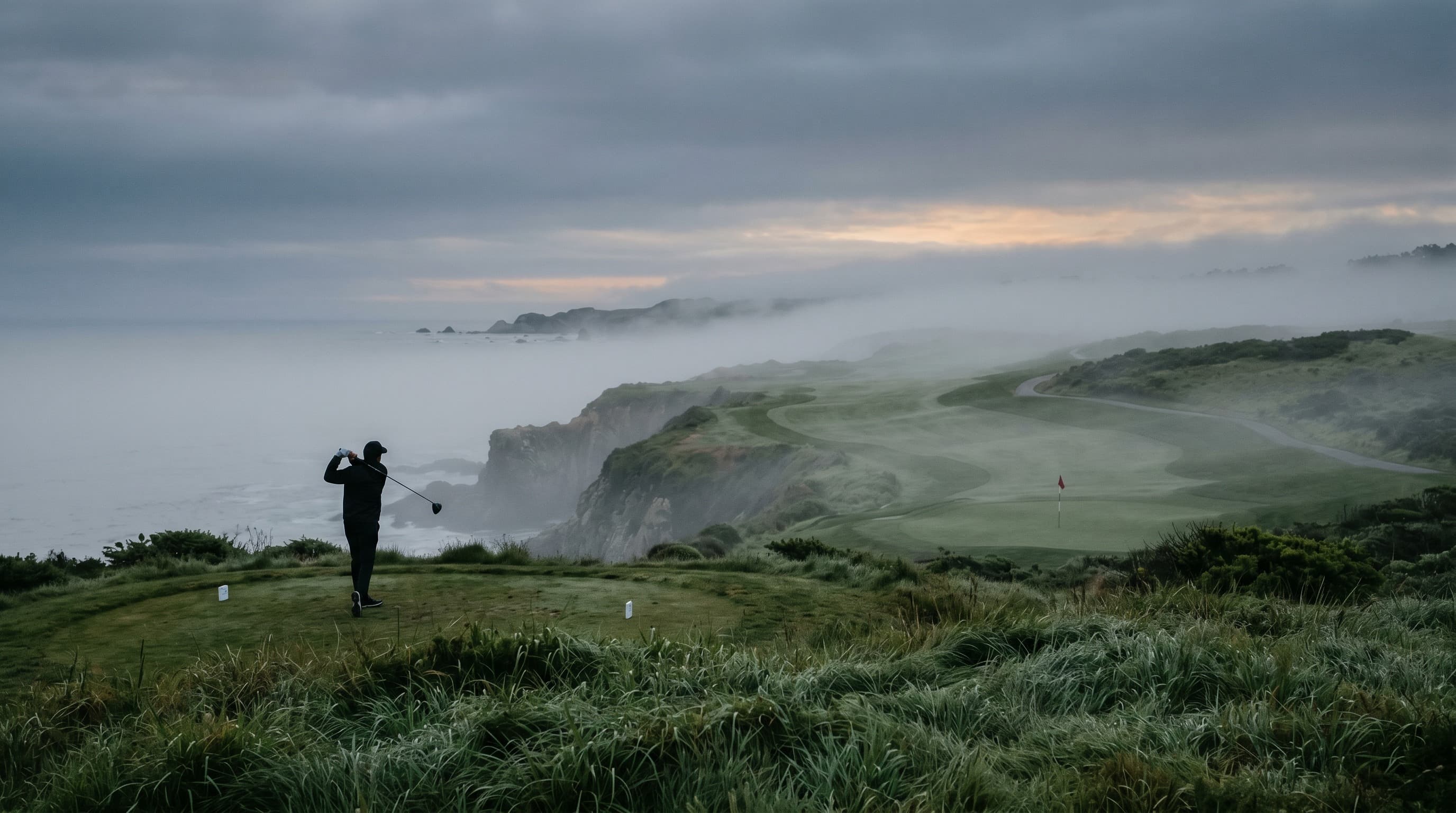
Reading Coastal Wind: How the Marine Layer Reshapes Pebble Beach, Bandon, and the Pacific Coast Game
Coastal golf does not play by inland rules. The marine layer suppresses wind in the morning, then releases it through midday in a thermal cycle that turns a calm 7am tee into a 22mph back nine. Here is the meteorology behind the pattern, the G-Score data that confirms it across the Pacific coast, and the morning workflow that turns the marine layer from a confusion into a competitive advantage.
Read Story
How to Read a G-Score: The 0–100 Golf Playability Number, Decoded
A G-Score on this site is a single 0–100 number that tells you whether today is worth tee-up. Here is exactly what each band means, what drives the calculation, and how to use it to plan a round you will actually score on.
Read StoryMinSu Kim
Founder & Golf Data Analyst
MinSu is a data analyst and golfer with 10+ years on the course. He built Golf Weather Score to answer one question: is today a good day to play? He combines weather data, course intelligence, and the proprietary G-Score algorithm to help golfers make smarter decisions.
Every Friday Morning
When Bethel Island Golf Course plays best next weekend.
Friday 6am ET: peak G-Score windows for Bethel Island Golf Course, wind direction by hour, and one gear call. Three minutes to read, save you the round.
One email a week. Unsubscribe in one click.
The Caddie's Oracle
Draw your luck before the tee off