
Caddie's Gear Advisor
Curated for today's 82°F · Clear
Tour-Level Drivers
Engineered for maximum distance and forgiveness
Laser Rangefinders
Pin-seeking technology for precision approaches
Premium Golf Balls
Tour-caliber spin and distance performance
Performance Sunglasses
Polarized lenses optimized for reading greens
Your Golf Trip, Handled
The Ultimate Golf Trip Planner
Everything you need to play Bigshot Golf — from booking your flight to checking in course-side.
Course-Side Stays
Luxury hotels, resorts, and stay-and-play packages just minutes from the first tee.
Flights
Compare fares across 700+ airlines for the best route to your tee time.
SUV Rentals for Golf Bags
Spacious vehicles with room for clubs, bags, and your foursome.
Travel Insurance
Coverage for medical, weather delays, and gear at your destination.
Bigshot Golf: Course Intelligence
Signature Setup
Let me be straight before anything else: BigShots Golf is not a golf course, and I haven't stood in its bays — so I'm not going to fake a hole-by-hole memory of a layout that doesn't exist. What it actually is, per the venue's own listings, is a driving-range entertainment complex in North Fort Worth at 15700 Golf View Dr (76177, also tagged Roanoke 76262): 56 outdoor tee boxes stacked over a flat outfield, virtual range games, light-up smart targets, a putting course, mini golf, and a full kitchen and bar. Think Topgolf's category, not Pebble Beach's. The North Fort Worth site was announced for development back in 2021. That changes what's worth telling you. There's no designer, no slope rating, no signature par-3 over water — but there is wide-open North Texas sky over every bay, and in this region the wind and the heat decide whether your range session is fun or a fight.
TL;DR: BigShots Golf Fort Worth is a 56-bay driving-range entertainment venue (games, targets, food/drink), not an 18-hole course. So skip the scorecard talk — what matters here is open-air weather. Expect a steady 10–12 mph south wind, brutal summer heat, and your best sessions in the evening or in fall.
Hole-by-Hole Wind & Playing Lines
There are no holes, so here's the honest equivalent: how the prevailing wind rewrites your target-game shots on an exposed Fort Worth range deck.
- Into the standard south/southeast Gulf breeze (10–12 mph most days): the smart-target games reward carry accuracy, and a high wedge gets eaten alive. A flighted-down mid-iron that you'd normally hit 150 will hold its line far better than a spinny lob you let climb into the wind.
- On a gusty spring afternoon (20–30 mph): stop chasing the long targets. The wind in March–May swirls and surges, and trying to flag a 200-yard target into it just sprays your dispersion. Play the closer targets and protect your accuracy score.
- Behind a winter "blue norther" (sharp NW shift): a cold front can flip the wind hard to the north and drop the temperature 20–30°F in an hour. Your downwind targets suddenly play short — club down and don't overpower it.
The portable lesson, and the reason a weather site cares about a range venue at all: on an open deck the wind is the whole defense. Read it before your first ball, not after three wasted bays.
Green & Fairway Characteristics
This is where BigShots departs hardest from a real course. There are no bentgrass greens and no fairways — you hit from level, engineered turf or mat tee boxes into a flat outfield dotted with electronic targets, and there's a separate putting course plus mini golf for the short game. Because the playing surface is manufactured and dead level, none of the usual course variables apply: no grain, no firmness swings, no slope feeding putts toward a creek. That actually simplifies the analysis. With the ground taken out of the equation, the only thing standing between you and a clean target game is the air above it — wind speed, wind direction, and Texas heat. Everything in this article points back to that single truth.
Seasonal Weather Pattern
North Fort Worth sits in a humid-subtropical, wind-exposed stretch of North Texas, and the seasons here are not subtle. Spring (Mar–May) is the windiest and most volatile window — sustained 15–20 mph southerlies, gusts well past 25–30, and the region's severe-storm season, which can shut an outdoor deck outright. Summer (Jun–Aug) is the headline: highs routinely in the upper-90s°F and pushing 100+, with humidity that makes the midday bays genuinely punishing. Fall (Sep–Oct) is the sweet spot — the heat breaks, the wind settles, and an evening session is close to perfect. Winter (Dec–Feb) is mild day-to-day but punctuated by blue-norther cold fronts that slam the wind north and crater the temperature fast. I've played enough North Texas golf in July to say the heat there is its own hazard — and a covered, fan-cooled bay handles it better than an exposed fairway ever could, which is one genuine edge a venue like this has.
Local Play Tips
The single best lever you control here is the clock. The venue runs 11 a.m.–10 p.m. Sunday–Thursday and 11 a.m.–11 p.m. Friday and Saturday, and those hours map almost perfectly onto the weather. The 11 a.m. open in a Texas summer drops you into the hottest, brightest, most wind-blown part of the day — the bays bake and the south wind is up. Wait for the back half of the evening: the temperature falls, the Gulf breeze typically eases after sundown, and on Friday/Saturday you also catch the nightly laser show and the light-up target effects, which is the actual point of a place like this. If you're here to genuinely groove ball-striking rather than party, a cool fall evening is the technical ideal; if you're here for the entertainment, late weekend is the move.
Pre-Round Weather Workflow
Use golfweatherscore's 7-day G-Score and windExposure the same way you would for a course — just read them for an open-air range instead of a layout:
- A few days out: scan the G-Score curve and pick your evening. A high G-Score on a fall night is the closest thing to a perfect session this venue offers; a spring afternoon dropping toward a low score usually means wind and possible storms.
- The day before: check wind direction and speed. A 10–12 mph south flow is normal and manageable; a windExposure reading flashing 20+ mph gusts means downgrade your expectations on the long targets and plan around accuracy.
- Session day: in summer, treat heat as the primary hazard — hydrate, grab a shaded/fan-cooled bay, and lean toward the later, cooler hours. In winter, watch for a front on the timeline; if a blue norther is due, the wind and temperature can swing hard mid-visit, so go earlier in the warm air before it flips.
Related Reading
Before you tee off at Bigshot Golf
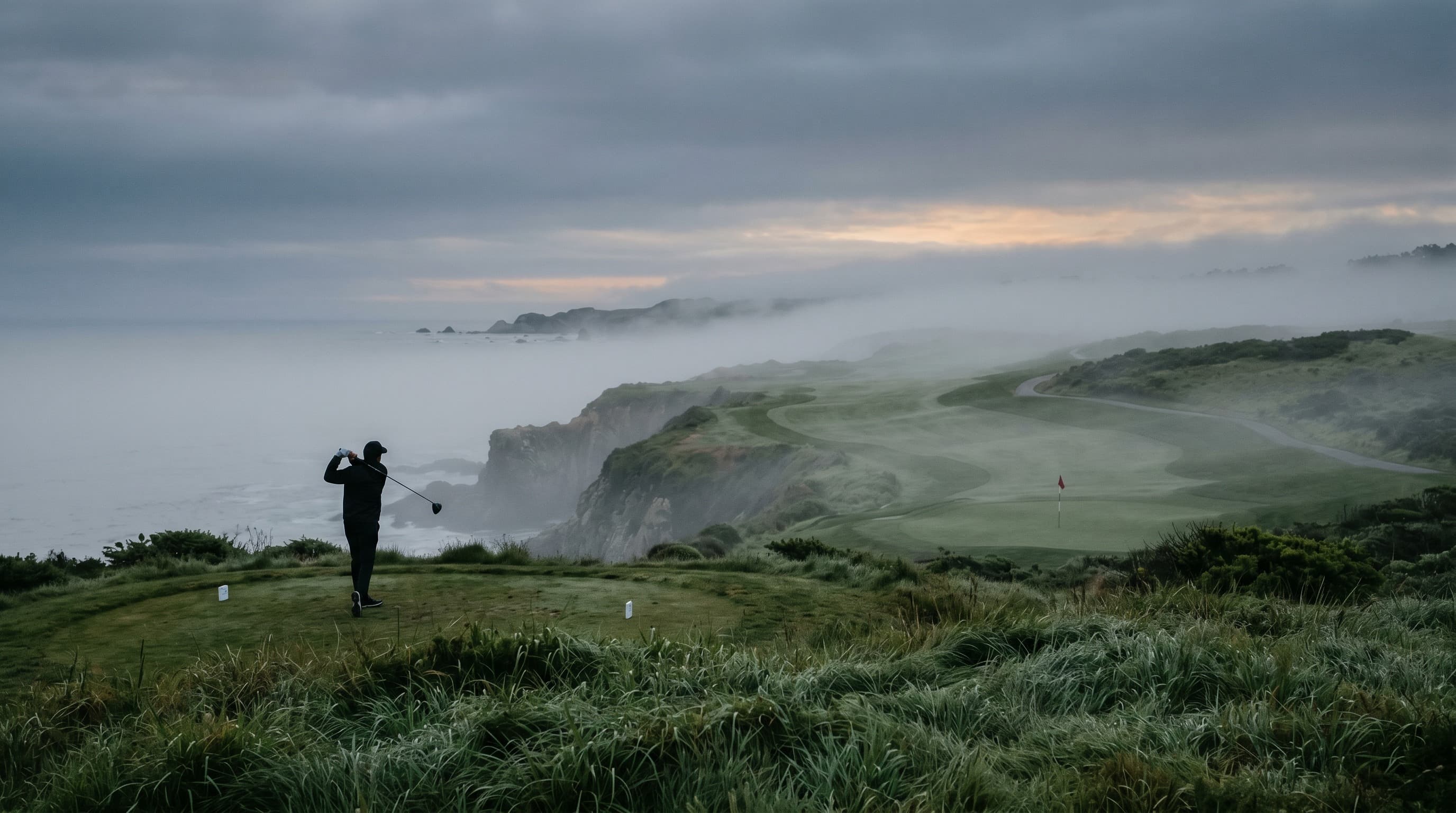
Reading Coastal Wind: How the Marine Layer Reshapes Pebble Beach, Bandon, and the Pacific Coast Game
Coastal golf does not play by inland rules. The marine layer suppresses wind in the morning, then releases it through midday in a thermal cycle that turns a calm 7am tee into a 22mph back nine. Here is the meteorology behind the pattern, the G-Score data that confirms it across the Pacific coast, and the morning workflow that turns the marine layer from a confusion into a competitive advantage.
Read Story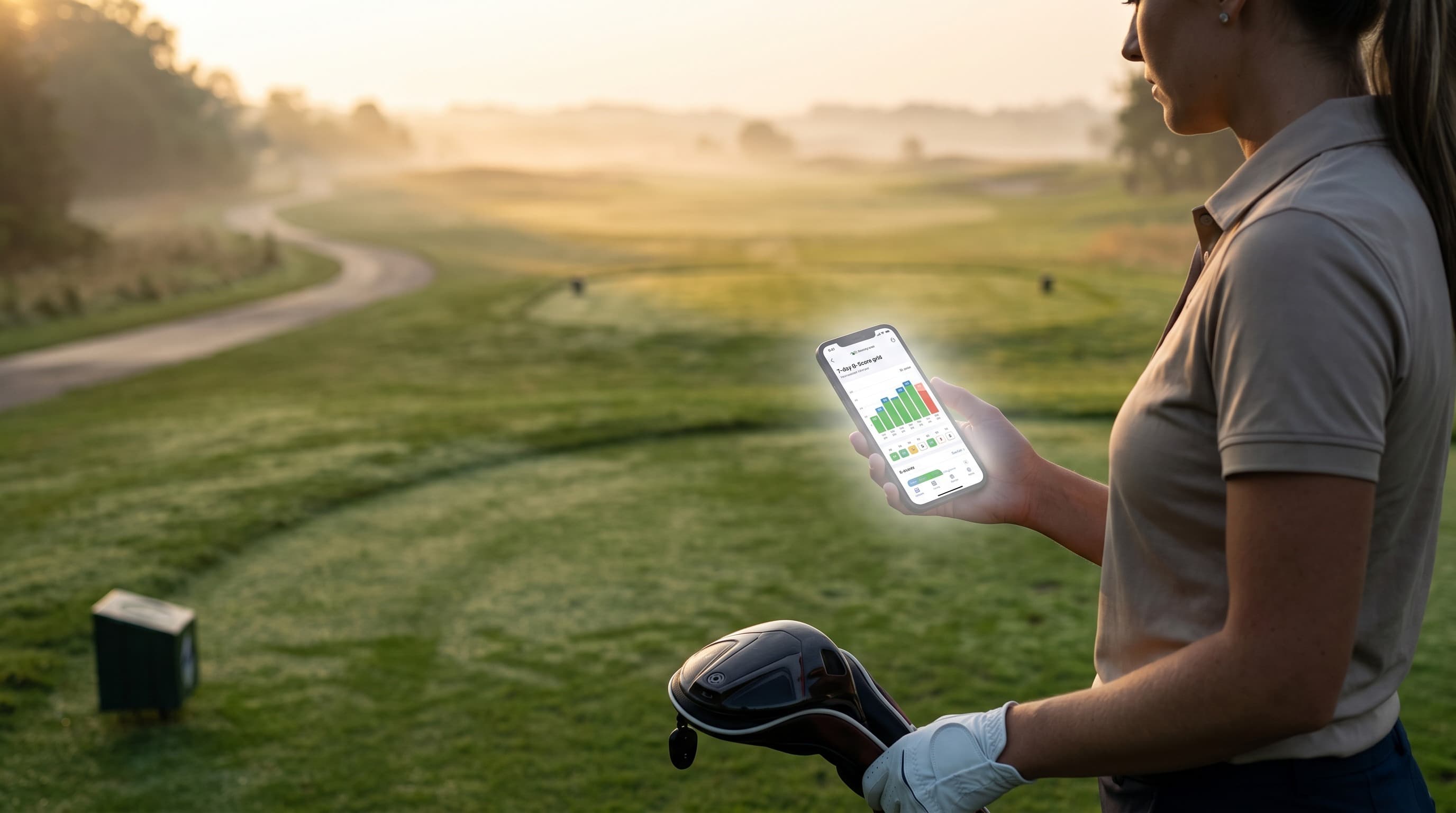
Saturday Morning Tee Time Decision Tree: How to Pick the Right Window in Six Minutes
You have Saturday open. Three courses on the shortlist, the weather is mixed, and your tee-time window is 6am to 4pm. Here is the six-minute decision tree we use to pick the right round, the right course, and the right hour — without overthinking.
Read StoryMinSu Kim
Founder & Golf Data Analyst
MinSu is a data analyst and golfer with 10+ years on the course. He built Golf Weather Score to answer one question: is today a good day to play? He combines weather data, course intelligence, and the proprietary G-Score algorithm to help golfers make smarter decisions.
Every Friday Morning
When Bigshot Golf plays best next weekend.
Friday 6am ET: peak G-Score windows for Bigshot Golf, wind direction by hour, and one gear call. Three minutes to read, save you the round.
One email a week. Unsubscribe in one click.
The Caddie's Oracle
Draw your luck before the tee off