
Caddie's Gear Advisor
Curated for today's 98°F · Clear
Ultralight Distance Drivers
Maximum carry in hot, low-drag conditions
UV Protection Apparel
UPF 50+ cooling fabrics for peak-sun rounds
Precision Rangefinders
Slope-adjusted yardage in any condition
Hydration & Cooling
Insulated bottles and cooling towels
Your Golf Trip, Handled
The Ultimate Golf Trip Planner
Everything you need to play Bing Maloney Golf Club — from booking your flight to checking in course-side.
Course-Side Stays
Luxury hotels, resorts, and stay-and-play packages just minutes from the first tee.
Flights
Compare fares across 700+ airlines for the best route to your tee time.
SUV Rentals for Golf Bags
Spacious vehicles with room for clubs, bags, and your foursome.
Travel Insurance
Coverage for medical, weather delays, and gear at your destination.
Bing Maloney Golf Club: Course Intelligence
TL;DR
Bing Maloney is a flat, walkable 1952 Sacramento muni — par 72, 6,569 yards from the blues, slope 106. It is not hard on paper. What decides your score here is timing: the Delta breeze. Play before late morning and the whole 18 is gettable; tee off at 2 p.m. in July and the back nine fights you.
Signature Setup
Bing Maloney Golf Course opened in 1952 on a 125-acre parcel in south Sacramento off Freeport Boulevard, built for about $250,000 and named for John B. "Bing" Maloney, the city Recreation Department superintendent who lobbied for an 18-hole municipal track back in 1947. The designer was Michael J. McDonaugh — listed on the scorecard simply as "Mac McDonagh" — who had worked construction crews on Cypress Point, Pasatiempo, and Alister MacKenzie's Haggin Oaks across town. The layout is par 72, 6,569 yards from the blue tees, rated 69.7 with a slope of just 106. An executive nine was added in 1988 and a covered range in 2017. The signature test is the 12th, the #1 handicap hole, a 430-yard par-4 that is the only hole on the property that genuinely asks for two good swings.
Hole-by-Hole Wind & Playing Lines
The three hardest holes by handicap are the 12th (430y par-4, HCP 1), the 1st (393y par-4, HCP 2), and the 10th (393y par-4, HCP 3). All three are mid-length two-shotters that are trivial in dead air and stretchy once the Sacramento Delta breeze fills in from the WSW — typically after 11 a.m. in summer, peaking mid-afternoon.
- Hole 12 (430y, par-4): the longest two-shotter. In a calm morning it is a driver and a 7-iron. Into a 12–15 mph afternoon breeze your 150-yard approach plays closer to 175; club up a full stick and aim left-center to hold the green.
- Hole 1 (393y, par-4): a cold-handed opener. I always treat the first as a "warm-up par" — bogey here in the breeze is not a disaster.
- Hole 11 (513y, par-5, HCP 5): reachable in the morning calm, a clear three-shot hole once the breeze is up. Lay back to a full wedge rather than chasing it.
I have not played Bing Maloney in a strong cross-Delta wind off the flat back nine, so I won't claim exact compass lines hole by hole — but the breeze direction (WSW) and its timing are consistent, and that alone reshapes the scorecard.
Green & Fairway Characteristics
The fairways are Bermuda and the greens are bentgrass — a classic Northern California muni combination. Lies are flat; this is valley-floor parkland with mature trees lining the corridors rather than elevation or forced carries. The front nine runs 3,313 yards (par 36) and the back 3,256 (par 36), so the two sides are nearly identical in length. There is little rough penalty and the greens roll medium-paced and true in the morning; by hot afternoons they firm up and the Bermuda fairways give you extra roll, which is why the breeze — not the turf — is the variable that matters.
Seasonal Weather Pattern
Sacramento summers are hot and bone-dry: July and August highs sit in the low-to-mid 90s°F and routinely touch 100°F+. But the saving grace is the Delta breeze — marine air pulled up from the Carquinez Strait and the Sacramento–San Joaquin Delta that arrives from the WSW in the afternoon and drops evening temps fast. Mornings are calm and clear. Winters are mild (highs in the mid-50s°F) but bring Tule fog in December and January that can delay the first tee times by an hour or more, plus the season's rain. Spring and fall are the sweet spots: warm, low wind, firm turf.
Local Play Tips
The single best edge here is the tee sheet, not the swing. The first two hours of the day at Bing Maloney are dead calm — I'd estimate a 2 p.m. summer round plays 4–6 effective strokes harder than the same loop at 7 a.m., purely from the Delta breeze. In winter, call ahead about Tule fog before driving over; the staff will tell you if the front is sitting on the property. Walk it — the course is flat enough that a walking round here is genuinely faster and easier on the legs than riding most hilly tracks.
Pre-Round Weather Workflow
Use the 7-day G-Score the same way every round here: scan it for the days the afternoon wind stays under ~8 mph and grab the earliest tee time on the calmest day. Check the windExposure readout the night before — Bing Maloney's open, flat layout means there's no tree-line shelter once the Delta breeze is up, so a windy afternoon hits every approach equally. If the G-Score is high in the morning and drops by afternoon (common in winter fog burn-off), flip your usual logic and play later. The rule for this course: chase the calm window, not the temperature.
Related Reading
Before you tee off at Bing Maloney Golf Club

Reading Coastal Wind: How the Marine Layer Reshapes Pebble Beach, Bandon, and the Pacific Coast Game
Coastal golf does not play by inland rules. The marine layer suppresses wind in the morning, then releases it through midday in a thermal cycle that turns a calm 7am tee into a 22mph back nine. Here is the meteorology behind the pattern, the G-Score data that confirms it across the Pacific coast, and the morning workflow that turns the marine layer from a confusion into a competitive advantage.
Read Story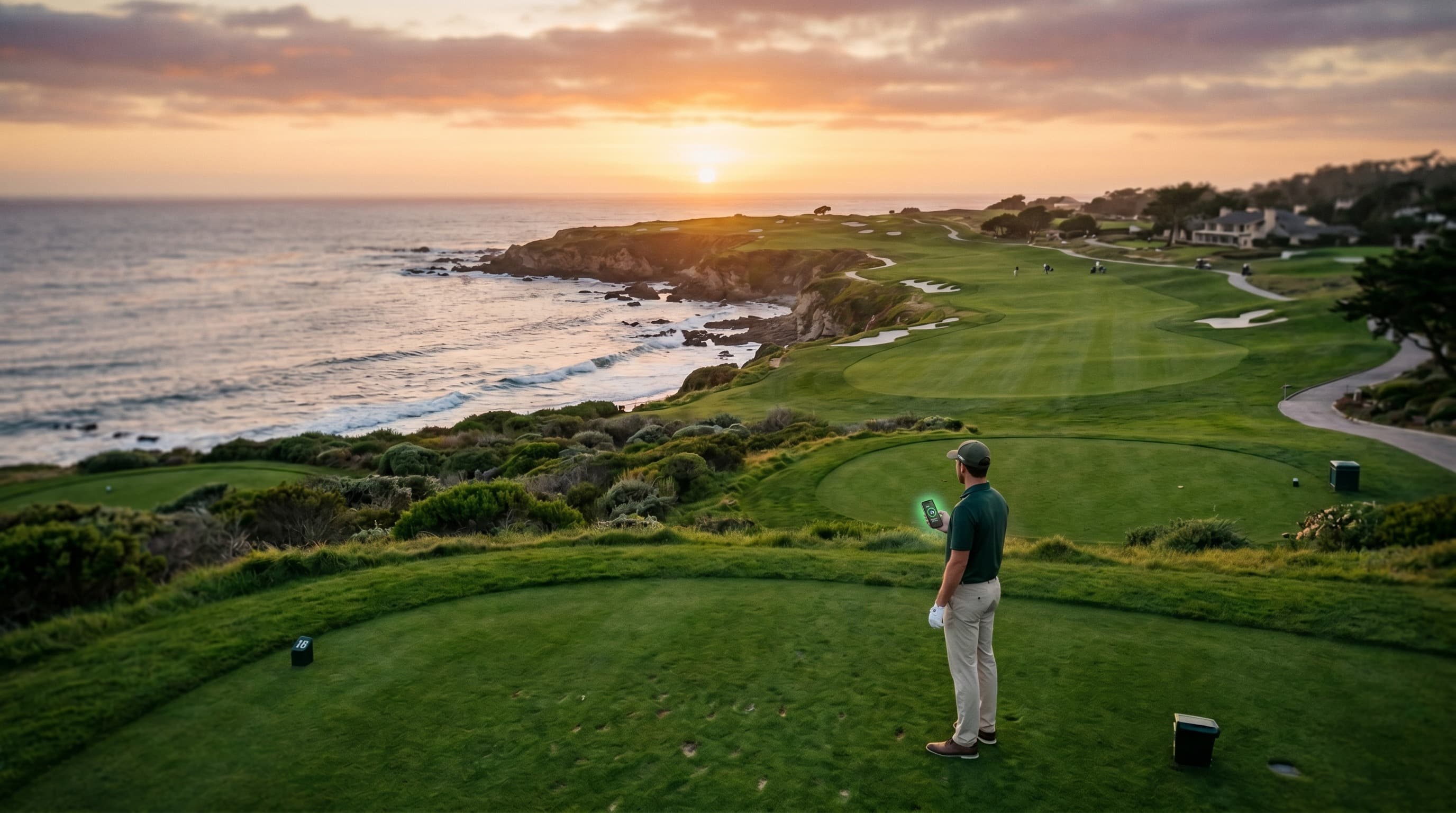
How to Read a G-Score: The 0–100 Golf Playability Number, Decoded
A G-Score on this site is a single 0–100 number that tells you whether today is worth tee-up. Here is exactly what each band means, what drives the calculation, and how to use it to plan a round you will actually score on.
Read StoryMinSu Kim
Founder & Golf Data Analyst
MinSu is a data analyst and golfer with 10+ years on the course. He built Golf Weather Score to answer one question: is today a good day to play? He combines weather data, course intelligence, and the proprietary G-Score algorithm to help golfers make smarter decisions.
Every Friday Morning
When Bing Maloney Golf Club plays best next weekend.
Friday 6am ET: peak G-Score windows for Bing Maloney Golf Club, wind direction by hour, and one gear call. Three minutes to read, save you the round.
One email a week. Unsubscribe in one click.
The Caddie's Oracle
Draw your luck before the tee off