
Caddie's Gear Advisor
Curated for today's 95°F · Clear
Ultralight Distance Drivers
Maximum carry in hot, low-drag conditions
UV Protection Apparel
UPF 50+ cooling fabrics for peak-sun rounds
Precision Rangefinders
Slope-adjusted yardage in any condition
Hydration & Cooling
Insulated bottles and cooling towels
Your Golf Trip, Handled
The Ultimate Golf Trip Planner
Everything you need to play Birch Hills Golf Course — from booking your flight to checking in course-side.
Course-Side Stays
Luxury hotels, resorts, and stay-and-play packages just minutes from the first tee.
Flights
Compare fares across 700+ airlines for the best route to your tee time.
SUV Rentals for Golf Bags
Spacious vehicles with room for clubs, bags, and your foursome.
Travel Insurance
Coverage for medical, weather delays, and gear at your destination.
Birch Hills Golf Course: Course Intelligence
Signature Setup
The first time I drove up to Birch Hills it was a June morning, the marine layer still sitting low over the Brea hills and the thermometer in my car reading 60°F at 7:40 a.m. — typical Orange County "June Gloom." Honest framing first: this is a par-62 executive course tucked into the hills of Brea, about twenty minutes up the 57 from where I live in Irvine. It is short by design — a place for tightening irons and short game, not for bombing driver. I could not confirm one named designer or a firm opening year, and I won't invent either; what I can speak to with confidence is the Southern California weather that governs how a course like this actually plays. On a short track, the wind and the marine layer matter more, not less, because every approach is a scoring iron and small misjudgments compound fast.
TL;DR: Short par-62 executive course in Brea, Orange County. The marine layer and the afternoon onshore breeze, not raw length, decide your score. Play it early — soft, calm morning turf scores well; firm, windy afternoons punish thin iron play.
Hole-by-Hole Wind & Playing Lines
I won't fake a stroke-index card for a course I've walked but not catalogued hole-by-hole, so here's how an executive layout in the Brea hills plays by wind type:
- Par-3s toward the open hillside into the afternoon sea breeze: Orange County's prevailing wind is a southwest-to-west onshore flow that builds through the afternoon, commonly 10–15 mph by 2 p.m. A 165-yard one-shotter that's a smooth 7-iron at 8 a.m. becomes a hard 5-iron after lunch. Club up two, flight it low, and aim center-green — a high, soft shot balloons and gets shoved long-and-right.
- The longer two-shotters into the same SW wind: these are the real card-wreckers on a short course. The temptation on a par-62 is to feel like you should be wedging in; into a stiffening sea breeze you're not. Take the extra club honestly and play for the fat of the green.
- Downwind/down-the-slope holes: when you turn back with the breeze and the Brea slope helping, the ball runs out hard on firm afternoon turf. Land it short and let it release rather than flying everything at the flag.
The carryover skill here is reading the time of day as much as the wind arrow — onshore Orange County wind is a clock, not a coin flip.
Green & Fairway Characteristics
This plays as classic warm-season Southern California turf: kikuyu and Bermuda through the fairways, greens that read medium-paced. The behavior shift across a single morning is the thing to plan around. Early, while the marine layer holds, the fairways are damp and grabby — kikuyu in particular sits up and dies the roll, so you get little release and approaches land soft. As the layer burns off and the surface dries, usually by late morning, the same fairway firms and the same shot releases five to ten yards more. Greens follow the same arc: medium and receptive at first light, quicker and firmer by mid-afternoon as the sun and the breeze dry them. On an executive course where you're hitting short irons into most greens, that softening-to-firming swing changes your landing target more than any pin position does. Roll a few on the practice green before you tee off and recalibrate again at the turn.
Seasonal Weather Pattern
Brea sits in a coastal-influenced Mediterranean climate, and the seasonal pattern is specific enough to plan around. Late spring into mid-summer (May–July) is "May Gray / June Gloom" — thick morning marine layer, 58–64°F at the early tee times, often not clearing until 9–11 a.m., then mild upper-70s afternoons with a building onshore breeze. Late summer (Aug–Sep) runs warmer and clearer, mid-80s to low-90s by afternoon, with the marine layer thinner. Fall (Oct–Nov) brings the wildcard: Santa Ana winds, a hot, dry offshore (NE-to-E) flow that completely reverses the normal wind direction, drops humidity into the teens, and firms the course up dramatically — your downwind holes become headwind holes and vice versa, so don't play fall off a summer memory. Winter (Dec–Feb) is the green, cooler stretch, 55–68°F, with the region's rain arriving in short bursts that soften everything. I lean on NOAA Southern California historicals for the Santa Ana stretch rather than guessing.
Local Play Tips
The mistake a visiting golfer makes here is treating a "short, easy executive course" as a place to switch the brain off. On a 4,000-ish-yard par-62 your scoring is almost entirely scoring-iron accuracy and short game, and the Orange County weather attacks exactly those clubs. Two specific, locally-earned reads: first, the marine layer is your friend — the soft, calm 7–9 a.m. window in late spring and early summer is by far the best scoring condition, before the onshore breeze stands up. Get the early tee time. Second, respect Santa Ana days in the fall: when that dry NE wind is blowing, the course firms out, the greens get slick, and the wind on every hole is flipped from what you'd expect — I've watched players club a downwind par-3 normally and air it twenty yards over because the Santa Ana had reversed the flow.
Pre-Round Weather Workflow
Read golfweatherscore's 7-day G-Score and windExposure as planning tools for a short Orange County executive course:
- Three days out: scan the G-Score curve for the calm, marine-layer mornings versus the firm, breezy afternoons. On a course this short, the difference between those two windows is the difference between a comfortable round and fighting your scoring irons all day.
- The evening before: check the wind direction. A normal SW onshore flow means afternoon par-3s play long and the back nine into the breeze is the test. A NE/E reading is a Santa Ana — expect firm, fast surfaces and a fully reversed wind on every hole.
- Round morning: if windExposure shows light early gusts and your tee time is before 9 a.m., expect soft, grabby kikuyu and receptive greens — be aggressive at the flags while the surfaces are still slow. If you're stuck with an afternoon slot, club up honestly into the onshore breeze and play for the centers of greens rather than chasing pins.
Related Reading
Before you tee off at Birch Hills Golf Course
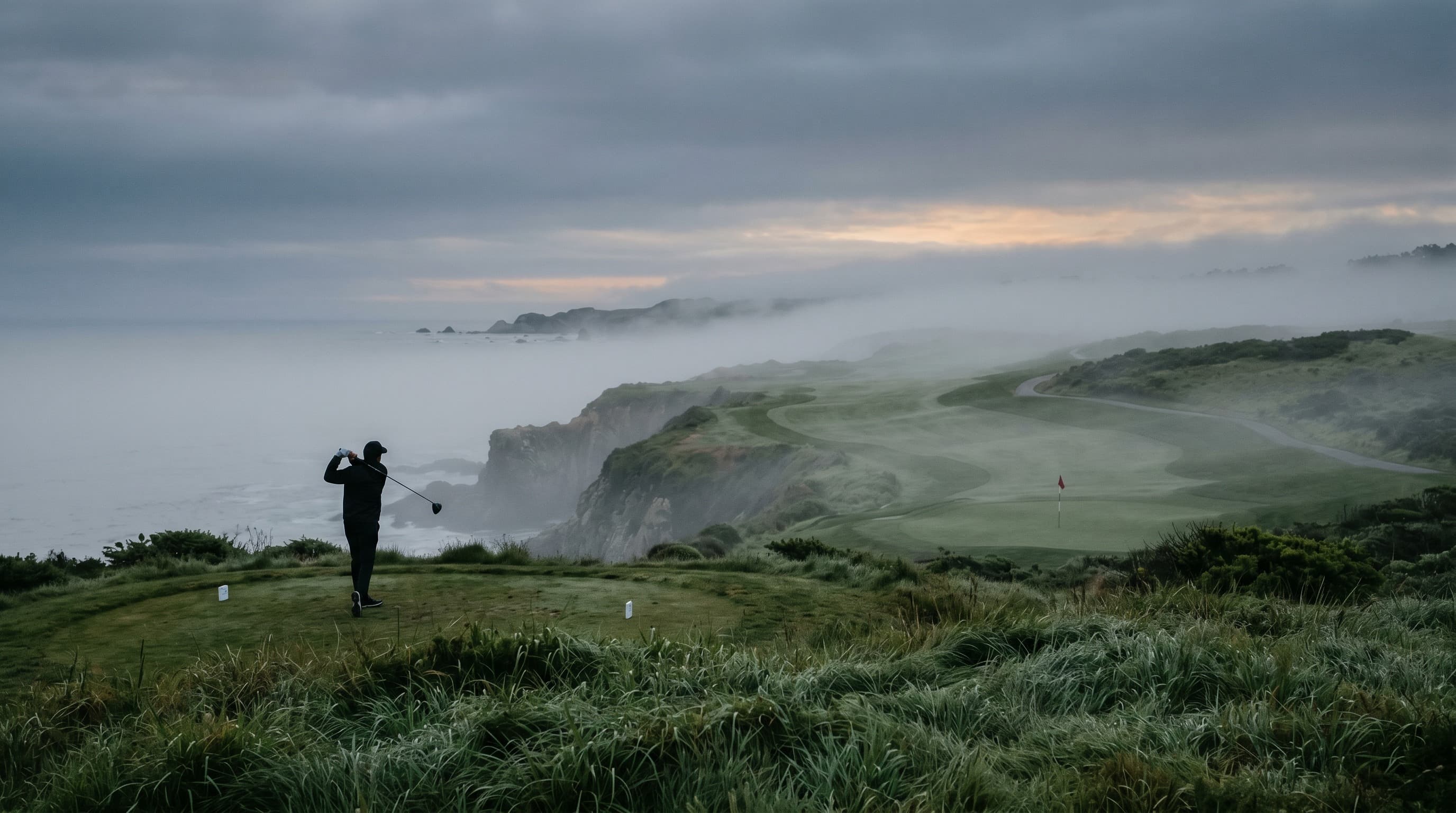
Reading Coastal Wind: How the Marine Layer Reshapes Pebble Beach, Bandon, and the Pacific Coast Game
Coastal golf does not play by inland rules. The marine layer suppresses wind in the morning, then releases it through midday in a thermal cycle that turns a calm 7am tee into a 22mph back nine. Here is the meteorology behind the pattern, the G-Score data that confirms it across the Pacific coast, and the morning workflow that turns the marine layer from a confusion into a competitive advantage.
Read Story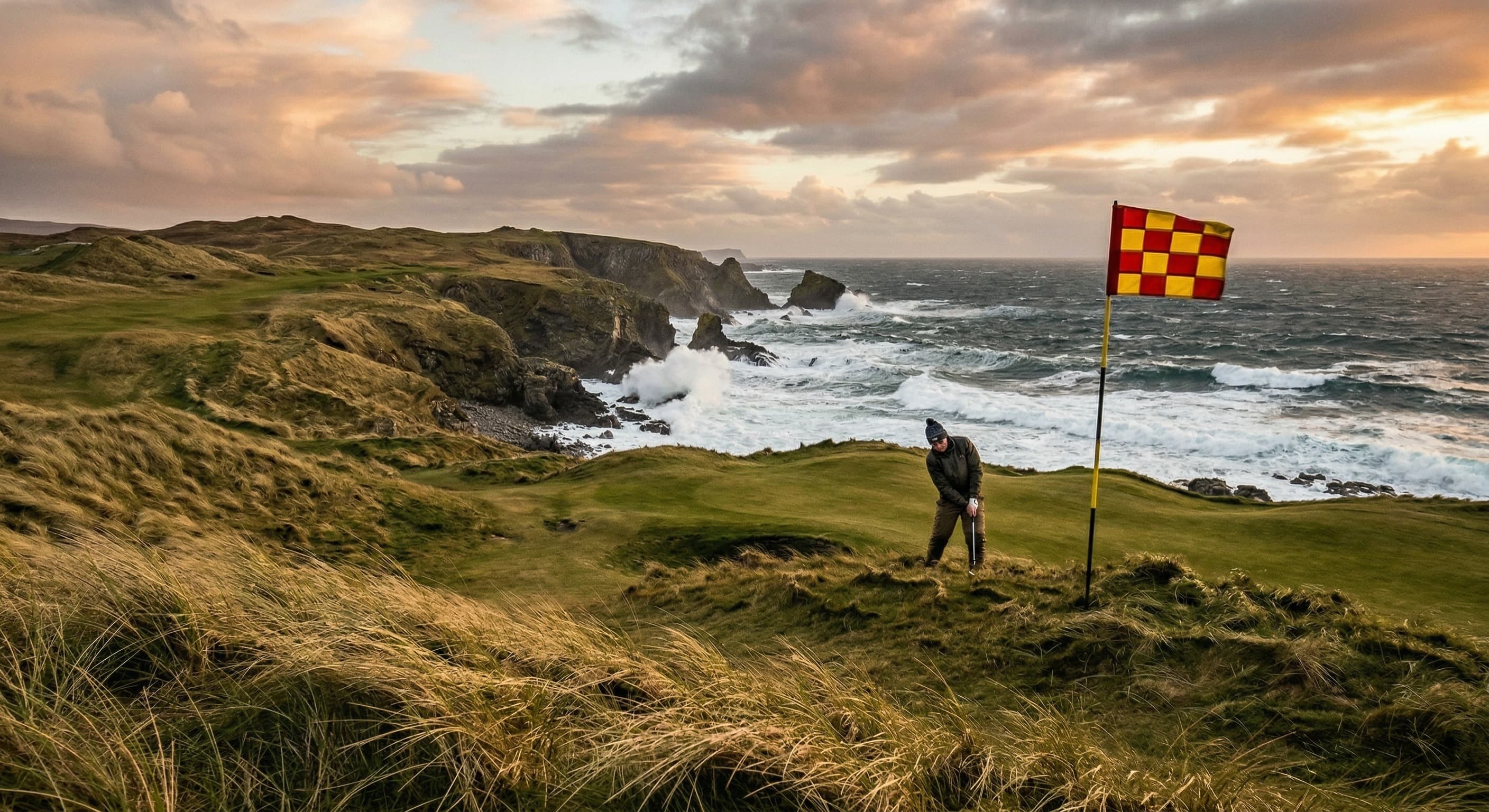
America's 20 Windiest Golf Courses: A G-Score Wind Analysis
We ranked America's 20 windiest golf courses using G-Score wind penalty data. See how coastal gusts and prairie gales reshape playability scores.
Read StoryMinSu Kim
Founder & Golf Data Analyst
MinSu is a data analyst and golfer with 10+ years on the course. He built Golf Weather Score to answer one question: is today a good day to play? He combines weather data, course intelligence, and the proprietary G-Score algorithm to help golfers make smarter decisions.
Every Friday Morning
When Birch Hills Golf Course plays best next weekend.
Friday 6am ET: peak G-Score windows for Birch Hills Golf Course, wind direction by hour, and one gear call. Three minutes to read, save you the round.
One email a week. Unsubscribe in one click.
The Caddie's Oracle
Draw your luck before the tee off