
Caddie's Gear Advisor
Curated for today's 59°F · Clouds
Tour-Level Drivers
Engineered for maximum distance and forgiveness
Laser Rangefinders
Pin-seeking technology for precision approaches
Premium Golf Balls
Tour-caliber spin and distance performance
Performance Sunglasses
Polarized lenses optimized for reading greens
Your Golf Trip, Handled
The Ultimate Golf Trip Planner
Everything you need to play Blackberry Farm Golf Course — from booking your flight to checking in course-side.
Course-Side Stays
Luxury hotels, resorts, and stay-and-play packages just minutes from the first tee.
Flights
Compare fares across 700+ airlines for the best route to your tee time.
SUV Rentals for Golf Bags
Spacious vehicles with room for clubs, bags, and your foursome.
Travel Insurance
Coverage for medical, weather delays, and gear at your destination.
Blackberry Farm Golf Course: Course Intelligence
Signature Setup
I planned a Bay Area swing last August and pulled Blackberry Farm up on the map because it sits right on Stevens Creek in Cupertino, tucked under the foothills west of the Santa Clara Valley. I haven't walked this exact nine myself, so the playing notes below lean on the Cupertino microclimate I do know cold and on the scorecard, not on a card I signed here. What I can state plainly: it's a compact City of Cupertino municipal layout — a 9-hole executive course, short by design, the kind of walkable track you finish in well under two hours. The architect and opening year aren't publicly documented. The creek corridor is the defining feature; water and tree lines, not length, are what protect the number.
Hole-by-Hole Wind & Playing Lines
On a short course the wind matters more, not less — when every approach is a wedge or short iron, a 10 mph breeze swings you a full club. The governing pattern here is the NW down-valley sea breeze that builds through the Santa Clara Valley most summer afternoons.
- The longer par-4 on the card: Into the afternoon NW breeze this plays a full club longer than the yardage. Take the extra club and favor the side away from the creek — a held-off, wind-fighting swing tends to leak toward water, exactly where you can't afford it.
- The creek-side par-3s: Morning, with the marine layer still in, these are dead-calm short irons. By 2 p.m. that same shot needs an extra half-club and a lower flight, because the breeze quarters across the creek and pushes a high wedge long and right.
- The dogleg short-4s: Position over power. Lay back to a comfortable wedge number rather than chasing the corner; the small greens punish a long-side miss far more than a 20-yard-shorter drive ever will.
Green & Fairway Characteristics
The greens are small — the premium is on hitting the right tier and the right side, not on overpowering the hole. Expect a summer stimp in roughly the 8–9 range: honest municipal speed, quick enough that a downhill putt above the hole still gets away from you, but not glassy. Fairways tell two stories by time of day. Early, the Stevens Creek corridor holds moisture and the marine layer keeps everything soft and slow off the deck. Once the fog burns off — usually mid-to-late morning in summer — the turf firms up and you get real run-out, so a mid-morning drive rolls noticeably farther than the same swing at 7 a.m. Tree lines along the creek pinch the tee shots; accuracy beats distance on every hole that flirts with the water.
Seasonal Weather Pattern
This is a textbook Mediterranean climate, and it runs the course. Summers (June–September) are effectively rain-free, with afternoon highs in the low-to-mid 80s°F and morning lows near 55°F. The signature is the daily marine layer: gray, still, and cool at dawn, burning off to clear by late morning. Then the NW sea breeze funnels down the valley, freshening from calm before noon to 10–15 mph by mid-afternoon on a typical day. Winter (December–March) is the wet season — most of the year's rain falls then, fairways stay soft, and play turns soggy. Spring and fall are the quietest-wind, firmest-turf windows. The practical read: summer mornings are calm and cool, summer afternoons are breezy and dry, and that swing is worth a club or two on the longer holes.
Local Play Tips
Treat the marine layer as your tee-time alarm clock. The genuine local edge here isn't a hidden line off any tee — it's the calm window before the down-valley NW breeze wakes up. Through mid-morning the air is dead still and the creek-side par-3s are pure short irons; by mid-afternoon that same breeze adds a club and pushes everything toward the water. Get out early, play your short game soft while the greens are still holding morning moisture, and you'll never face the wind on the holes where the creek is already in play.
Pre-Round Weather Workflow
Use the 7-day G-Score on this page as your tee-time selector, not just a forecast. Two days out, find the morning slot with the lowest wind reading and the highest G-Score — on this course that's almost always before noon, ahead of the sea breeze. Check the windExposure rating the night before: if it flags NW above 10 mph for the afternoon, book a morning time and plan to club up into the longer holes after lunch, bailing away from the creek. If the morning G-Score sits 8–12 points above the afternoon block, that gap is the valley breeze — respect it, walk early, and let the calm window do the work.
Related Reading
Before you tee off at Blackberry Farm Golf Course
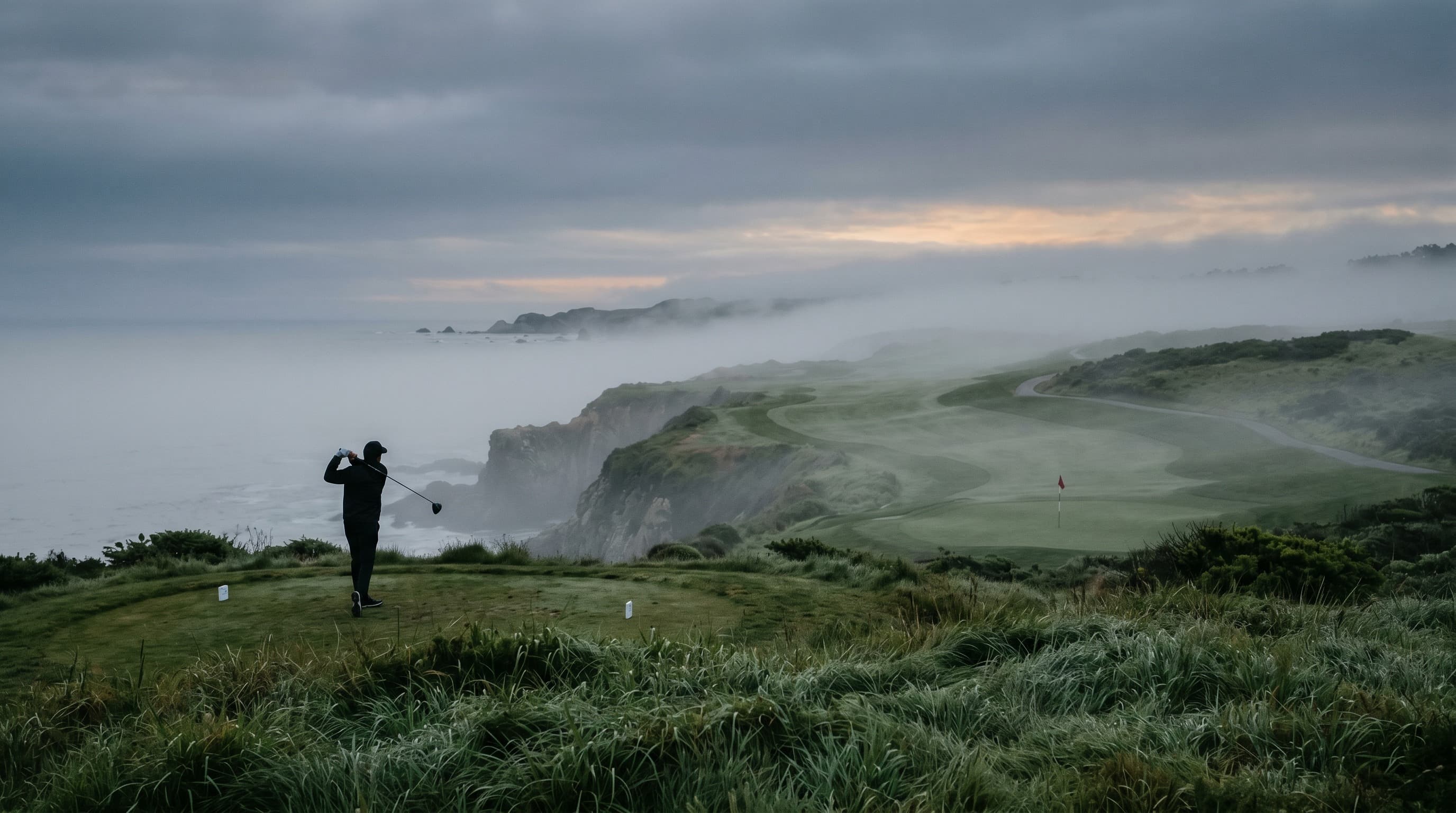
Reading Coastal Wind: How the Marine Layer Reshapes Pebble Beach, Bandon, and the Pacific Coast Game
Coastal golf does not play by inland rules. The marine layer suppresses wind in the morning, then releases it through midday in a thermal cycle that turns a calm 7am tee into a 22mph back nine. Here is the meteorology behind the pattern, the G-Score data that confirms it across the Pacific coast, and the morning workflow that turns the marine layer from a confusion into a competitive advantage.
Read Story
How to Read a G-Score: The 0–100 Golf Playability Number, Decoded
A G-Score on this site is a single 0–100 number that tells you whether today is worth tee-up. Here is exactly what each band means, what drives the calculation, and how to use it to plan a round you will actually score on.
Read StoryMinSu Kim
Founder & Golf Data Analyst
MinSu is a data analyst and golfer with 10+ years on the course. He built Golf Weather Score to answer one question: is today a good day to play? He combines weather data, course intelligence, and the proprietary G-Score algorithm to help golfers make smarter decisions.
Every Friday Morning
When Blackberry Farm Golf Course plays best next weekend.
Friday 6am ET: peak G-Score windows for Blackberry Farm Golf Course, wind direction by hour, and one gear call. Three minutes to read, save you the round.
One email a week. Unsubscribe in one click.
The Caddie's Oracle
Draw your luck before the tee off