
Caddie's Gear Advisor
Curated for today's 58°F · Clear
Tour-Level Drivers
Engineered for maximum distance and forgiveness
Laser Rangefinders
Pin-seeking technology for precision approaches
Premium Golf Balls
Tour-caliber spin and distance performance
Performance Sunglasses
Polarized lenses optimized for reading greens
Your Golf Trip, Handled
The Ultimate Golf Trip Planner
Everything you need to play Blackhawk Golf Course — from booking your flight to checking in course-side.
Course-Side Stays
Luxury hotels, resorts, and stay-and-play packages just minutes from the first tee.
Flights
Compare fares across 700+ airlines for the best route to your tee time.
SUV Rentals for Golf Bags
Spacious vehicles with room for clubs, bags, and your foursome.
Travel Insurance
Coverage for medical, weather delays, and gear at your destination.
Blackhawk Golf Course: Course Intelligence
Signature Setup
Blackhawk sits on open prairie east of Austin, in Pflugerville, and the first thing the land tells you is that there's nowhere to hide from the wind. I haven't walked all 18 here in person — for the hole specifics I'm leaning on the scorecard and the local reputation — but I've played enough Central Texas golf in May to know what 20-plus mph out of the south does to a long iron on flat ground. The course was designed by Charles Howard with LPGA U.S. Women's Open champion Hollis Stacy and opened in the fall of 1990. It runs par 72, 7,103 yards from the tips, 6,608 from the blue tees at a 71.2 rating and 122 slope. What people remember isn't a postcard hole — it's the par 3s.
Hole-by-Hole Wind & Playing Lines
The four par 3s — Holes 5, 8, 12, and 15 — are routed in different directions, which is exactly why they're called one of the toughest sets in the area. The wind doesn't help you on all of them in the same round.
Hole 15 (par-3, up to 233y): This is the brute. Into a typical south or southeast spring wind, a 233-yard one-shotter is a fairway wood for most players, and the prairie gives you no backstop. Don't flag-hunt. The smart play is the full club you'd be tempted to throttle, aimed at the wide front-center, taking the long two-putt over a short-side miss.
Hole 12 (par-3): Plays shorter but the crosswind is the trap — a left-to-right gust pushes a held shot off the green into trouble. I'd start it at the upwind edge and let the wind walk it back.
Hole 8 (par-3): When the morning is still (before about 10 a.m.), this is the one par 3 you can attack; once the breeze fills in, club up one and swing easy rather than flush a high ball that balloons and stalls.
Green & Fairway Characteristics
This is a Texas bermuda course, and that defines how it plays. In summer the fairways are firm and the ball runs out — your drives chase, but so do your misses, and the bermuda rough grabs the clubface and produces flyers you can't control out of the deep stuff. The greens run fast and firm in the heat; downwind, downhill putts get away from you. From the blue tees at 6,608 yards the course isn't overlong, but the openness means errant shots aren't tree-blocked — they keep rolling. Front nine and back nine both expose you to the prairie wind, so there's no sheltered stretch to make up ground.
Seasonal Weather Pattern
Pflugerville's climate is classic Central Texas. June through August is the punishing window: daytime highs routinely hit 95–100°F, and the heat index climbs higher with humidity blowing up from the Gulf. The grass is at its firmest and the greens at their fastest then. Spring (March–May) brings the strongest sustained south winds — 15–25 mph afternoons are normal — which is the single biggest scoring variable on the par 3s. Fall is the sweet spot: warm, drier, and calmer mornings into October. Winters are mild but the bermuda goes dormant and off-color, and a passing "blue norther" can drop the temperature 30 degrees in an afternoon and flip the wind hard to the north — re-read every par 3 when that happens.
Local Play Tips
The local move is heat management, not shot-making. In July and August, book the earliest slot the starter offers and play fast — the difference between an 8 a.m. and an 11 a.m. tee time on this exposed layout is real, both in the heat index and in how hard the south wind is blowing by the turn. Carry more water than you think you need; there's little shade out on the prairie holes. And because the wind is the whole defense here, check which way it's forecast before you pick your tees — into a stiff south wind, the 233-yard 15th from the back makes a strong case for moving up a set.
Pre-Round Weather Workflow
Check the 7-day G-Score before you book, and for Blackhawk weight two signals above all: wind speed/direction and afternoon heat. If the forecast shows sub-10 mph mornings, target the earliest tee time and you can actually attack the par 3s; if it shows a 20 mph south wind building by noon, plan a sunrise round and expect the 12th and 15th to cost you. Use the windExposure read for the back nine — this is open ground with no tree cover, so the wind number is the score number. In summer, assume firm, fast-running fairways and greens; in spring, assume the wind is your primary opponent and club accordingly.
Related Reading
Before you tee off at Blackhawk Golf Course
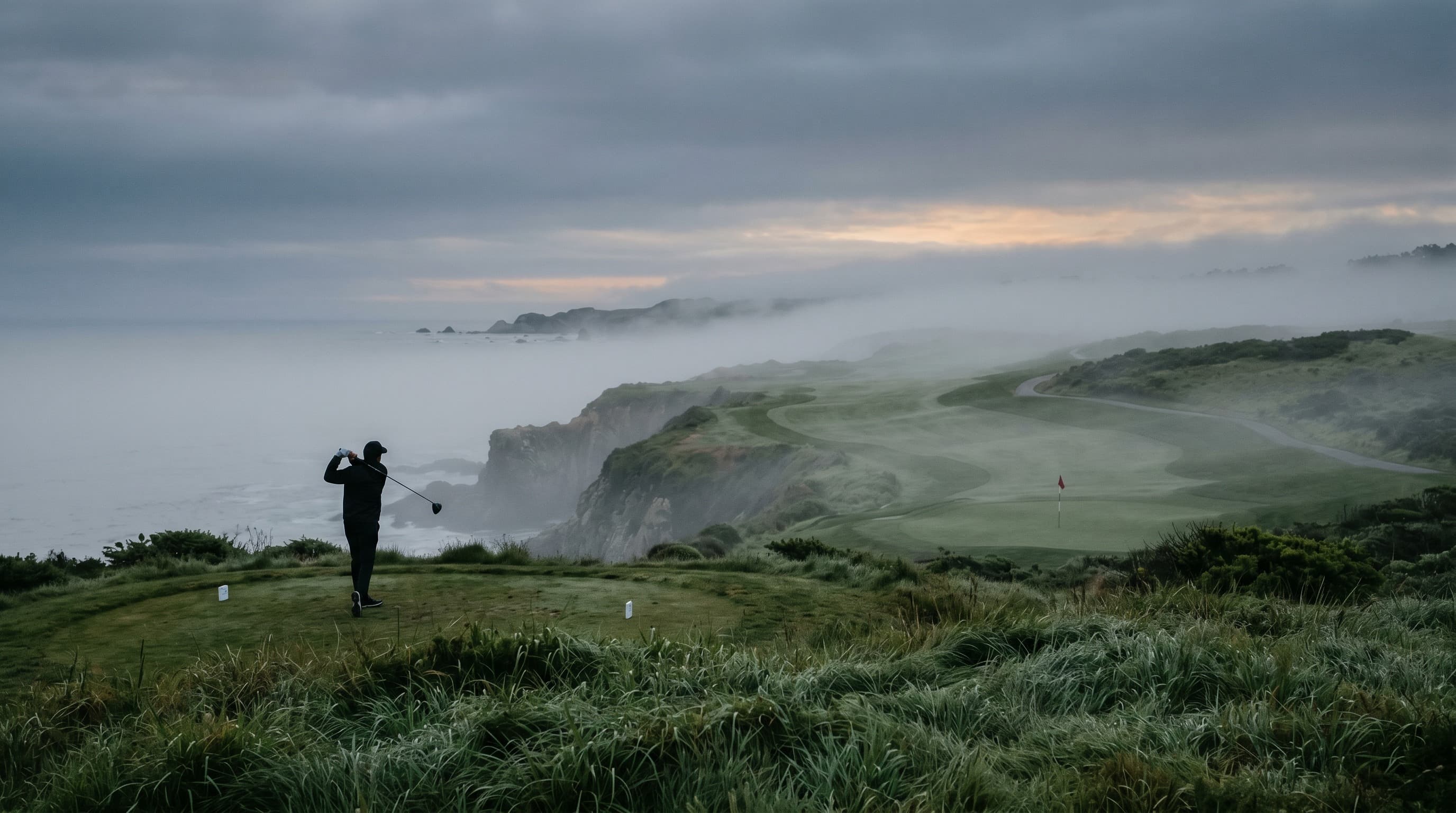
Reading Coastal Wind: How the Marine Layer Reshapes Pebble Beach, Bandon, and the Pacific Coast Game
Coastal golf does not play by inland rules. The marine layer suppresses wind in the morning, then releases it through midday in a thermal cycle that turns a calm 7am tee into a 22mph back nine. Here is the meteorology behind the pattern, the G-Score data that confirms it across the Pacific coast, and the morning workflow that turns the marine layer from a confusion into a competitive advantage.
Read Story
Saturday Morning Tee Time Decision Tree: How to Pick the Right Window in Six Minutes
You have Saturday open. Three courses on the shortlist, the weather is mixed, and your tee-time window is 6am to 4pm. Here is the six-minute decision tree we use to pick the right round, the right course, and the right hour — without overthinking.
Read StoryMinSu Kim
Founder & Golf Data Analyst
MinSu is a data analyst and golfer with 10+ years on the course. He built Golf Weather Score to answer one question: is today a good day to play? He combines weather data, course intelligence, and the proprietary G-Score algorithm to help golfers make smarter decisions.
Every Friday Morning
When Blackhawk Golf Course plays best next weekend.
Friday 6am ET: peak G-Score windows for Blackhawk Golf Course, wind direction by hour, and one gear call. Three minutes to read, save you the round.
One email a week. Unsubscribe in one click.
The Caddie's Oracle
Draw your luck before the tee off