
Caddie's Gear Advisor
Curated for today's 46°F · Clouds
Cold-Weather Performance Layers
Thermal mid-layers that move with your swing
Tour Hand Warmers
Rechargeable warmers trusted by caddies
Thermal Base Layers
Lightweight compression that traps heat
Winter Golf Headwear
Beanies and ear warmers built for the links
Bob-O-Link Golf Club: Course Intelligence
Signature Setup
Bob O'Link Golf Club sits in Highland Park, Illinois, on Chicago's North Shore, and it is one of the older Donald Ross routings in the Midwest — opened in 1916, par 72, roughly 6,900 yards from the championship tees. I should say plainly: this is a private, all-male club, and I have not played a guest round inside the ropes here. What I write below leans on Ross's documented design language, the club's published history, and a decade of my own rounds on North Shore parkland courses two miles from this property — not on a scorecard I personally signed at Bob O'Link.
What makes the course worth understanding is Ross himself. His crowned, run-off greens and staggered fairway bunkering reward a player who flights the ball low and lands it short, then lets the firmness do the work. The 4th — a short par-4 that dares you to take driver into a nest of bunkers — is the kind of hole Ross built to punish greed, not length.
Hole-by-Hole Wind & Playing Lines
The defining weather variable here is Lake Michigan, three miles east. The lake breeze and the cold-front NW winds reshape the same holes completely.
- Hole 1 (#1 handicap, long par-4): On a NE morning wind off the lake — common April through June — the opening approach plays a full club-and-a-half longer. A 165-yard 7-iron becomes a hard 5-iron. Aim for the center of a Ross green that sheds long-and-right.
- The short par-4 4th: Into the prevailing SW summer wind, the green is reachable and the bunkers are in play off the tee. With a NW post-front wind at your back, lay back to a wedge number — Ross greens this firm don't hold a long approach.
- A long par-3 on the back: Cross-winds off the lake turn a 200-yard tee shot into a knockdown. I'd club up and start it into the wind rather than fight a high ball that balloons.
Green & Fairway Characteristics
The greens are bentgrass, built on Ross's raised pads with run-offs on every side — miss in the wrong spot and you're chipping from a tightly mown collar back up onto a crown. The fairways are classic Midwest parkland: tree-lined, gently moving, not links-firm but quick to run in a dry July. From the back tees the course measures into the high-6,000s; the front nine and back nine play to a similar par-36/36 balance, so there's no soft side to hide on. My honest read on the numbers: the slope sits in the mid-130s range from the tips, but I'd treat that as an estimate, not a figure I've confirmed on a current rating sheet.
Seasonal Weather Pattern
Highland Park's golf season is short and front-driven. April mornings open near 42–48°F with raw NE lake winds; the ball won't carry, and cold bentgrass greens stay slow until the sun is up. Peak season is mid-June through early September, with daytime highs of 78–84°F and a reliable midday lake breeze. By late September, lows drop into the low-50s and the first cold fronts bring 20–25 mph NW gusts that strip the trees and bake the greens. The course closes when the North Shore freezes — typically November.
Local Play Tips
One thing that doesn't show up in a yardage book: on this stretch of the North Shore, the lake breeze "switch" usually happens between 10 and 11 a.m. on warm summer days. A round that tees off at 7:30 plays in calm air; the same round at 11:30 fights an onshore wind on the closing holes. If you ever get a guest invitation, take the earliest tee time you can.
Pre-Round Weather Workflow
Use the 7-day G-Score on golfweatherscore for Bob O'Link before you commit to a tee time. Watch two signals: wind direction (a NE/E reading means a lake wind and a longer, colder front nine) and the morning-vs-afternoon G-Score spread. When the early slots score 8–12 points higher than midday, that's the lake breeze filling in — book the early window. Check windExposure the night before: a 20+ mph NW post-front day means firmer Ross greens and a low-flighted game plan, not your high summer ball.
Related Reading
Before you tee off at Bob-O-Link Golf Club
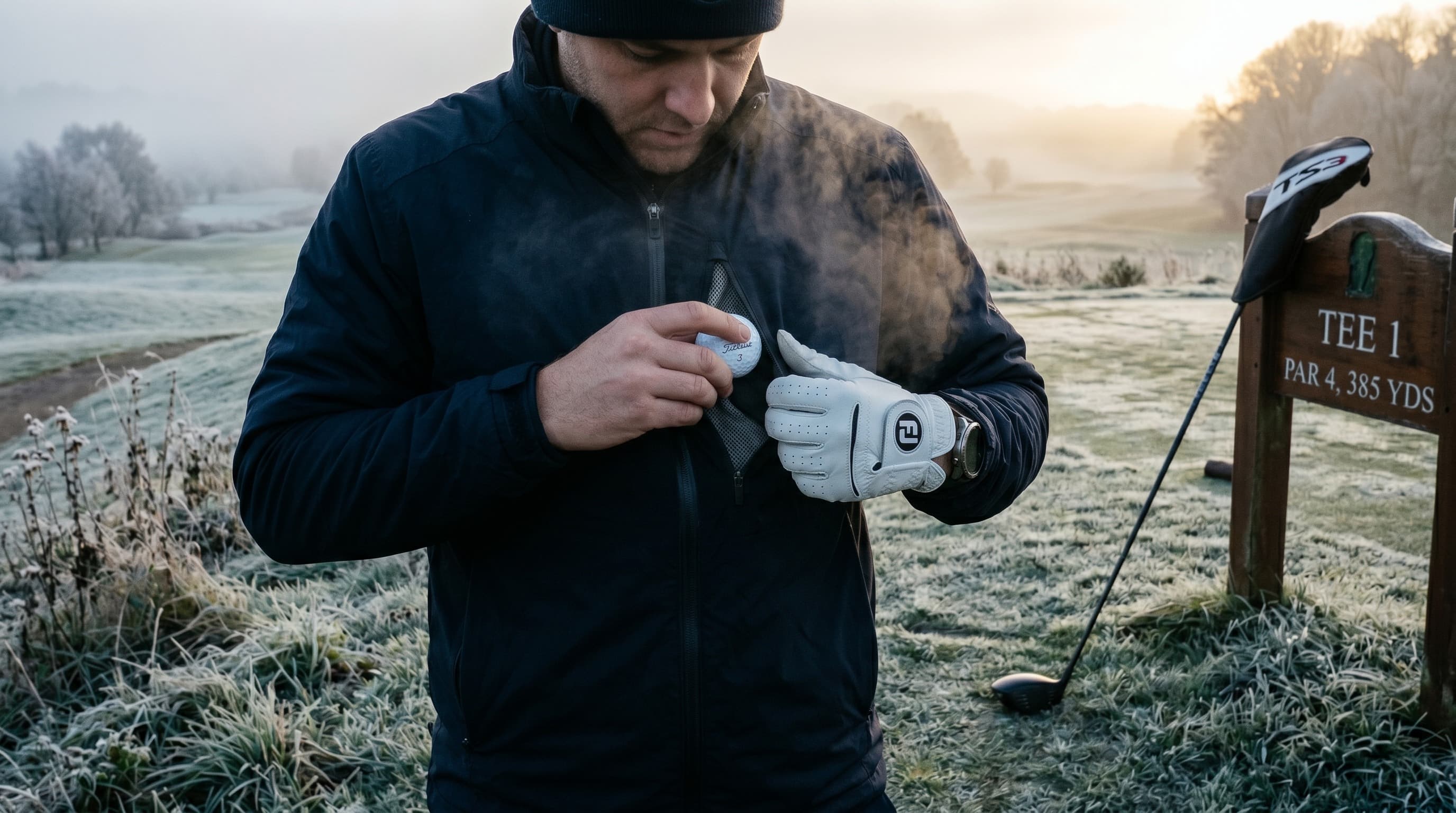
How Cold Weather Steals Distance: The Ball Compression Physics Every Golfer Should Know
Every 10°F drop costs the average golfer two to four yards of driver carry. Here is the physics — ball compression, air density, muscle temperature — and the field data we pulled from G-Score-monitored cold rounds to show exactly how distance loss compounds, and how to compensate without changing your swing.
Read Story
America's 20 Windiest Golf Courses: A G-Score Wind Analysis
We ranked America's 20 windiest golf courses using G-Score wind penalty data. See how coastal gusts and prairie gales reshape playability scores.
Read StoryDanorie
Editorial & Data
Golf Weather Score is built by Danorie. We compute the G-Score — our own playability rating — from live NOAA forecasts and published course scorecards, so any US course can be compared on any day with a single number. Methodology and data sources are documented on every page.
Every Friday Morning
When Bob-O-Link Golf Club plays best next weekend.
Friday 6am ET: peak G-Score windows for Bob-O-Link Golf Club, wind direction by hour, and one gear call. Three minutes to read, save you the round.
One email a week. Unsubscribe in one click.
The Caddie's Oracle
Draw your luck before the tee off