
Caddie's Gear Advisor
Curated for today's 86°F · Clear
Ultralight Distance Drivers
Maximum carry in hot, low-drag conditions
UV Protection Apparel
UPF 50+ cooling fabrics for peak-sun rounds
Precision Rangefinders
Slope-adjusted yardage in any condition
Hydration & Cooling
Insulated bottles and cooling towels
Your Golf Trip, Handled
The Ultimate Golf Trip Planner
Everything you need to play Boulder Creek Golf & Country Club — from booking your flight to checking in course-side.
Course-Side Stays
Luxury hotels, resorts, and stay-and-play packages just minutes from the first tee.
Flights
Compare fares across 700+ airlines for the best route to your tee time.
SUV Rentals for Golf Bags
Spacious vehicles with room for clubs, bags, and your foursome.
Travel Insurance
Coverage for medical, weather delays, and gear at your destination.
Boulder Creek Golf & Country Club: Course Intelligence
Signature Setup
Boulder Creek Golf & Country Club sits at 16901 Big Basin Highway, deep in the Santa Cruz Mountains, where Jack Fleming routed the first nine in 1961 and a second nine followed in 1966. Fleming — the longtime superintendent who built and shaped courses across Northern California after working under Alister MacKenzie — laid this one straight into the redwoods rather than carving the forest away. After the 2020 CZU Lightning Complex fires tore through this canyon, the club rebuilt and now plays as a revitalized nine: par 34, 2,388 yards from the men's tees, course rating 60.9, slope 105. This is not a championship test. It is a short, tree-walled mountain course where the trees, the grade, and the canopy light decide your score more than raw yardage does.
Hole-by-Hole Wind & Playing Lines
Wind is muted here — the redwoods block most of it at canopy height — so the playing problem is vertical, not lateral. The hardest hole is the par-5 17th (436y), climbing through the canyon with a lake guarding the layup zone; I'd hit driver, then a deliberate lay-up well short of the water and a full wedge rather than chase the green in two. The 12th (par-5, 440y) is the longest hole on the card and plays its yardage honestly on still mornings, but add a club when the marine layer sits low and heavy and the air is damp. The 10th (182y par-3) opens the nine in permanent shade; the ball flies a touch shorter in that cool, moist canopy air, so I take one more club than the number suggests. On the rare afternoon when a westerly funnels up the Big Basin drainage, the short par-3 18th (120y) plays into a swirl — trust the number, not the gust.
Green & Fairway Characteristics
Fairways are narrow and redwood-lined; miss the corridor and you are punching out sideways from duff and roots, not chipping from rough. The greens are small mountain targets that hold a damp morning ball well and firm up only on the driest summer afternoons. With a slope of just 105, the course rewards position over power — a 3-wood or hybrid off most tees keeps you in the short grass and below the hole. The back-nine card is par-3 heavy (four of the nine are one-shotters: 10, 11, 14, 16, 18), so iron play and distance control off the deck matter far more than the driver.
Seasonal Weather Pattern
Boulder Creek sits near 1,000 ft in one of the wetter pockets of coastal California — NOAA historical records put annual rainfall around 50 inches, with December through February the soggiest stretch and the course often heavy underfoot or closed after storms. Summer mornings (June–September) start cool and gray under marine fog, frequently in the upper 50s°F at 8 a.m., then climb into the high 70s–80s°F by afternoon once the layer burns off. The redwood canopy keeps the on-course temperature roughly 8–10°F below the open valley floor all day, which is the single biggest comfort difference from a typical inland California round.
Local Play Tips
The shade is the local secret. Because so much of the routing never sees direct sun, morning dew and fog moisture linger on the greens far longer than on an exposed course — putts are visibly slower before 9 a.m. and quicken through midday. Bring more golf balls than the yardage implies: the tree corridors swallow anything pushed or pulled, and there is no recovery from under a redwood. I haven't played the reconstructed post-2020 routing in person, so for green firmness and exact hole condition I lean on the club's current scorecard and local reports rather than my own read.
Pre-Round Weather Workflow
Check your 7-day G-Score forecast the night before and target the highest-scoring morning window — at Boulder Creek that is almost always an early tee time before the fog lifts and the canopy traps the cool air. Use the windExposure reading as a low-priority factor here, since the redwoods shelter most holes; weight rain probability and recent rainfall instead, because this course drains slowly and plays soft for a day or two after any storm. If the G-Score flags a wet morning in winter, push to an afternoon tee when the surface has had a few hours to firm, and carry an extra towel — the canopy stays damp long after the rain stops.
Related Reading
Before you tee off at Boulder Creek Golf & Country Club

The May 2026 G-Score Heatmap: Where American Golf Peaks This Spring
May is the most underrated month on the American golf calendar. Five regions hit their annual peak this spring, three turn quietly hostile, and the data tells a clearer story than the brochures. Here is where to play, where to avoid, and how to time your booking window.
Read Story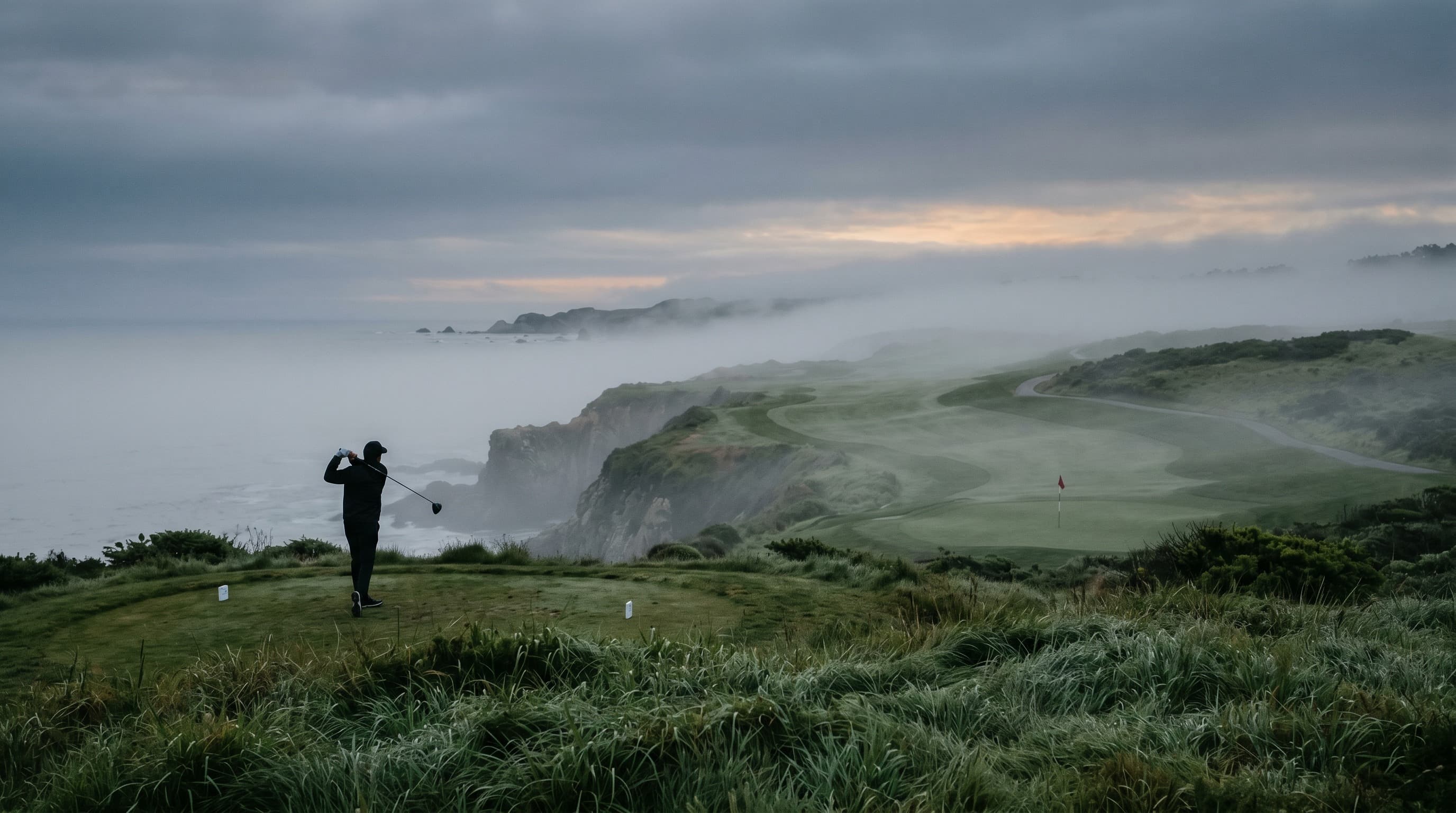
Reading Coastal Wind: How the Marine Layer Reshapes Pebble Beach, Bandon, and the Pacific Coast Game
Coastal golf does not play by inland rules. The marine layer suppresses wind in the morning, then releases it through midday in a thermal cycle that turns a calm 7am tee into a 22mph back nine. Here is the meteorology behind the pattern, the G-Score data that confirms it across the Pacific coast, and the morning workflow that turns the marine layer from a confusion into a competitive advantage.
Read StoryMinSu Kim
Founder & Golf Data Analyst
MinSu is a data analyst and golfer with 10+ years on the course. He built Golf Weather Score to answer one question: is today a good day to play? He combines weather data, course intelligence, and the proprietary G-Score algorithm to help golfers make smarter decisions.
Every Friday Morning
When Boulder Creek Golf & Country Club plays best next weekend.
Friday 6am ET: peak G-Score windows for Boulder Creek Golf & Country Club, wind direction by hour, and one gear call. Three minutes to read, save you the round.
One email a week. Unsubscribe in one click.
The Caddie's Oracle
Draw your luck before the tee off