
Caddie's Gear Advisor
Curated for today's 64°F · Clear
Tour-Level Drivers
Engineered for maximum distance and forgiveness
Laser Rangefinders
Pin-seeking technology for precision approaches
Premium Golf Balls
Tour-caliber spin and distance performance
Performance Sunglasses
Polarized lenses optimized for reading greens
Brae Burn Golf Pro Shop: Course Intelligence
Signature Setup
I walked off the 18th at Brae Burn on an October morning a few years back, hands stiff at 8 a.m. — 49°F, the fairways still silver with dew that hadn't burned off. This is one of New England's oldest clubs, founded in 1897 in West Newton, Massachusetts, and re-shaped by Donald Ross in 1912. The course earned its place in the record books at the 1919 U.S. Open, where Walter Hagen won and Willie Chisholm carded an 18 on a single par-3 in the valley — still the highest score on a par-3 in U.S. Open history. The defining feature here is not length; it's Ross's routing and his small, contoured greens guarded by chocolate-drop mounding. Par is 72. The pro shop sits beside the first tee, and the staff there will tell you honestly which pins are cut on the meanest shelves that day.
Hole-by-Hole Wind & Playing Lines
Eastern Massachusetts runs a prevailing SW wind through summer and swings NW behind autumn fronts. At a Ross course this matters less off the tee than into the greens.
- The valley par-3 (signature): Played from an elevated tee into the bowl, a NW autumn breeze knocks the ball down hard. The miss long here is dead — exactly the trouble that buried Chisholm. Take one less club than the yardage says, land it short-center, and let the slope feed it.
- The long uphill par-4 (#1-handicap stretch): Into the SW summer breeze this plays a full club-and-a-half longer than the number. Club up and favor the safe side short of the green-front bunkers; the Ross greens shed a long approach toward trouble.
- Closing holes: A SW gust above 12 mph turns the inward nine into a grind. Play for the front edge and let the contours do the work — going pin-hunting at Ross mounding is how a 78 becomes an 84.
Green & Fairway Characteristics
The greens are the whole exam. They are intimate, firm, and tilted in ways that aren't obvious until your ball trickles off the high side — pure early-Ross. Bentgrass surfaces hold a well-struck iron in spring moisture but firm up noticeably by July, so the spring target line is not the summer one. Fairways are parkland-tight, framed by mature trees, with the chocolate-drop mounds pinching the approach corridors. The scorecard wrecker here is not raw yardage; it's the recovery shot after a tree-line miss and the three-putt from above the hole.
Seasonal Weather Pattern
Brae Burn's golf window runs roughly mid-April through November. July and August highs sit in the low-to-mid 80s°F with thick afternoon humidity and the occasional pop-up thunderstorm tracking in from the west. May and late September are the sweet spots — daytime highs in the 60s–70s°F, firm-but-receptive turf, and lighter early wind. My October round started at 49°F and the ball came off the face dead until the sun cleared the trees near 10 a.m.; I lost close to a club of carry on every cold-morning iron. Frost delays are common from late October on — call the pro shop before an early autumn slot.
Local Play Tips
The single biggest edge here is timing the air. The SW breeze and the humidity both build through the day, so a dawn tee time plays measurably easier than a 2 p.m. one — especially on the uphill long par-4 and the closing stretch. I've only played Brae Burn once, in October, so on midsummer green firmness I'm going off members' notes rather than my own card; expect more roll-out and faster surfaces in July than my fall round suggests. If you can, ask the pro shop for the day's pin sheet before you warm up — on Ross greens the pin position changes the entire club selection.
Pre-Round Weather Workflow
Use the 7-day G-Score on this page as your tee-time selector, not just a forecast. For Brae Burn:
- Scan G-Score across the week and favor the morning with the highest number — here that lines up with the calmest, lowest-humidity window before the SW breeze fills in.
- Check windExposure and direction. A SW reading above ~12 mph means add a club on every into-wind approach and play the long par-4 short of the bunkers.
- Watch the spring/fall temperature. Below ~50°F at tee time, factor a club of carry loss until midday and layer something you can shed by the turn.
- Confirm frost delays in shoulder season before locking an early slot.
Related Reading
Before you tee off at Brae Burn Golf Pro Shop
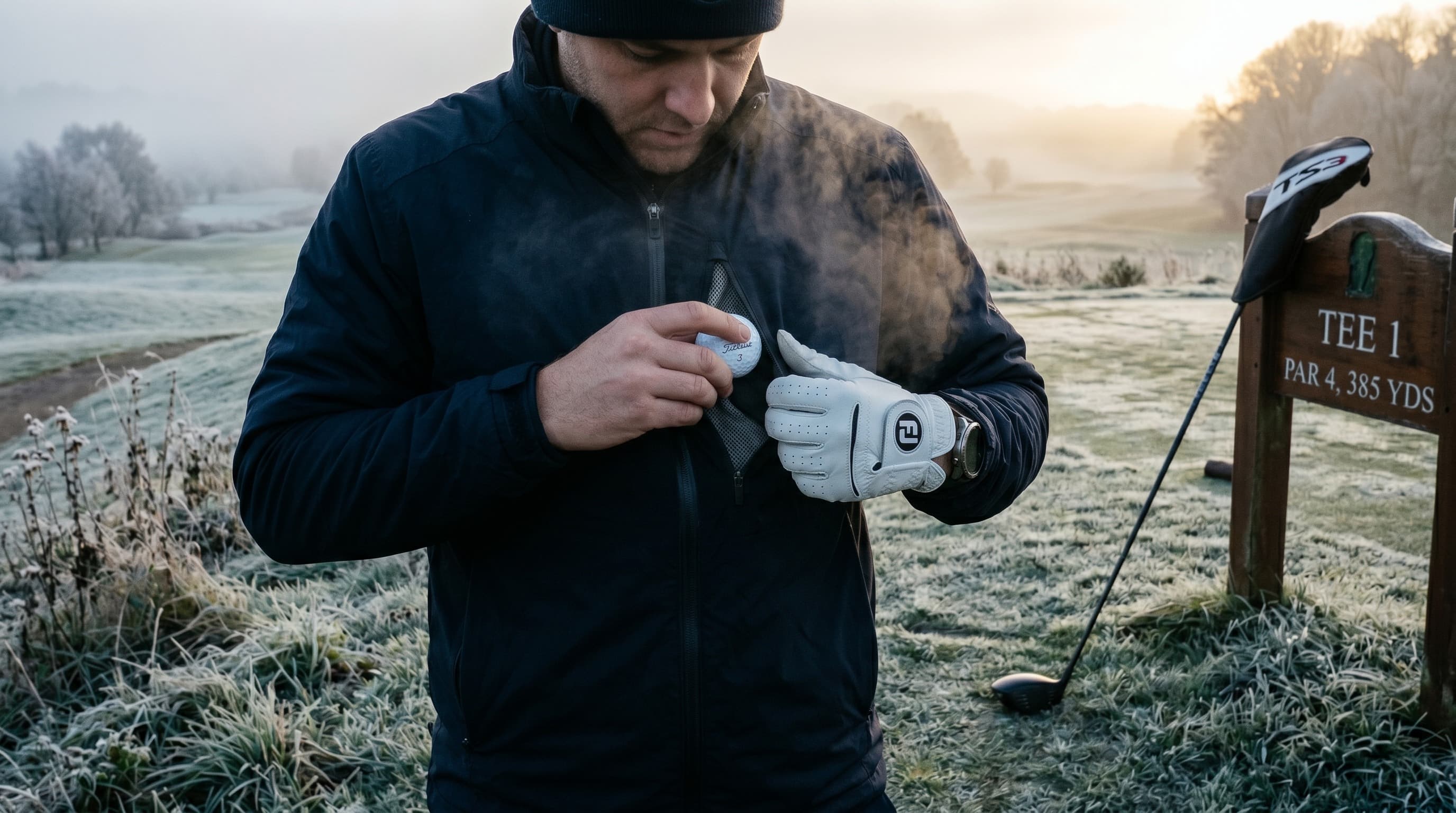
How Cold Weather Steals Distance: The Ball Compression Physics Every Golfer Should Know
Every 10°F drop costs the average golfer two to four yards of driver carry. Here is the physics — ball compression, air density, muscle temperature — and the field data we pulled from G-Score-monitored cold rounds to show exactly how distance loss compounds, and how to compensate without changing your swing.
Read Story
America's 20 Windiest Golf Courses: A G-Score Wind Analysis
We ranked America's 20 windiest golf courses using G-Score wind penalty data. See how coastal gusts and prairie gales reshape playability scores.
Read StoryDanorie
Editorial & Data
Golf Weather Score is built by Danorie. We compute the G-Score — our own playability rating — from live NOAA forecasts and published course scorecards, so any US course can be compared on any day with a single number. Methodology and data sources are documented on every page.
Every Friday Morning
When Brae Burn Golf Pro Shop plays best next weekend.
Friday 6am ET: peak G-Score windows for Brae Burn Golf Pro Shop, wind direction by hour, and one gear call. Three minutes to read, save you the round.
One email a week. Unsubscribe in one click.
The Caddie's Oracle
Draw your luck before the tee off