
Caddie's Gear Advisor
Curated for today's 61°F · Clear
Tour-Level Drivers
Engineered for maximum distance and forgiveness
Laser Rangefinders
Pin-seeking technology for precision approaches
Premium Golf Balls
Tour-caliber spin and distance performance
Performance Sunglasses
Polarized lenses optimized for reading greens
Your Golf Trip, Handled
The Ultimate Golf Trip Planner
Everything you need to play Brookside Country Club — from booking your flight to checking in course-side.
Course-Side Stays
Luxury hotels, resorts, and stay-and-play packages just minutes from the first tee.
Flights
Compare fares across 700+ airlines for the best route to your tee time.
SUV Rentals for Golf Bags
Spacious vehicles with room for clubs, bags, and your foursome.
Travel Insurance
Coverage for medical, weather delays, and gear at your destination.
Brookside Country Club: Course Intelligence
Signature Setup
I played the San Joaquin Valley enough in my California years to know its golf is decided by two things almost nobody mentions in the brochure: the afternoon Delta breeze and the summer heat. Brookside Country Club sits in Stockton, right at the edge of the Sacramento–San Joaquin Delta, and you feel both.
This is not a Golden Age course — set your expectations accordingly. Brookside opened in 1991 to a Robert Trent Jones Jr. design, a par 72 that stretches to 6,780 yards from the tournament tees at a 135 slope and 72.8 rating. It is a modern parkland layout on flat valley ground, with the tee options dropping to 6,092 yards (127/70.2) from the whites for most players. The defining feature isn't dramatic elevation or ocean drama; it's the wind that comes off the Delta most afternoons, and how the firm ryegrass and valley heat interact with it.
Hole-by-Hole Wind & Playing Lines
Honest note first: I have not found a verified hole-by-hole card for the Stockton layout, so I'm reasoning from the course's geography rather than naming a specific hole as the toughest. What I can tell you is reliable — the Delta breeze arrives from the west to northwest and typically builds to 10–20 mph by early afternoon.
That means any holes routed westbound on the back nine play meaningfully longer after lunch. A 150-yard approach into a 15 mph headwind is closer to a 165–170-yard shot — two clubs, not one, and you want the ball started into the wind side so the breeze brings it back rather than throwing it offline. Downwind holes the opposite way are where you make your number: a ryegrass fairway baked firm in summer will release another 10–15 yards. The judgment call all day is simply which way am I pointed relative to the Delta.
Green & Fairway Characteristics
Brookside runs ryegrass greens and ryegrass fairways, which is worth knowing before you putt. Ryegrass greens don't run as glassy-fast as bentgrass or poa, so resist the urge to baby downhill putts — they hold pace better than a NorCal poa surface and grain matters less. In the summer the valley heat dries the fairways out fast; expect plenty of roll and plan your layups accordingly. At 6,780 from the tips with a 72.8 rating, the card is fair from the blues and whites and only stern from the back tees in wind. Greens here tend to favor the slopes of the surrounding ground, so read your break toward the low side and trust it.
Seasonal Weather Pattern
Stockton's Central Valley climate is its own thing, distinct from coastal California. Summers (Jun–Sep) run hot and dry — afternoons regularly hit the 90s and into the 100s°F, which is why morning tee times aren't a luxury, they're survival. Winters (Dec–Feb) are mild, in the mid-50s°F, but bring the valley's signature hazard: tule fog, a dense ground fog that can sit on the course past 9 or 10 a.m. and delay first groups. The window I'd target is spring (Apr–May) and fall (Oct) — warm, dry, lighter wind early, and no fog.
Local Play Tips
A few things the scorecard won't tell you. First, the Delta breeze is a clock, not a coin flip — it's calm at dawn and fills in through the afternoon, so the same course plays like two different layouts at 8 a.m. versus 2 p.m. I always took the earliest tee I could get in the valley for exactly this reason. Second, in winter, check the fog before you drive over; a clear forecast inland can still mean a socked-in valley floor at sunrise. Third, hydrate harder than you think in summer — the dry heat pulls water out of you without the sweat you'd expect on a humid coast. Green fees sit in the $50–100 range, which is honest value for a maintained RTJ Jr. course.
Pre-Round Weather Workflow
Use the 7-day G-Score on this page to time your round. For Brookside specifically: scan for the morning slot with the highest G-Score and lowest windExposure reading — that's almost always before the Delta breeze builds. In summer, weight temperature heavily and book the first available tee. In winter, check for tule-fog risk overnight and into the morning before committing to an early time. If the only slot is afternoon, plan for the westerly: add a club into the wind, take advantage of it going the other way, and keep the ball flighted lower when the gusts pick up.
Related Reading
Before you tee off at Brookside Country Club
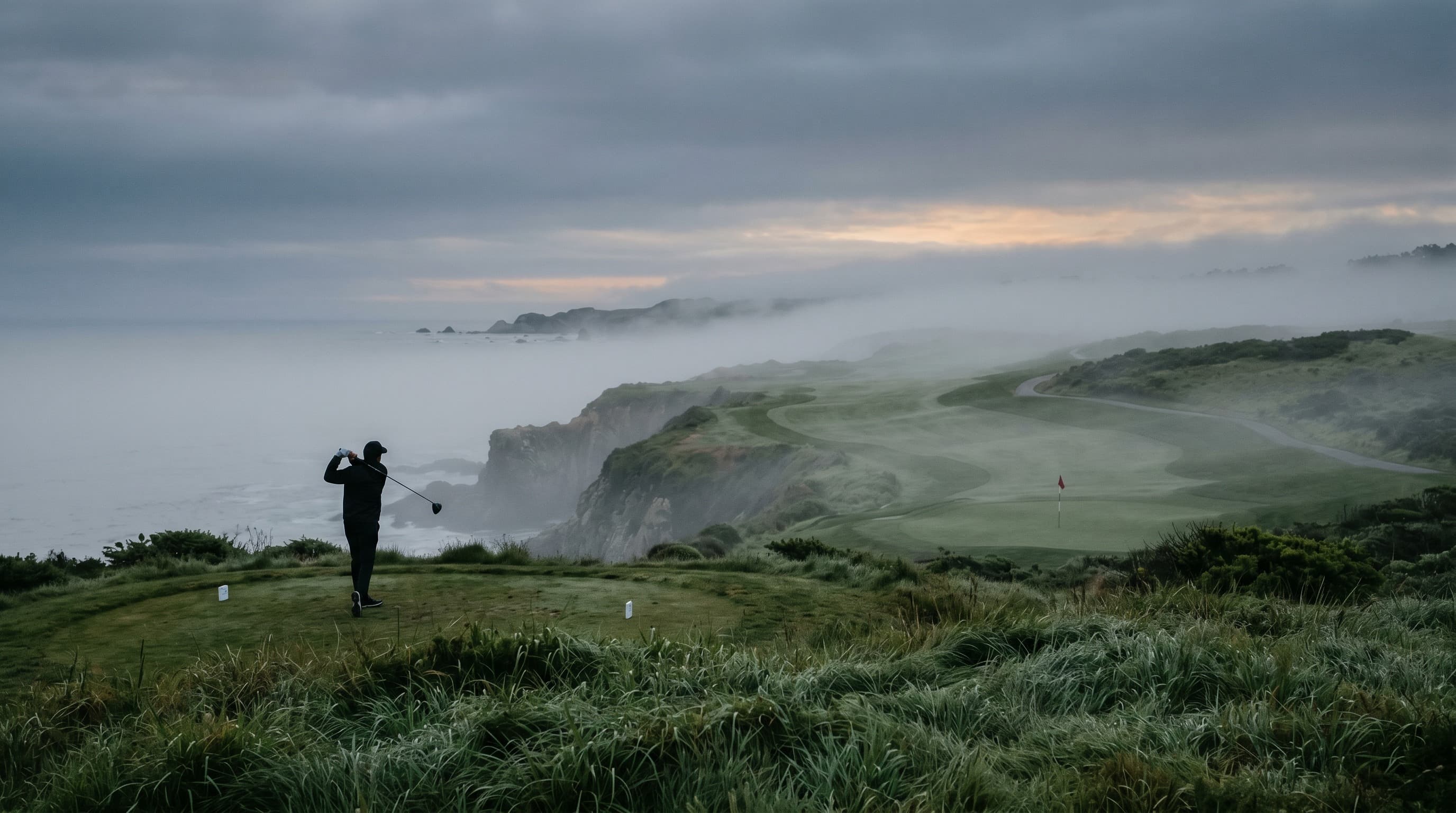
Reading Coastal Wind: How the Marine Layer Reshapes Pebble Beach, Bandon, and the Pacific Coast Game
Coastal golf does not play by inland rules. The marine layer suppresses wind in the morning, then releases it through midday in a thermal cycle that turns a calm 7am tee into a 22mph back nine. Here is the meteorology behind the pattern, the G-Score data that confirms it across the Pacific coast, and the morning workflow that turns the marine layer from a confusion into a competitive advantage.
Read Story
How to Read a G-Score: The 0–100 Golf Playability Number, Decoded
A G-Score on this site is a single 0–100 number that tells you whether today is worth tee-up. Here is exactly what each band means, what drives the calculation, and how to use it to plan a round you will actually score on.
Read StoryMinSu Kim
Founder & Golf Data Analyst
MinSu is a data analyst and golfer with 10+ years on the course. He built Golf Weather Score to answer one question: is today a good day to play? He combines weather data, course intelligence, and the proprietary G-Score algorithm to help golfers make smarter decisions.
Every Friday Morning
When Brookside Country Club plays best next weekend.
Friday 6am ET: peak G-Score windows for Brookside Country Club, wind direction by hour, and one gear call. Three minutes to read, save you the round.
One email a week. Unsubscribe in one click.
The Caddie's Oracle
Draw your luck before the tee off