
Caddie's Gear Advisor
Curated for today's 74°F · Thunderstorm
Storm-Ready Outerwear
Waterproof layers built for 18 holes in the rain
Tour-Grade Umbrellas
68" double-canopy wind-resistant coverage
Wet-Weather Gloves
All-weather grip that performs in the rain
Waterproof Golf Shoes
Keep your feet dry through every fairway
Your Golf Trip, Handled
The Ultimate Golf Trip Planner
Everything you need to play Brookside Golf Club — from booking your flight to checking in course-side.
Course-Side Stays
Luxury hotels, resorts, and stay-and-play packages just minutes from the first tee.
Flights
Compare fares across 700+ airlines for the best route to your tee time.
SUV Rentals for Golf Bags
Spacious vehicles with room for clubs, bags, and your foursome.
Travel Insurance
Coverage for medical, weather delays, and gear at your destination.
Brookside Golf Club: Course Intelligence
Signature Setup
The number that frames Brookside is 1928 — the year William P. Bell laid out two full 18-hole courses on the floor of the Arroyo Seco in Pasadena, California. Bell was the Southern California architect behind a long list of the region's classic municipal and club layouts, and Brookside is his civic-scale work: two courses, the Koiner (No. 1) playing as the longer championship test near 7,000 yards at par 72, and the shorter E.O. Nay (No. 2) beside it. What makes the setting unmistakable is the Rose Bowl. The stadium sits in the same Arroyo basin the golf occupies, so several holes play in its literal shadow. I live in Irvine, about an hour south, and I'll be straight about my limits below: I know this basin and its weather far better than I know every pin on the Koiner card, and I've written it that way.
Hole-by-Hole Wind & Playing Lines
The Arroyo Seco is a canyon running roughly north–south through Pasadena, and that geography is the whole wind story here. On warm afternoons the basin draws an up-canyon breeze out of the south-southwest — the same daytime heating draft you feel in most Southern California arroyos — and it builds through the early afternoon. The holes that play up the canyon against that draft are where strokes leak on the Koiner Course: a long par-4 that reads 430 yards into a steady 8–12 mph up-canyon push plays closer to 455, so club up one full iron and favor the wide side rather than firing at a firm, sun-baked green. The reciprocal holes running down-canyon get a helping nudge that runs an approach through the green — take less club and land it short of the surface. Mornings, before the draft fills in, the basin sits comparatively still and the same holes play their honest yardage.
Green & Fairway Characteristics
This is a Bell routing on flat Arroyo floor, not a hillside course, so the defense is firmness and exposure rather than severe elevation change. The fairways run firm and fast through the dry season — the Arroyo drains hard and Pasadena summers see little rain — which means a well-struck drive chases out and a thinned approach skips long. As a heavily-played municipal pair, the greens are kept at a fair, repeatable municipal pace rather than a tournament roll, and the winter surface is typically the overseeded ryegrass/Poa look common to SoCal courses that overseed a warm-season base for green color through the cool months. With par 72 over the Koiner's near-7,000 yards, the scoring math favors driver-then-mid-iron precision: keep the ball below the hole and let the firm fairways add the distance.
Seasonal Weather Pattern
Pasadena's calendar is the opposite of the courses I write about back east — the limiter here is summer heat, not winter frost. July through September, afternoon highs in the basin routinely push the low-to-mid 90s°F, and the Arroyo floor traps that heat with little shade, so a midday summer round is a genuine endurance test. The window I'd target is November through March: daytime highs in the 60s–low 70s°F, low humidity, and the up-canyon afternoon draft far gentler than in summer. Watch the autumn Santa Ana pattern, though — when the offshore flow reverses and pours dry NE wind down out of the mountains, the basin firms further and the wind direction inverts the playing lines described above. Spring mornings can also bring a marine-layer overcast that burns off by mid-morning, leaving soft early greens.
Local Play Tips
Two things the scorecard won't tell you. First, the wind here is a time-of-day variable more than a weather-front variable: the Arroyo's up-canyon afternoon draft is thermally driven, so it shows up on calm, sunny days precisely when you'd least expect wind — plan around the clock, not just the forecast. Second, Brookside is wedged into the Rose Bowl's event footprint, so tee-time access and parking can be disrupted around major stadium events; checking the Rose Bowl calendar before booking is the kind of logistics step that saves a wasted morning. The value play, as with most William P. Bell municipals, is an early weekday walk-up on the Koiner before the league and weekend crowd.
Pre-Round Weather Workflow
Use the 7-day G-Score on the course page to time your round, and read two windExposure signals for the Arroyo specifically. (1) Treat the afternoon as the windy half of the day regardless of the headline forecast — if you want the calm version of Brookside, book a morning tee time before the up-canyon draft fills in around 1–2 p.m. (2) In autumn, scan for Santa Ana days: a dry NE offshore flow flips the wind direction and firms the greens hard, so favor lower, running approaches and expect the canyon's playing lines to reverse. (3) In summer, the G-Score will reward early starts most — a high-G morning here can play 8–12 points better than the same firm, hot course at 3 p.m. Land it short, let the firm Arroyo turf do the rest, and beat the heat off the first tee.
---
Note on first-hand limits: these reads lean on the documented facts of Brookside — a William P. Bell 1928 pair of courses on the Arroyo Seco floor beside the Rose Bowl, the Koiner (No. 1) playing the longer par-72 championship test — together with Pasadena/Arroyo Seco climate patterns I know from rounds across Southern California. I have not signed a card on every Koiner hole, so I've reasoned wind and firmness from the basin's geography and SoCal weather rather than asserting specific per-hole yardages or handicap rankings I can't verify.
Related Reading
Before you tee off at Brookside Golf Club
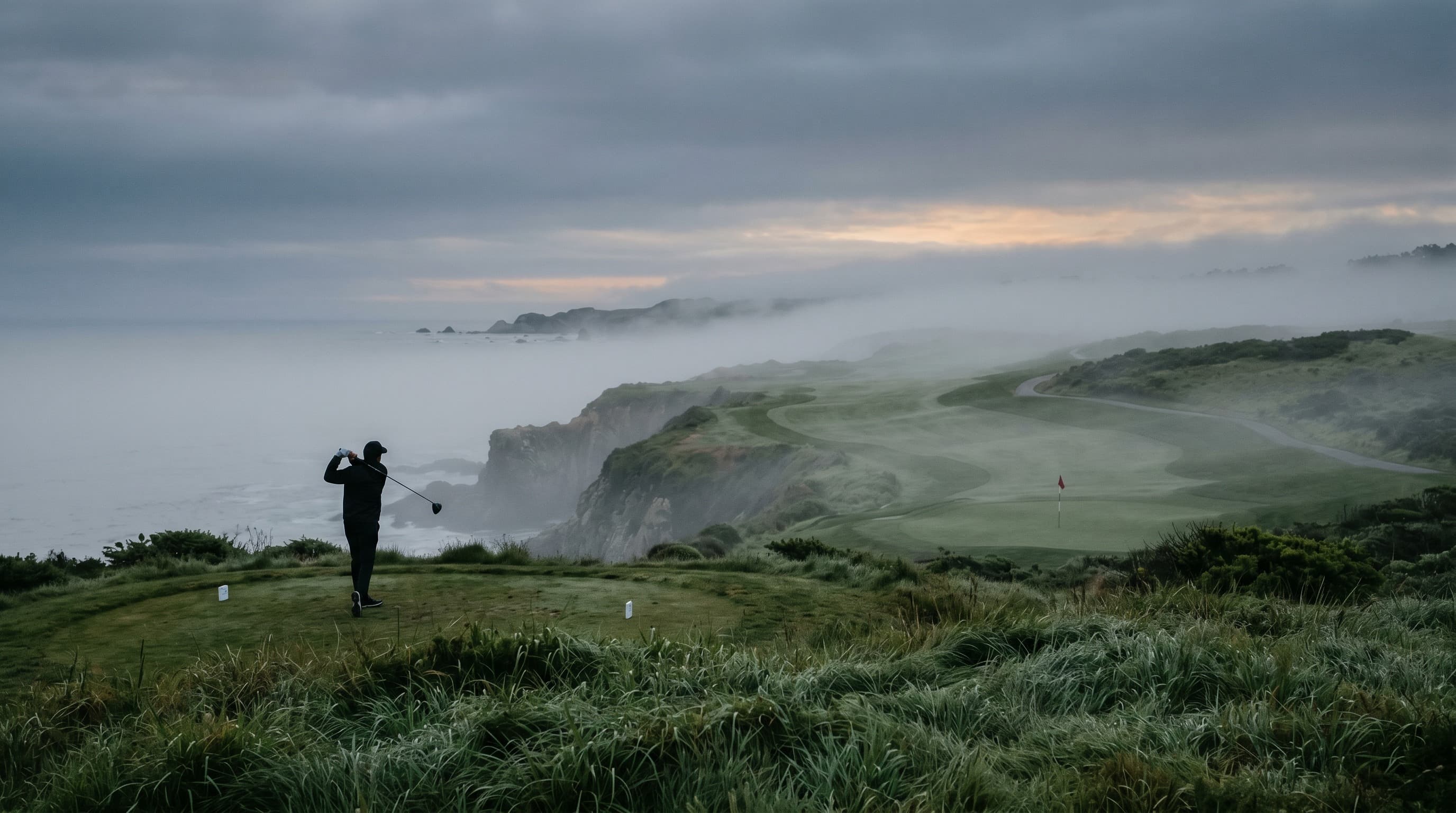
Reading Coastal Wind: How the Marine Layer Reshapes Pebble Beach, Bandon, and the Pacific Coast Game
Coastal golf does not play by inland rules. The marine layer suppresses wind in the morning, then releases it through midday in a thermal cycle that turns a calm 7am tee into a 22mph back nine. Here is the meteorology behind the pattern, the G-Score data that confirms it across the Pacific coast, and the morning workflow that turns the marine layer from a confusion into a competitive advantage.
Read Story
Saturday Morning Tee Time Decision Tree: How to Pick the Right Window in Six Minutes
You have Saturday open. Three courses on the shortlist, the weather is mixed, and your tee-time window is 6am to 4pm. Here is the six-minute decision tree we use to pick the right round, the right course, and the right hour — without overthinking.
Read StoryMinSu Kim
Founder & Golf Data Analyst
MinSu is a data analyst and golfer with 10+ years on the course. He built Golf Weather Score to answer one question: is today a good day to play? He combines weather data, course intelligence, and the proprietary G-Score algorithm to help golfers make smarter decisions.
Every Friday Morning
When Brookside Golf Club plays best next weekend.
Friday 6am ET: peak G-Score windows for Brookside Golf Club, wind direction by hour, and one gear call. Three minutes to read, save you the round.
One email a week. Unsubscribe in one click.
The Caddie's Oracle
Draw your luck before the tee off