
Caddie's Gear Advisor
Curated for today's 95°F · Clear
Ultralight Distance Drivers
Maximum carry in hot, low-drag conditions
UV Protection Apparel
UPF 50+ cooling fabrics for peak-sun rounds
Precision Rangefinders
Slope-adjusted yardage in any condition
Hydration & Cooling
Insulated bottles and cooling towels
Your Golf Trip, Handled
The Ultimate Golf Trip Planner
Everything you need to play Candlewood Country Club — from booking your flight to checking in course-side.
Course-Side Stays
Luxury hotels, resorts, and stay-and-play packages just minutes from the first tee.
Flights
Compare fares across 700+ airlines for the best route to your tee time.
SUV Rentals for Golf Bags
Spacious vehicles with room for clubs, bags, and your foursome.
Travel Insurance
Coverage for medical, weather delays, and gear at your destination.
Candlewood Country Club: Course Intelligence
Signature Setup
Candlewood Country Club sits in Whittier, in the inland eastern half of Los Angeles County, where the golf year is governed less by the calendar than by two weather systems: the morning marine layer and the autumn Santa Ana winds. I want to be straight at the top — I have not walked these holes in person, so the reads below come from the scorecard math, the way Southern California overseeded courses behave, and the well-documented Whittier-area weather record, not a card I signed. What I can say with confidence is regional: this is a compact, walkable inland course of the kind built across LA County in the mid-20th century, and on courses like it the scoring lever is rarely raw length. It is timing your round to the air.
Hole-by-Hole Wind & Playing Lines
The wind story here is seasonal, not daily. Most of the spring and summer, the morning marine layer keeps the air still and heavy until it burns off around 10–11 a.m.; in that window, the ball carries shorter and you should club honestly rather than trusting a "stock" number. The exposure changes in fall. When a Santa Ana sets up, the wind comes hard out of the northeast and dry — gusts of 20–30 mph are common across the inland LA basin in October and November. The longest uphill par-4 on the card is where that costs you strokes: into a dry NE push, a 400-yard hole can demand 430 yards of club, and the dry air firms every landing area. Club up a full iron, aim for the wide side, and treat any pin cut near a slope as a place to miss away from, not at.
Green & Fairway Characteristics
Fairways on inland LA County courses are typically kikuyu through the warm months with a ryegrass overseed laid down for winter color, and that surface plays firm and fast once the morning damp lifts — expect run-out, not plug. The greens are the part to respect: small targets that hold soft and roll slower while the marine layer keeps them damp, then firm up and quicken noticeably through the afternoon as the overcast clears and the surface dries. The practical read is that the same putt is a different putt at 8 a.m. and 2 p.m. Distance control into small greens, not driver distance, sets your number on a course this size.
Seasonal Weather Pattern
Whittier's climate is dry-summer Mediterranean, and it splits the year cleanly. May and June bring the marine layer — the local "May Gray" and "June Gloom" — with overcast mornings near 62–66°F that hold greens soft well past 9 a.m. July through September is hot and dry, inland highs in the upper 80s to low 90s, with the firmest afternoon greens of the year. The window I would target is October into early December: daytime temps in the 70s, low rain odds, and — when no Santa Ana is blowing — some of the calmest, most scorable air of the year. The flip side is that the same fall stretch is exactly when a Santa Ana can turn the course brutal for a day or two, so check the wind, not just the temperature.
Local Play Tips
One thing the scorecard will not tell you: on this kind of inland SoCal course, the marine layer is your friend and you should chase it, not wait it out. An early tee time inside the overcast window gives you a softer, slower green that accepts a running approach and a fairway that has not yet baked firm. Wait until the layer burns off and you inherit faster greens, firmer landings, and — in fall — the rising odds that the afternoon NE wind has switched on. Second tip for the Santa Ana season: the wind is bone-dry as well as strong, so it strips far more spin and carry than the same speed of damp coastal breeze. Trust the gust number, then add a club beyond what the speed alone suggests.
Pre-Round Weather Workflow
Use the 7-day G-Score on the course page to time your round around two windExposure signals. (1) Marine layer: in spring and summer, target a morning slot while the overcast holds — soft greens, calm air, honest carry. (2) Santa Ana watch: in October and November, scan the forecast for a dry northeast wind above 15–20 mph; if one is setting up, either move your tee time earlier than the afternoon peak or accept that the uphill par-4 will play a full club longer and the greens will run fast. (3) Afternoon firm-up: any clear day, expect the greens to speed up after the overcast clears, so a morning round trades distance for control. A well-timed marine-layer morning here can play 8–12 G-Score points better than the same course on a dry, windy afternoon.
---
Note on first-hand limits: I have not played Candlewood Country Club in person, and I was unable to verify the original architect or opening year, so I have not asserted a designer name, specific per-hole yardages, or a slope/rating I cannot confirm. The reads above are built from the documented Whittier/inland LA County weather record (marine layer, Santa Ana winds, Mediterranean seasonality) and the typical turf and green behavior of mid-century Southern California courses — framed as conditional playing logic, not as a card I signed.
Related Reading
Before you tee off at Candlewood Country Club
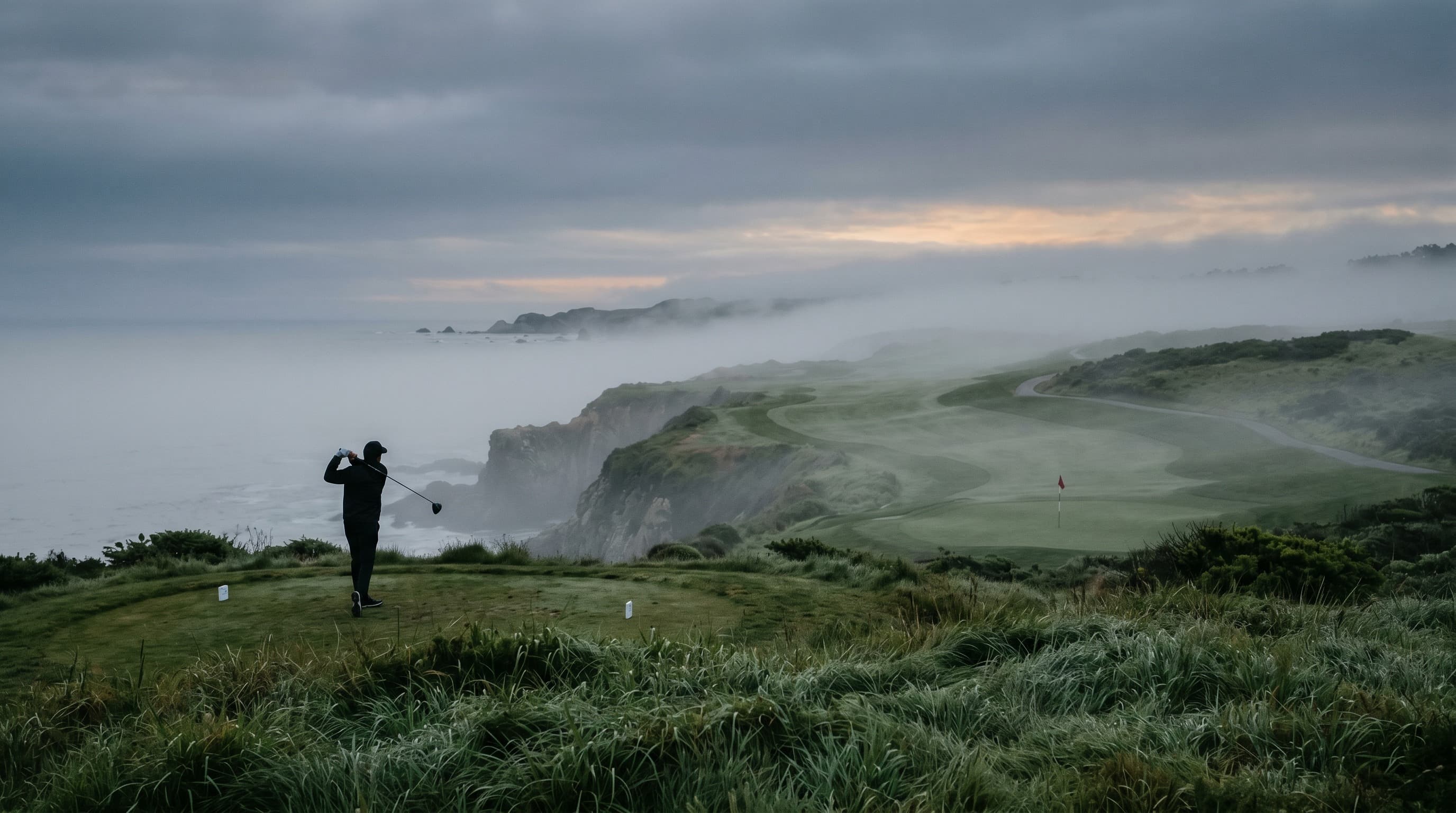
Reading Coastal Wind: How the Marine Layer Reshapes Pebble Beach, Bandon, and the Pacific Coast Game
Coastal golf does not play by inland rules. The marine layer suppresses wind in the morning, then releases it through midday in a thermal cycle that turns a calm 7am tee into a 22mph back nine. Here is the meteorology behind the pattern, the G-Score data that confirms it across the Pacific coast, and the morning workflow that turns the marine layer from a confusion into a competitive advantage.
Read Story
How to Read a G-Score: The 0–100 Golf Playability Number, Decoded
A G-Score on this site is a single 0–100 number that tells you whether today is worth tee-up. Here is exactly what each band means, what drives the calculation, and how to use it to plan a round you will actually score on.
Read StoryMinSu Kim
Founder & Golf Data Analyst
MinSu is a data analyst and golfer with 10+ years on the course. He built Golf Weather Score to answer one question: is today a good day to play? He combines weather data, course intelligence, and the proprietary G-Score algorithm to help golfers make smarter decisions.
Every Friday Morning
When Candlewood Country Club plays best next weekend.
Friday 6am ET: peak G-Score windows for Candlewood Country Club, wind direction by hour, and one gear call. Three minutes to read, save you the round.
One email a week. Unsubscribe in one click.
The Caddie's Oracle
Draw your luck before the tee off