
Caddie's Gear Advisor
Curated for today's 56°F · Rain
Storm-Ready Outerwear
Waterproof layers built for 18 holes in the rain
Tour-Grade Umbrellas
68" double-canopy wind-resistant coverage
Wet-Weather Gloves
All-weather grip that performs in the rain
Waterproof Golf Shoes
Keep your feet dry through every fairway
Your Golf Trip, Handled
The Ultimate Golf Trip Planner
Everything you need to play Carlton Oaks Golf — from booking your flight to checking in course-side.
Best time to golf in CaliforniaCourse-Side Stays
Luxury hotels, resorts, and stay-and-play packages just minutes from the first tee.
Flights
Compare fares across 700+ airlines for the best route to your tee time.
SUV Rentals for Golf Bags
Spacious vehicles with room for clubs, bags, and your foursome.
Travel Insurance
Coverage for medical, weather delays, and gear at your destination.
Carlton Oaks Golf: Course Intelligence
Signature Setup
Carlton Oaks sits in Santee, about 18 miles inland from the San Diego coast, and Pete Dye's 1990 redesign gave it the trademarks you'd expect from him: railroad-tie bulkheads on water-edged holes, deep pot bunkering, and fairways that funnel toward trouble rather than away from it. It plays to a par 72 at roughly 7,000 yards from the back markers, with a slope rating in the mid-140s — steep for a daily-fee course, and most of that number comes from forced carries and kikuyu rough rather than length. The 18th, a par 4 bending along water with a bulkheaded green complex, is the hole people remember. I haven't seen a tournament of note staged here, so I won't pretend there's a marquee event history — this is a strong public Dye layout, not a tour stop.
Hole-by-Hole Wind & Playing Lines
The wind here is thermal, not coastal. Santee's valley heats through the morning and pulls air up-valley — generally a WNW to W breeze that strengthens after about 11 a.m.
- Hole 4 (#1 handicap, par 4, ~440y): This plays into the afternoon up-valley wind. I'd lay back off the tee to about 200 yards to keep it in the short grass, then take one extra club into a green that won't hold a knockdown well. A morning round here is two clubs different from a 3 p.m. round.
- The water holes (Dye's bulkheaded stretch): On a WNW afternoon, any approach over water gets pushed; aim a half-club longer and favor the bail-out side rather than flirting with the railroad ties.
- Downwind par 5s: Late morning the same breeze helps the holes running the other direction — reachable in two if you keep it dry.
Green & Fairway Characteristics
The fairways are Bermuda laced with kikuyu, and that matters more than the yardage. Kikuyu sits the ball up in the fairway but in the rough it wraps the hosel and kills clubhead speed — punch out rather than fight it. The greens are bentgrass, which in San Diego's inland heat run firmer and faster as the day dries them out. Early, they're receptive and slower; by afternoon they're quick and repel anything not landing soft. Front nine and back nine both carry water, so the course doesn't give you a "safe side" to relax on.
Seasonal Weather Pattern
Santee is hotter and drier than coastal San Diego — that's the whole point of playing inland. July and August afternoons regularly push into the mid-90s°F, occasionally higher, while coastal courses 18 miles west sit 15–20 degrees cooler under the marine layer. Winter is the sweet spot: December and January mornings start around 45–50°F and climb into the mid-60s, with firm, dry turf and almost no rain outside a few January–February systems. Fall brings Santa Ana risk — hot, dry NE offshore wind that flips the usual up-valley pattern and bakes the greens.
Local Play Tips
The kikuyu is the local knowledge most visitors miss: it's not normal rough. From the kikuyu, take more loft and accept a short recovery — trying to muscle a mid-iron out of it is how good scores die here. Also, because this is an inland valley and not coast, don't plan your round around a marine-layer morning that never arrives; the burn-off here is early and the heat is real.
Pre-Round Weather Workflow
Check your 7-day G-Score and windExposure the night before. For Carlton Oaks, look for a morning tee time with a G-Score 8–12 points above the afternoon — that gap is the up-valley wind and inland heat building after 11 a.m. If the forecast shows a Santa Ana (NE offshore, single-digit humidity), expect glassy-fast greens and play more break. Hydrate for an inland round, not a coastal one.
Related Reading
Before you tee off at Carlton Oaks Golf
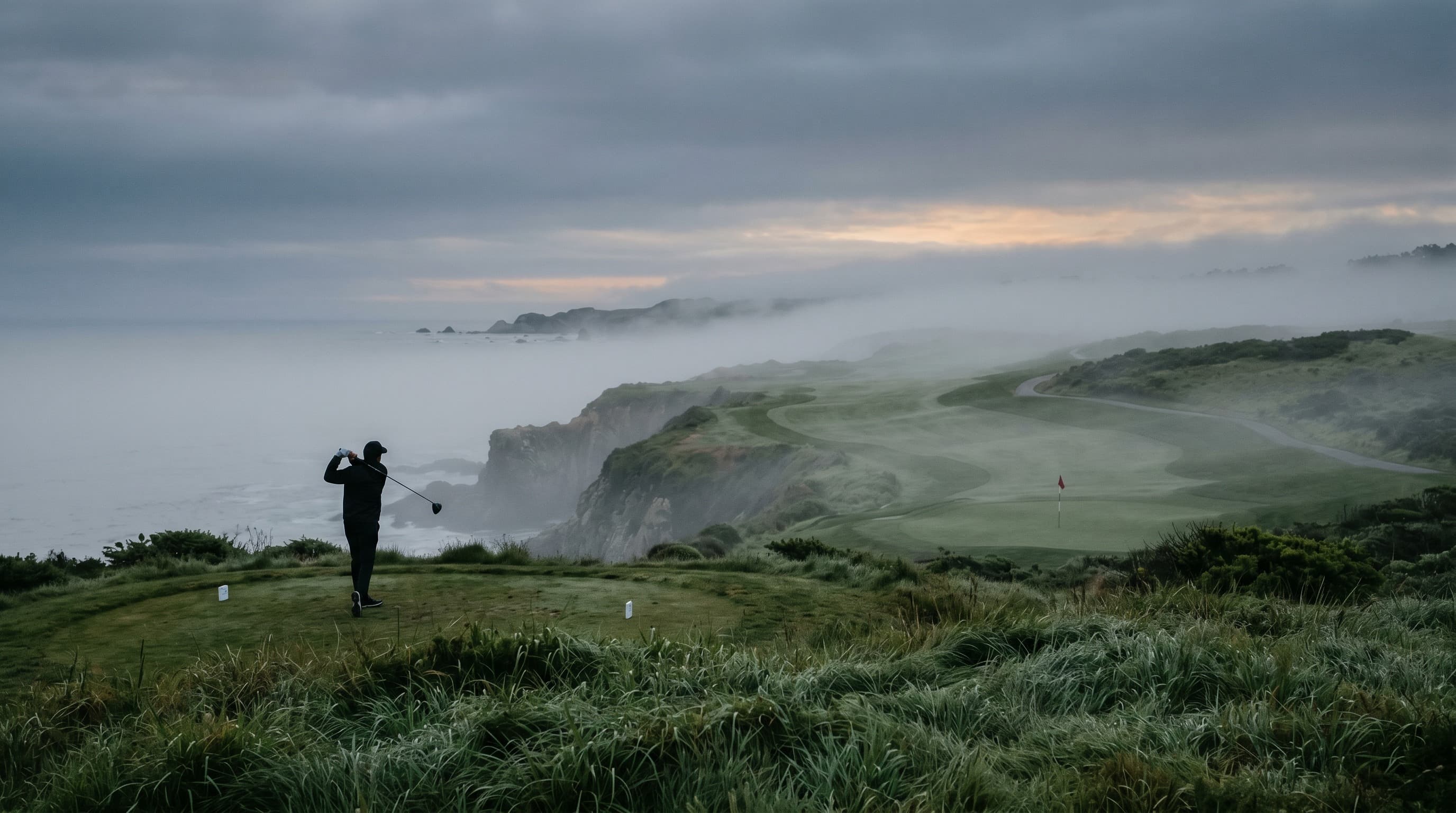
Reading Coastal Wind: How the Marine Layer Reshapes Pebble Beach, Bandon, and the Pacific Coast Game
Coastal golf does not play by inland rules. The marine layer suppresses wind in the morning, then releases it through midday in a thermal cycle that turns a calm 7am tee into a 22mph back nine. Here is the meteorology behind the pattern, the G-Score data that confirms it across the Pacific coast, and the morning workflow that turns the marine layer from a confusion into a competitive advantage.
Read Story
How to Read a G-Score: The 0–100 Golf Playability Number, Decoded
A G-Score on this site is a single 0–100 number that tells you whether today is worth tee-up. Here is exactly what each band means, what drives the calculation, and how to use it to plan a round you will actually score on.
Read StoryDanorie
Editorial & Data
Golf Weather Score is built by Danorie. We compute the G-Score — our own playability rating — from NOAA forecasts and published course scorecards, so any US course can be compared on any day with a single number. Methodology and data sources are documented on every page.
Every Friday Morning
When Carlton Oaks Golf plays best next weekend.
Friday 6am ET: peak G-Score windows for Carlton Oaks Golf, wind direction by hour, and one gear call. Three minutes to read, save you the round.
One email a week. Unsubscribe in one click.
The Caddie's Oracle
Draw your luck before the tee off