
Caddie's Gear Advisor
Curated for today's 59°F · Clouds
Tour-Level Drivers
Engineered for maximum distance and forgiveness
Laser Rangefinders
Pin-seeking technology for precision approaches
Premium Golf Balls
Tour-caliber spin and distance performance
Performance Sunglasses
Polarized lenses optimized for reading greens
Your Golf Trip, Handled
The Ultimate Golf Trip Planner
Everything you need to play Chambers Bay Golf Course — from booking your flight to checking in course-side.
Course-Side Stays
Luxury hotels, resorts, and stay-and-play packages just minutes from the first tee.
Flights
Compare fares across 700+ airlines for the best route to your tee time.
SUV Rentals for Golf Bags
Spacious vehicles with room for clubs, bags, and your foursome.
Travel Insurance
Coverage for medical, weather delays, and gear at your destination.
Chambers Bay Golf Course: Course Intelligence
Signature Setup
The starter's hut at Chambers Bay sits above a treeless bowl of fescue that drops toward Puget Sound, and the first thing you notice is that there is almost nothing green about it. Robert Trent Jones Jr. opened the course in 2007 on a former sand and gravel quarry in University Place, Washington, and he built it to look more like a Scottish links than a Pacific Northwest parkland track. The USGA noticed fast: Chambers Bay hosted the 2010 U.S. Amateur and then the 2015 U.S. Open, won by Jordan Spieth at five under. The signature image is the lone Douglas fir standing behind the 15th green — it is the only tree on the entire 18 holes, and the property leans on that fact hard.
Hole-by-Hole Wind & Playing Lines
Chambers Bay is routed in a loop around the bay, so the wind hits different holes from opposite sides through the round.
- Hole 4 (#1 handicap, par-4, 540y from the championship tees, downhill): On a NW wind off the Sound — common in the afternoon — the tee shot rides out but the approach climbs back into the breeze. I'd rather hit a full 7-iron from the fairway than a knockdown wedge off the back downslope.
- Hole 8 (par-5, 600y): Plays straight downwind most summer afternoons. The second shot tempts you, but the green sheds anything coming in hot. Lay up to a full third.
- Hole 16 (par-4, 418y): Right against the water, exposed to a left-to-right crosswind. The fairway tilts toward the bay, so aim up the left edge and let the slope feed it back.
Green & Fairway Characteristics
The fairways are fine fescue — firm, fast, and built to bounce — so a flighted shot that lands 15 yards short and releases is the percentage play in dry months. The greens were originally fescue too, which drew loud complaints at the 2015 Open ("broccoli," players called them); the course regrassed to Poa annua in 2021, and they now roll closer to 11 on the Stimpmeter for daily play. Elevation change is the real defense: there is roughly 100 feet of drop from the high points to the holes near the water, and several greens are benched into slopes that funnel mishits well away from the pin.
Seasonal Weather Pattern
This is a summer course. July and August average highs sit in the low-to-mid 70s°F with single-digit rainfall, and the fescue gets genuinely crusty — that's when Chambers Bay plays its links game. From November through March, Tacoma's marine climate drops you into the mid-40s°F with 5–6 inches of rain a month, the fescue goes soft, and the bounce disappears. I played a damp morning in late September at about 54°F and the same fairways that run forever in August simply stopped the ball dead.
Local Play Tips
Two things the booking page won't tell you. First, the walk is brutal — this is a true walking-only course (carts only for medical need), and the routing covers close to five miles with serious climbs, so a forecast in the 80s°F turns the back nine into a slog; carry less and bring more water than you think. Second, the morning is calm and the afternoon is not — I've stood on the 1st tee at 7:40 a.m. in dead air and finished the 18th into a 15 mph onshore wind four hours later.
Pre-Round Weather Workflow
Before you drive out to University Place, pull the 7-day G-Score for Chambers Bay and check two things. Look at the morning-vs-afternoon wind split: if the onshore breeze is forecast to build past 12 mph, take the earliest tee time you can get and play the exposed water holes (8 and 16) before it fills in. Then check the 48-hour rain history through the windExposure panel — if more than half an inch has fallen, the fescue won't release, so plan to fly approaches to the number instead of bouncing them in. On a dry, low-wind morning, Chambers Bay rewards the ground game; on a wet, windy afternoon, it's a different and far harder course.
Related Reading
Before you tee off at Chambers Bay Golf Course
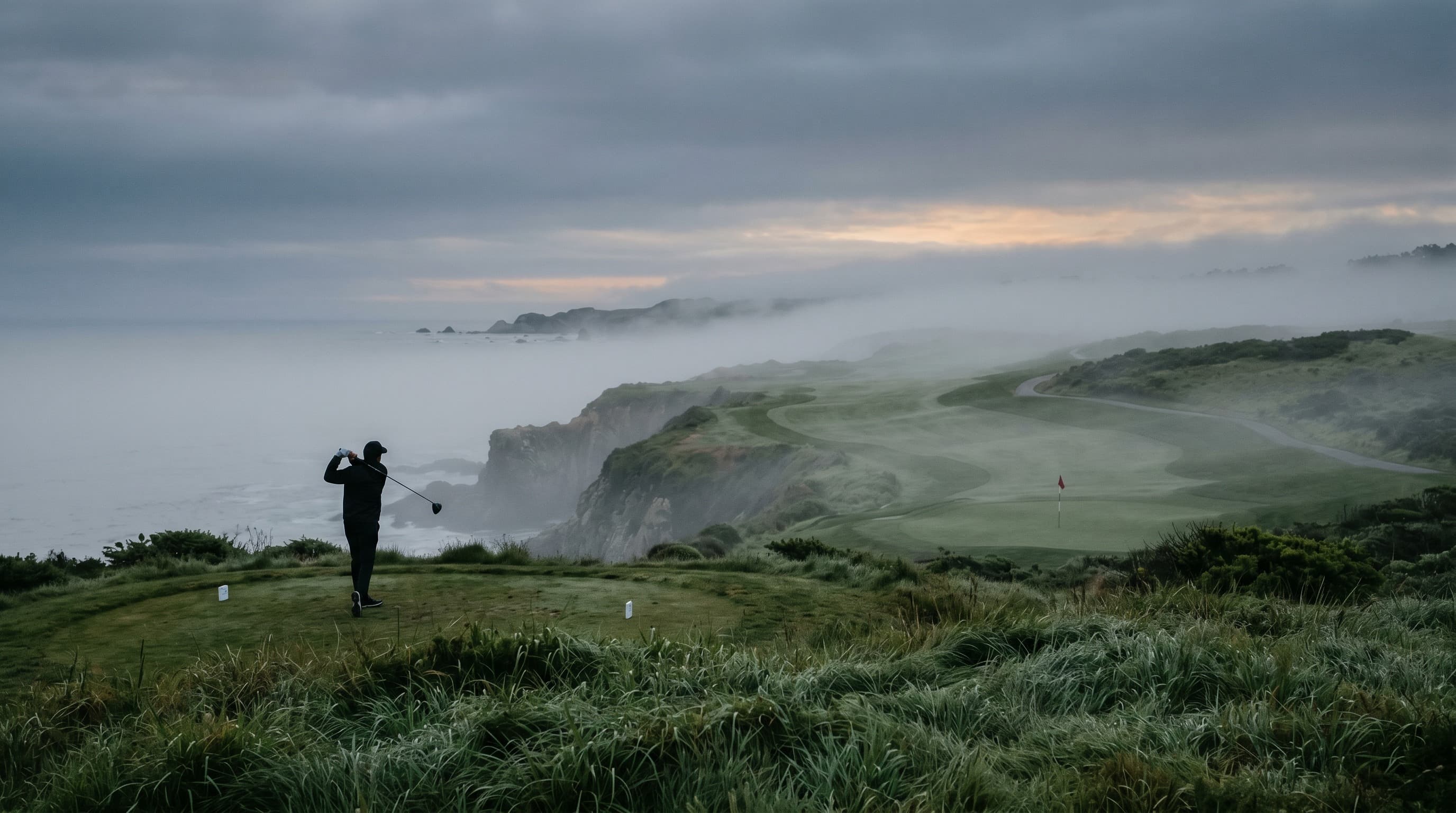
Reading Coastal Wind: How the Marine Layer Reshapes Pebble Beach, Bandon, and the Pacific Coast Game
Coastal golf does not play by inland rules. The marine layer suppresses wind in the morning, then releases it through midday in a thermal cycle that turns a calm 7am tee into a 22mph back nine. Here is the meteorology behind the pattern, the G-Score data that confirms it across the Pacific coast, and the morning workflow that turns the marine layer from a confusion into a competitive advantage.
Read Story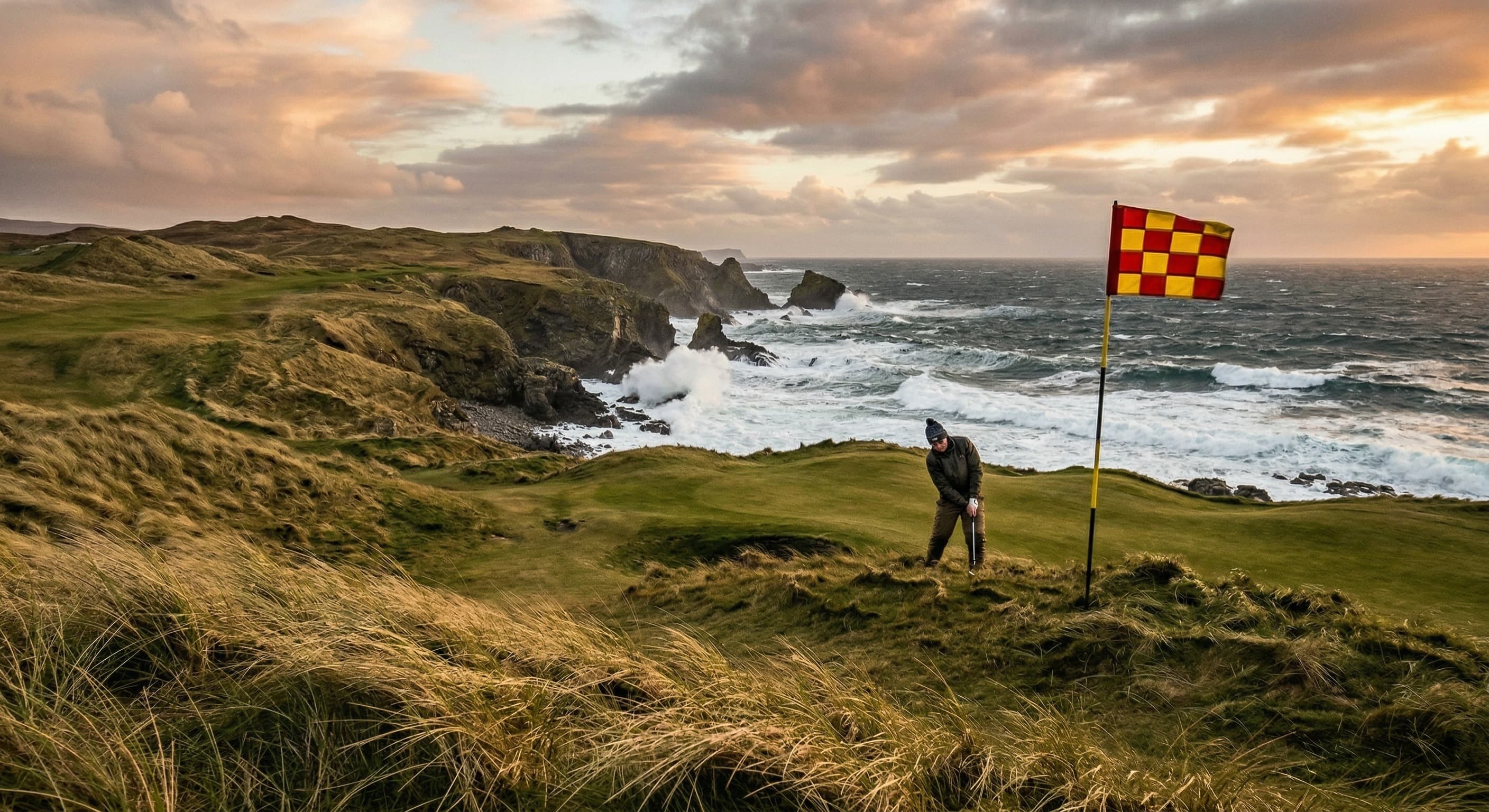
America's 20 Windiest Golf Courses: A G-Score Wind Analysis
We ranked America's 20 windiest golf courses using G-Score wind penalty data. See how coastal gusts and prairie gales reshape playability scores.
Read StoryDanorie
Editorial & Data
Golf Weather Score is built by Danorie. We compute the G-Score — our own playability rating — from live NOAA forecasts and published course scorecards, so any US course can be compared on any day with a single number. Methodology and data sources are documented on every page.
Every Friday Morning
When Chambers Bay Golf Course plays best next weekend.
Friday 6am ET: peak G-Score windows for Chambers Bay Golf Course, wind direction by hour, and one gear call. Three minutes to read, save you the round.
One email a week. Unsubscribe in one click.
The Caddie's Oracle
Draw your luck before the tee off