
Caddie's Gear Advisor
Curated for today's 70°F · Clear
Low-Spin Wind-Cheating Balls
Penetrating ball flight that holds its line in the gusts
Wind-Blocking Layers
Cut the chill and drag without choking your swing
Low-Launch Drivers
Lower spin off the tee for control in a crosswind
Secure-Fit Caps
Stay-put headwear built for a blustery round
Hapuna Golf Course: Course Intelligence
Arnold Palmer and Ed Seay designed Hapuna Golf Course in 1992 on the Kohala Coast of the Big Island of Hawaii, on a piece of volcanic lava-flow land just up the highway from Mauna Kea Resort. The course is the resort's primary championship layout — Mauna Kea Resort's other course is the legendary 1964 Robert Trent Jones Sr. design that gets all the destination attention — and Hapuna sits higher on the mountain, with more wind exposure and more elevation change than its older neighbor. The two courses together form the most-played destination golf pair in the Hawaiian Islands.
The scorecard reads 6,895 yards from the back markers, par 72, with a slope of 134 and a course rating of 73.5. The four par-3s sit between 155 and 178 yards. The 178-yard second is the longest one-shotter and plays uphill against the prevailing northeast trade wind; the 155-yard fifth is the shortest and plays to a green elevated against a black lava-flow backdrop. The four par-5s range from 533 to 566 yards — none of them unreachable for the modern long hitter, but the trade wind compresses the carry distance on most of them.
The number-one handicap is the 441-yard fourth — a par-4 played from an elevated tee down to a fairway that wraps right around an old lava-flow ridge Palmer left in place rather than removing. The 437-yard second-hardest is the par-4 fourteenth; the 545-yard third-hardest is the par-5 ninth, the only par-5 in the top-three hardest. The course's defense is the wind — the daily three-o'clock trade gusts can pull a 7-iron forty yards off-line on the exposed back nine.
The Hawaiian climate keeps Hapuna playable year-round. The prime window is November through April when the trades moderate and the air dries out; May through October produces the most consistent wind and the firmest fairway turf. Walking is allowed; carts are standard for resort play. The course is daily-fee public-access through Mauna Kea Resort or its sister Westin Hapuna Beach Hotel.
Related Reading
Before you tee off at Hapuna Golf Course
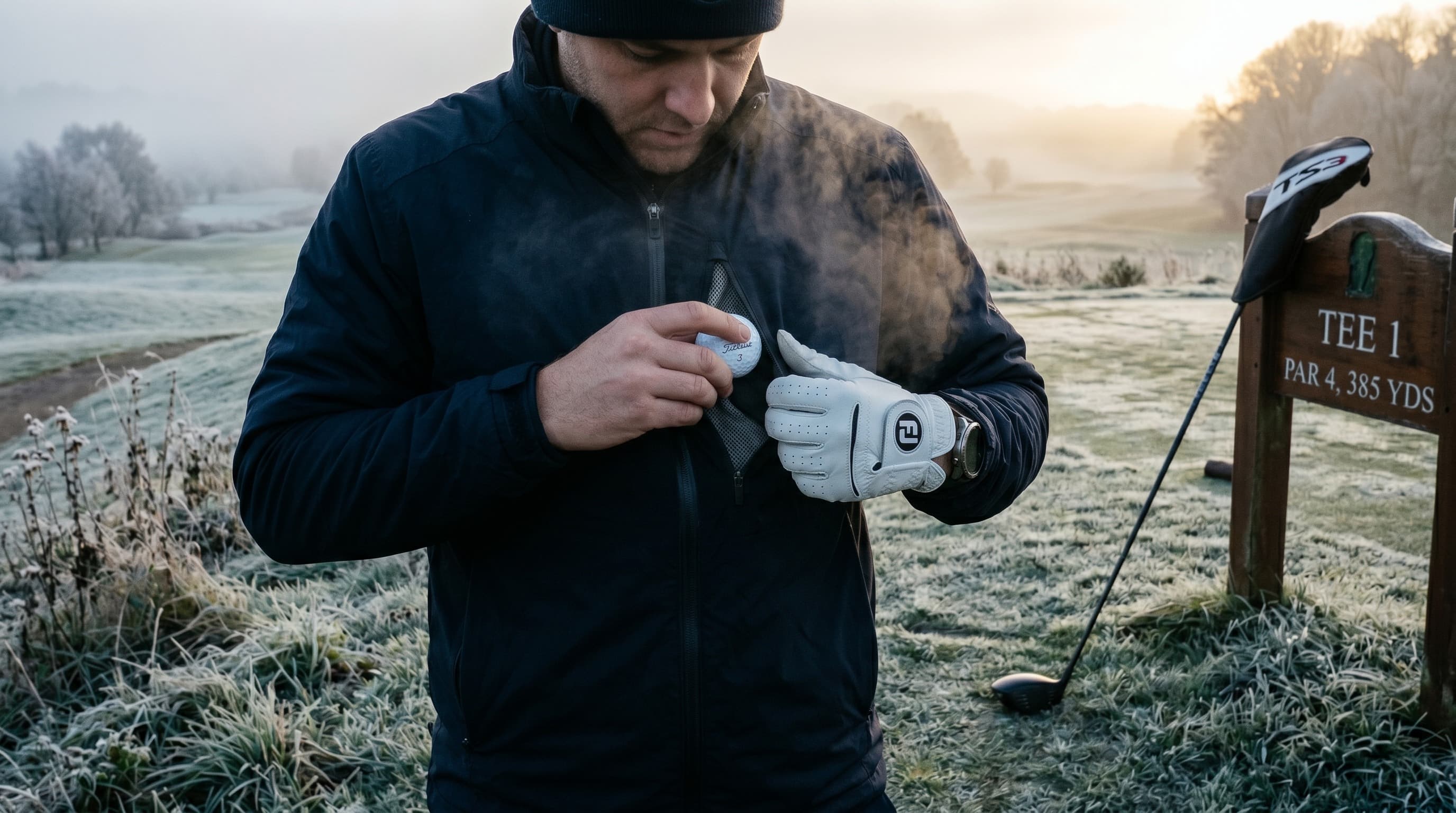
How Cold Weather Steals Distance: The Ball Compression Physics Every Golfer Should Know
Every 10°F drop costs the average golfer two to four yards of driver carry. Here is the physics — ball compression, air density, muscle temperature — and the field data we pulled from G-Score-monitored cold rounds to show exactly how distance loss compounds, and how to compensate without changing your swing.
Read Story
Best Golf Weather by State: Ranking America by Average G-Score
We ranked all 50 US states by average G-Score golf playability. California tops the list, but the results beyond the top five may surprise you.
Read StoryDanorie
Editorial & Data
Golf Weather Score is built by Danorie. We compute the G-Score — our own playability rating — from live NOAA forecasts and published course scorecards, so any US course can be compared on any day with a single number. Methodology and data sources are documented on every page.
Every Friday Morning
When Hapuna Golf Course plays best next weekend.
Friday 6am ET: peak G-Score windows for Hapuna Golf Course, wind direction by hour, and one gear call. Three minutes to read, save you the round.
One email a week. Unsubscribe in one click.
The Caddie's Oracle
Draw your luck before the tee off