
Caddie's Gear Advisor
Curated for today's 90°F · Thunderstorm
Storm-Ready Outerwear
Waterproof layers built for 18 holes in the rain
Tour-Grade Umbrellas
68" double-canopy wind-resistant coverage
Wet-Weather Gloves
All-weather grip that performs in the rain
Waterproof Golf Shoes
Keep your feet dry through every fairway
Your Golf Trip, Handled
The Ultimate Golf Trip Planner
Everything you need to play Kingsmill Resort: The Plantation Course — from booking your flight to checking in course-side.
Course-Side Stays
Luxury hotels, resorts, and stay-and-play packages just minutes from the first tee.
Flights
Compare fares across 700+ airlines for the best route to your tee time.
SUV Rentals for Golf Bags
Spacious vehicles with room for clubs, bags, and your foursome.
Travel Insurance
Coverage for medical, weather delays, and gear at your destination.
Kingsmill Resort: The Plantation Course: Course Intelligence
Signature Setup
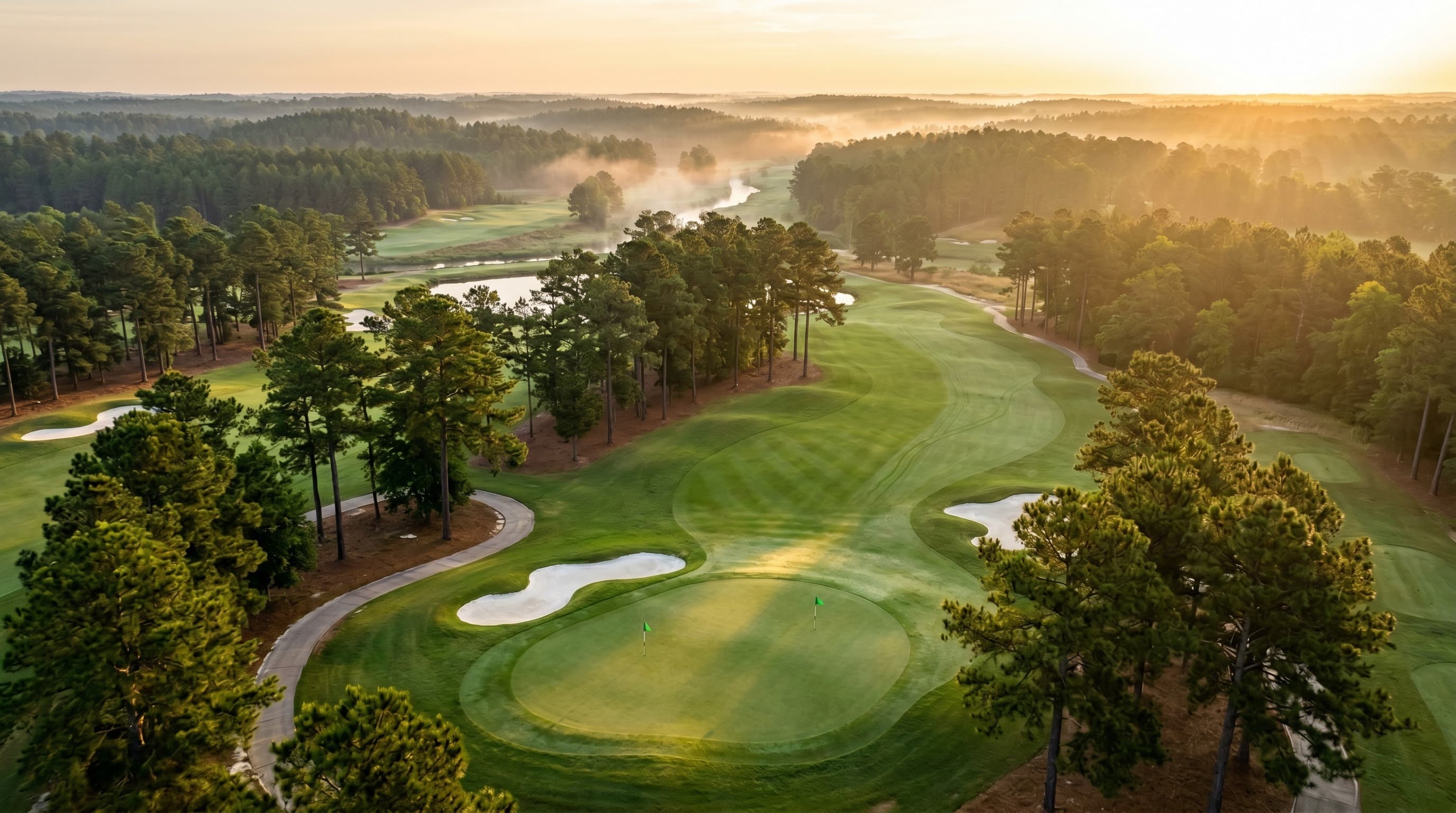
The first thing you notice at Kingsmill's Plantation Course is the dew. I walked the property on an early-October morning, 58°F at 8 a.m., a low river mist still hanging over the fairways before the sun burned it off — the kind of soft, heavy turf that eats roll and rewards a flighted approach. This is the gentler of Kingsmill's three layouts, and it wears its colonial history openly.
Arnold Palmer and Ed Seay routed the Plantation Course in 1986 on the grounds of the old Kingsmill plantation, along the tidal James River in Williamsburg, Virginia. The back nine threads past the brick ruins of the 18th-century Burwell estate, which gives the course its name and its quieter, parkland character. It plays to par 72 at roughly 6,605 yards from the back tees — short by modern resort standards, but the river breeze and soft transition-zone turf do the defending. The River Course next door hosts the LPGA; the Plantation is where you go to actually enjoy your round.
Hole-by-Hole Wind & Playing Lines
I rely on the published scorecard for exact hole order here — I have not played all 18 in tournament conditions — but the wind logic on this property is consistent and worth planning around.
The #1-handicap par-4 (~440y). The longest two-shotter ranks as the toughest hole, and it runs into the prevailing summer SW breeze off the river. Into a 10–12 mph wind a 150-yard approach stretches closer to 170; favor the right-center off the tee and take one extra club into the back-to-front green.
The short par-3s (back nine). These are the holes that bite. Sitting low near the river corridor, they are the most wind-exposed on the course. On a still morning they are wedge-to-short-iron; once the afternoon SW breeze fills in, the same shot needs two more clubs and a lower flight to hold the green.
The reachable par-5s. Downwind in calm air they tempt you to go for it in two; into the river breeze they become honest three-shotters. Lay back to a full wedge yardage rather than dumping a half-club layup into the greenside zoysia.
Green & Fairway Characteristics
Williamsburg sits in the turf transition zone, so the greens are bentgrass — they run a moderate ~10 on the Stimp, smooth but not lightning, and they soften noticeably under summer humidity and morning dew. Fairways are zoysia and Bermuda, lush and slow to roll out, especially before mid-morning when the river mist lifts. That softness is the whole strategic story: at 6,605 yards the Plantation looks short on paper, but heavy air and damp turf strip the carry-and-roll that a number like that promises. Plan for landing-spot golf, not chase. Slope sits in the mid-120s from the back tees — a fair test, with trouble coming from water and the tree-lined parkland corridors rather than brutal length or rough.
Seasonal Weather Pattern
Williamsburg is humid-subtropical Tidewater Virginia, near 37.2°N on the James River, and the seasons swing wide. Spring (April–May) is the firmest, most pleasant window: 55–78°F with calm mornings before light afternoon river breezes of 8–12 mph. Summer (June–August) turns hot and sticky — 85–92°F with humidity routinely above 70% and near-daily afternoon thunderstorms rolling up the river corridor. That moisture, per NOAA Tidewater-area records, is what softens carry distance more than visitors expect. Fall (September–October) is the connoisseur's season: 58–80°F, lighter wind, firmer turf. Winter brings mild 40s–50s with occasional frost delays on the early tee times.
Local Play Tips
Something the scorecard won't tell you: the river mist and dew sit on this property well past sunrise in spring and fall, so the very first tee times play slower and softer than the same holes two hours later. If you want firm greens and roll, a mid-morning tee time beats the dawn slot here — the opposite of most coastal courses I write about. In summer the calculation flips entirely: the early window is the only way to beat both the afternoon thunderstorms and the worst of the humidity. I have not played the Plantation in peak August heat, so I lean on historical data for that month — but the pattern across Tidewater Virginia is reliable enough to bet a tee time on.
Pre-Round Weather Workflow
Use the 7-day G-Score on this page the way I do. Three days out, check whether your window lands before or after the afternoon SW river breeze builds — on the exposed back-nine par-3s that single factor swings the score 8–12 points. The morning of, read the windExposure panel: an SW reading means the short par-3s and the #1-handicap par-4 play into the breeze, so club up one and flight the ball lower. If the forecast reads above 85°F with high humidity, expect shorter carry and softer greens — take the extra club, fly your approach in with spin, and don't trust the 6,605-yard scorecard to mean "easy." On a damp Williamsburg morning, the Plantation defends itself just fine.
Related Reading
Before you tee off at Kingsmill Resort: The Plantation Course
The May 2026 G-Score Heatmap: Where American Golf Peaks This Spring
May is the most underrated month on the American golf calendar. Five regions hit their annual peak this spring, three turn quietly hostile, and the data tells a clearer story than the brochures. Here is where to play, where to avoid, and how to time your booking window.
Read Story
Reading Coastal Wind: How the Marine Layer Reshapes Pebble Beach, Bandon, and the Pacific Coast Game
Coastal golf does not play by inland rules. The marine layer suppresses wind in the morning, then releases it through midday in a thermal cycle that turns a calm 7am tee into a 22mph back nine. Here is the meteorology behind the pattern, the G-Score data that confirms it across the Pacific coast, and the morning workflow that turns the marine layer from a confusion into a competitive advantage.
Read StoryMinSu Kim
Founder & Golf Data Analyst
MinSu is a data analyst and golfer with 10+ years on the course. He built Golf Weather Score to answer one question: is today a good day to play? He combines weather data, course intelligence, and the proprietary G-Score algorithm to help golfers make smarter decisions.
Every Friday Morning
When Kingsmill Resort: The Plantation Course plays best next weekend.
Friday 6am ET: peak G-Score windows for Kingsmill Resort: The Plantation Course, wind direction by hour, and one gear call. Three minutes to read, save you the round.
One email a week. Unsubscribe in one click.
The Caddie's Oracle
Draw your luck before the tee off