
Caddie's Gear Advisor
Curated for today's 63°F · Clear
Tour-Level Drivers
Engineered for maximum distance and forgiveness
Laser Rangefinders
Pin-seeking technology for precision approaches
Premium Golf Balls
Tour-caliber spin and distance performance
Performance Sunglasses
Polarized lenses optimized for reading greens
Your Golf Trip, Handled
The Ultimate Golf Trip Planner
Everything you need to play Olympic Club Golf Course — from booking your flight to checking in course-side.
Course-Side Stays
Luxury hotels, resorts, and stay-and-play packages just minutes from the first tee.
Flights
Compare fares across 700+ airlines for the best route to your tee time.
SUV Rentals for Golf Bags
Spacious vehicles with room for clubs, bags, and your foursome.
Travel Insurance
Coverage for medical, weather delays, and gear at your destination.
Olympic Club Golf Course: Course Intelligence
Signature Setup
I walked the Lake Course on a raw morning in mid-November, 8 a.m., 51°F with a fine drizzle coming sideways off Lake Merced — the kind of day San Franciscans shrug at and visitors badly underestimate. By the 4th hole my glove was soaked and my driver carry had dropped a full club. I have only played it once in these wet-season conditions, so the dry-summer comparisons below lean on historical setup data rather than my own scorecard.
The Lake is the older championship 18 inside a 36-hole private club above the Pacific; the Ocean Course shares the property, and Harding Park sits just across Lake Merced. Wilfrid Reid and Sam Whiting laid out the Lake in 1924, a 1925 landslide destroyed the original routing, and Whiting's rebuild reopened in 1927. It has since decided five U.S. Opens — 1955, 1966, 1987, 1998 and 2012 — each in cool, gray coastal air, never in the heat.
Hole-by-Hole Wind & Playing Lines
The Lake's signature defense is that its fairways cant the opposite way the holes bend, and in winter that camber gets worse: wet, heavy turf grips a draw and feeds it left into the cypress.
The 16th, stretched near 670 yards, is the longest hole on the property and plays straight into the prevailing west-to-northwest wind on most mornings — a genuine three-shot par-5 even for a single-digit player. Keep the tee ball right to fight the left tilt, then lay back to a full wedge. The 17th, a par-5 around 522 yards climbing through a narrowing chute of trees, is where the cold air costs you most: a hero driver gets kicked off the camber into trouble, so I take 3-wood up the high side. The 18th, the famous 344-yard uphill par-4, becomes a soft mid-wedge to its tiny amphitheater green when the air is dead and damp — but any swirl over the clubhouse turns it nasty.
Green & Fairway Characteristics
Thousands of cypress, eucalyptus and pine frame nearly every fairway, and the course carries famously few bunkers — the trees and the slope are the hazard, not sand. The poa/rye fairways sit slow and wet in marine air and hold almost no roll in the rainy months, so total carry is the number that matters. Greens are small, firm poa annua surfaces that pitch with the hillside; putts break harder toward Lake Merced than your eye reads. Almost no lie on the property is truly flat, front nine or back.
Seasonal Weather Pattern
Olympic is the coolest, dampest championship venue in American golf. Rainfall clusters December through March, and even outside the storms the marine layer holds mornings in the low-to-mid 50s°F year-round while inland California bakes. The west-northwest breeze off the ocean and the lake settles into a steady 10–15 mph most afternoons once the fog lifts. The summers are dry but rarely warm; the winters are wet, cold and short on roll — the opposite end of the spectrum from the foggy-but-dry August window most guests picture.
Local Play Tips
In the wet season, check your lie before you commit. The low fairways pool water and the ball plugs, so a fairway hit does not guarantee a clean strike — and on this course a muddy lie costs you the two clubs you cannot afford to give back. Carry a dry towel under an umbrella for grips, club up at least one extra for the cold dense air, and aim further up the high side of each dogleg than feels right, because the soaked fairway will feed the ball downhill toward the turn faster than in summer.
Pre-Round Weather Workflow
Check the 7-day G-Score for the San Francisco coastal zone the night before and pick the slot with the lowest rainfall probability and windExposure rating — in winter that often means threading a dry window between storms rather than chasing a calm morning. Plan on at least one extra club for the heavy air and treat the 16th and 17th as wind-and-wet dependent: a dry, calm window makes them playable, a wet northwest breeze makes them brutal. For more Northern California coastal timing notes and nearby venues, see our California golf weather hub.
Course facts confirmed via U.S. Open championship records (five Opens: 1955, 1966, 1987, 1998, 2012; 2012 Lake Course setup par 71, 7,170 yards) and published Olympic Club history (Reid & Whiting, 1924; Whiting rebuild reopened 1927).
Related Reading
Before you tee off at Olympic Club Golf Course

The Mental Game: Sports Psychology Research Behind Golf's Greatest Clutch Performers
Science-backed sports psychology research reveals why golf's greatest clutch performers master pressure through routines, visualization, and focus.
Read Story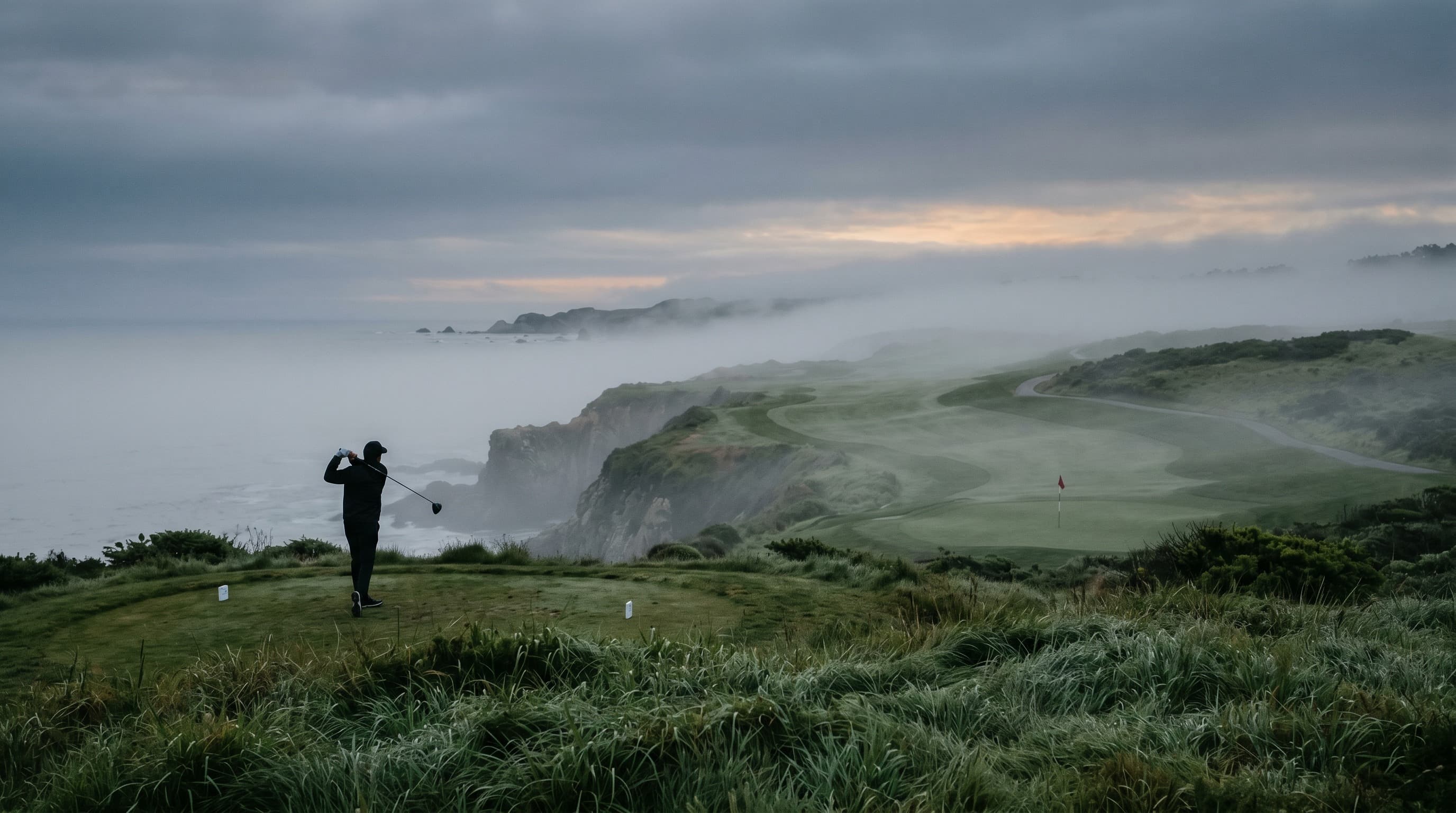
Reading Coastal Wind: How the Marine Layer Reshapes Pebble Beach, Bandon, and the Pacific Coast Game
Coastal golf does not play by inland rules. The marine layer suppresses wind in the morning, then releases it through midday in a thermal cycle that turns a calm 7am tee into a 22mph back nine. Here is the meteorology behind the pattern, the G-Score data that confirms it across the Pacific coast, and the morning workflow that turns the marine layer from a confusion into a competitive advantage.
Read StoryMinSu Kim
Founder & Golf Data Analyst
MinSu is a data analyst and golfer with 10+ years on the course. He built Golf Weather Score to answer one question: is today a good day to play? He combines weather data, course intelligence, and the proprietary G-Score algorithm to help golfers make smarter decisions.
Every Friday Morning
When Olympic Club Golf Course plays best next weekend.
Friday 6am ET: peak G-Score windows for Olympic Club Golf Course, wind direction by hour, and one gear call. Three minutes to read, save you the round.
One email a week. Unsubscribe in one click.
The Caddie's Oracle
Draw your luck before the tee off