
Caddie's Gear Advisor
Curated for today's 63°F · Clear
Tour-Level Drivers
Engineered for maximum distance and forgiveness
Laser Rangefinders
Pin-seeking technology for precision approaches
Premium Golf Balls
Tour-caliber spin and distance performance
Performance Sunglasses
Polarized lenses optimized for reading greens
Your Golf Trip, Handled
The Ultimate Golf Trip Planner
Everything you need to play Olympic Club Lake Course — from booking your flight to checking in course-side.
Best time to golf in CaliforniaCourse-Side Stays
Luxury hotels, resorts, and stay-and-play packages just minutes from the first tee.
Flights
Compare fares across 700+ airlines for the best route to your tee time.
SUV Rentals for Golf Bags
Spacious vehicles with room for clubs, bags, and your foursome.
Travel Insurance
Coverage for medical, weather delays, and gear at your destination.
Olympic Club Lake Course: Course Intelligence
Signature Setup
The 18th at Olympic looks impossible to finish a U.S. Open on — a 344-yard par-4 climbing uphill to a green wedged into a hillside amphitheater barely the size of a putting clock. I played the Lake Course once as a member's guest in late August, teeing off at 7:40 a.m. into thick fog at about 54°F, and I still remember laying up off the 18th tee with an iron because the fairway felt like it was tilting the ball back down the hill at me. I have not played it in winter, so my cool-weather notes here lean on the August round and historical data.
The Lake Course is the work of Wilfrid Reid and Sam Whiting in 1924, but a 1925 landslide tore up the original routing, and Whiting rebuilt it, reopening in 1927. Since then it has hosted five U.S. Opens — 1955 (Jack Fleck's playoff stunner over Ben Hogan), 1966 (Billy Casper erasing Arnold Palmer's seven-shot back-nine lead), 1987 (Scott Simpson over Tom Watson), 1998 (Lee Janzen over Payne Stewart), and 2012 (Webb Simpson at 1-over). Every one of those Opens was decided in cool, gray San Francisco air.
Hole-by-Hole Wind & Playing Lines
Olympic's defining trick is that the fairways tilt the opposite way from where the hole bends. On the prevailing W-to-NW sea breeze off Lake Merced, that matters most on the long stuff.
The 16th, the par-5 stretched near 670 yards, plays dead into that breeze most mornings — a true three-shot hole where even a strong player should keep the tee ball right to hold the left-canting fairway, then lay back to a full wedge. The 17th, a reachable-on-paper par-5 around 522 yards, narrows to a chute of cypress; into a crossing NW wind the smart play is a positional 3-wood, not a hero driver that the right-to-left camber will kick into the trees. The 18th, that 344-yard closer, is all about wind on a short club — in the calm fog it is a wedge to a postage stamp, but a swirling afternoon gust over the clubhouse turns it into the most nerve-wracking 130-yard shot in golf.
Green & Fairway Characteristics
The Lake Course has thousands of cypress, eucalyptus, and pine framing nearly every fairway, and famously few bunkers — the defense is the trees and the cant of the ground, not sand. Fairways are poa/rye that sit damp and slow in the marine air, so the ball does not run out; carry distance is what counts. The greens are small, firm poa annua surfaces that pitch with the hillside, and putts break harder toward Lake Merced than the eye suggests. Front nine and back nine both climb and fall across the slope, so very few lies are truly flat.
Seasonal Weather Pattern
This is the foggiest, coolest championship venue in American golf. The Pacific marine layer — locals call the fog "Karl" — sits over the course on summer mornings, holding temperatures in the low-to-mid 50s°F even in July and August while inland California bakes. Wind off the ocean and Lake Merced runs a steady 10–15 mph from the west-northwest most afternoons once the fog lifts. Rainfall clusters December through March; summers are dry but rarely warm, and the damp, heavy air is exactly why the course plays so long for its yardage.
Local Play Tips
Club up everywhere in the morning fog. The combination of 54°F air, sea-level dampness, and zero roll on poa fairways quietly steals 10–15 yards of total distance off the tee and into greens — most first-timers come up short all day and blame their swing. Trust your high-altitude instincts in reverse here: this is the heaviest-playing air you will find on a U.S. course. And on every dogleg, aim a touch further up the high side than feels right, because the fairway will feed the ball back toward the turn.
Pre-Round Weather Workflow
Check the 7-day G-Score for the San Francisco coastal zone the night before and book the earliest slot with the lowest windExposure rating — the foggy, dead-calm morning will almost always grade higher than the breezy afternoon at Olympic. Plan on at least one extra club for the cold, dense air, and treat the 16th and 18th as wind-dependent: a calm window makes them playable, an afternoon NW breeze makes them brutal. For more Northern California coastal timing notes and nearby venues, see our California golf weather hub.
Course facts confirmed via U.S. Open championship records (five Opens: 1955, 1966, 1987, 1998, 2012; 2012 setup par 71, 7,170 yards) and published Olympic Club history (Reid & Whiting, 1924; Whiting rebuild reopened 1927).
Related Reading
Before you tee off at Olympic Club Lake Course
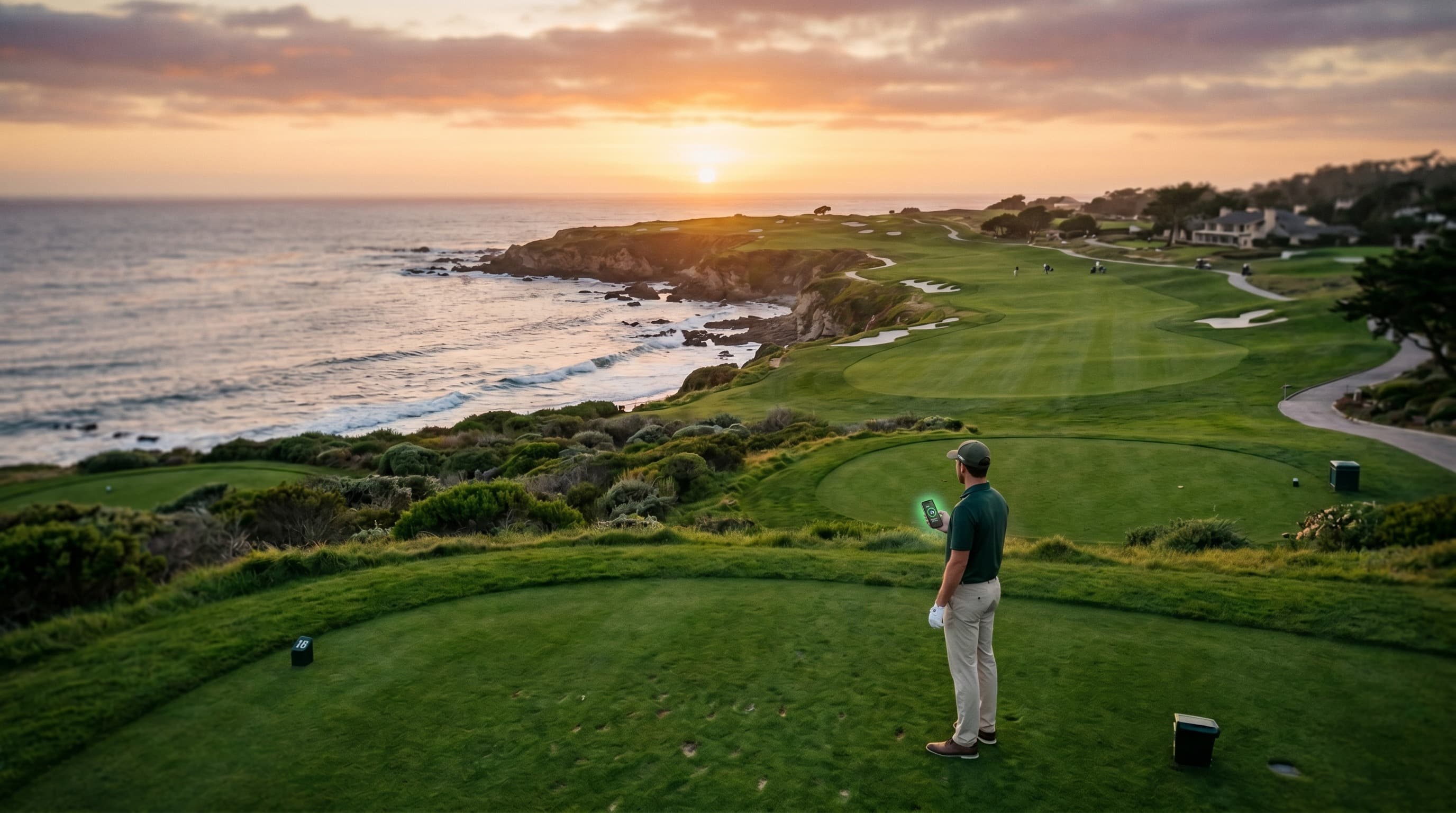
How to Read a G-Score: The 0–100 Golf Playability Number, Decoded
A G-Score on this site is a single 0–100 number that tells you whether today is worth tee-up. Here is exactly what each band means, what drives the calculation, and how to use it to plan a round you will actually score on.
Read Story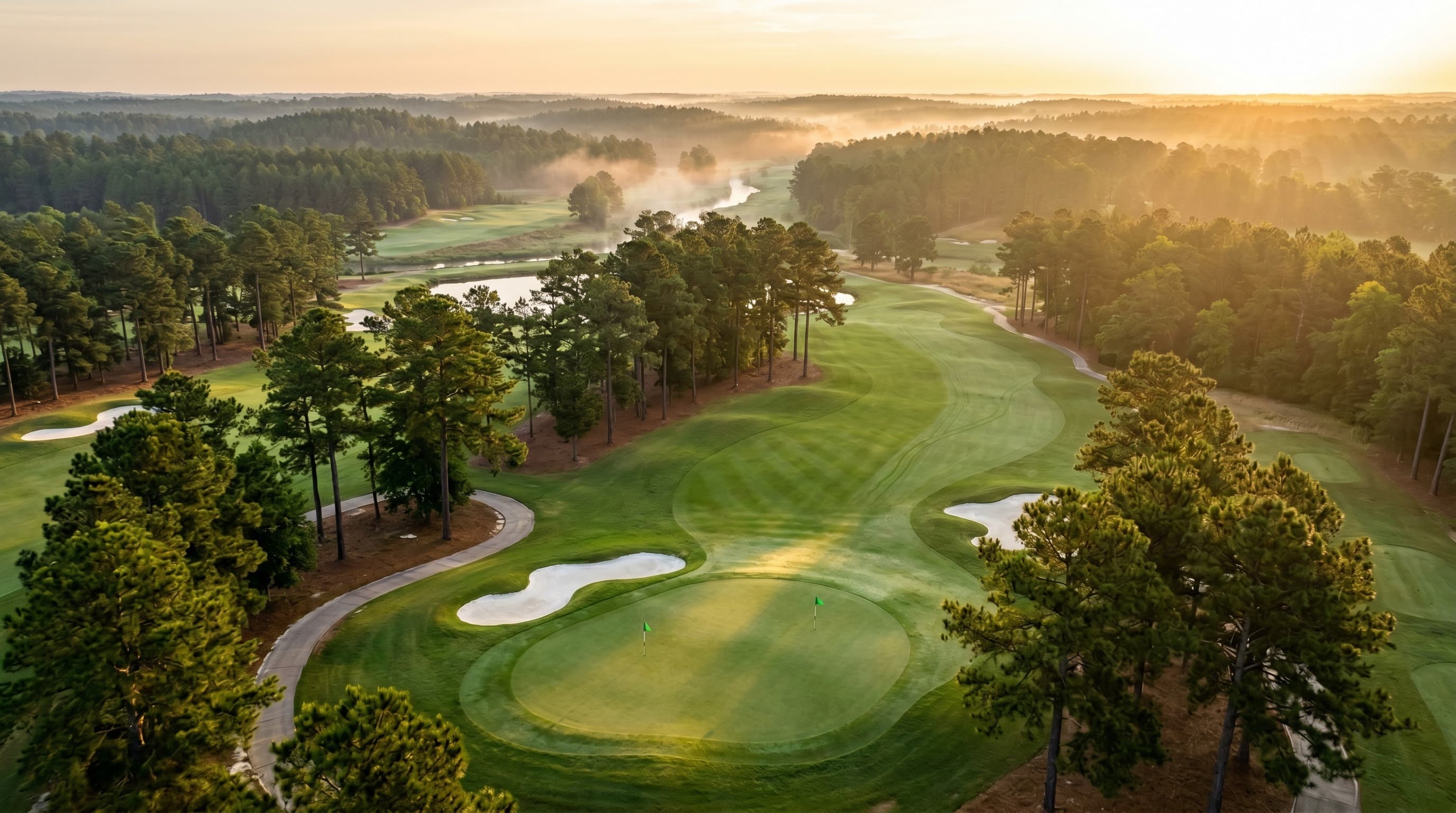
The May 2026 G-Score Heatmap: Where American Golf Peaks This Spring
May is the most underrated month on the American golf calendar. Five regions hit their annual peak this spring, three turn quietly hostile, and the data tells a clearer story than the brochures. Here is where to play, where to avoid, and how to time your booking window.
Read StoryDanorie
Editorial & Data
Golf Weather Score is built by Danorie. We compute the G-Score — our own playability rating — from live NOAA forecasts and published course scorecards, so any US course can be compared on any day with a single number. Methodology and data sources are documented on every page.
Every Friday Morning
When Olympic Club Lake Course plays best next weekend.
Friday 6am ET: peak G-Score windows for Olympic Club Lake Course, wind direction by hour, and one gear call. Three minutes to read, save you the round.
One email a week. Unsubscribe in one click.
The Caddie's Oracle
Draw your luck before the tee off