
Caddie's Gear Advisor
Curated for today's 60°F · Clouds
Tour-Level Drivers
Engineered for maximum distance and forgiveness
Laser Rangefinders
Pin-seeking technology for precision approaches
Premium Golf Balls
Tour-caliber spin and distance performance
Performance Sunglasses
Polarized lenses optimized for reading greens
Your Golf Trip, Handled
The Ultimate Golf Trip Planner
Everything you need to play Pebble Beach Golf Course — from booking your flight to checking in course-side.
Best time to golf in CaliforniaCourse-Side Stays
Luxury hotels, resorts, and stay-and-play packages just minutes from the first tee.
Flights
Compare fares across 700+ airlines for the best route to your tee time.
SUV Rentals for Golf Bags
Spacious vehicles with room for clubs, bags, and your foursome.
Travel Insurance
Coverage for medical, weather delays, and gear at your destination.
Pebble Beach Golf Course: Course Intelligence
Signature Setup
I played Pebble in late October, a 7:50 a.m. tee time off the 1st, hands colder than I'd dressed for — 51°F with the marine layer still sitting on Carmel Bay. By the 4th the fog had thinned to a flat silver light, and that's the version of Pebble Beach I think most golfers underestimate: it is not the postcard. It is a small, firm, wind-exposed course that punishes a soft miss.
Jack Neville and Douglas Grant routed it in 1919 along the Monterey Peninsula, and the design has aged into the rarest thing in American golf — a public course that has hosted six U.S. Opens (1972, 1982, 1992, 2000, 2010, 2019) and the AT&T Pebble Beach Pro-Am every winter. The famous coastal run from the 6th through the 10th hugs the cliff edge with almost no margin on the right.
Hole-by-Hole Wind & Playing Lines
Hole 9 (#1 handicap, par-4, 481y from the back). This is the hole that decides your card. It runs downhill toward the ocean, and the prevailing NW sea breeze pushes your ball right — straight toward the cliff. On a 12–15 mph afternoon wind I aimed at the left-center bunker and let it drift back; club up one, because the downhill lie tempts you to under-club into a green that won't hold a hot approach.
Hole 8 (par-4, 428y). The second shot is the one Jack Nicklaus once called his favorite in golf: a blind-then-revealed approach across a 100-yard chasm to a green perched on the cliff. On a calm morning it's a mid-iron carry; into a freshening W wind it becomes a 6-iron you have to trust. Bail left, never right.
Hole 7 (par-3, 106y). The shortest hole on tour and the most weather-dependent shot you'll hit all day. At 8 a.m. with no wind it's a soft wedge. By 1 p.m., into a 20 mph onshore gust, the same shot is a punched 7-iron. I've seen the club selection swing four irons on this one hole within a single afternoon.
Green & Fairway Characteristics
Two words define putting at Pebble: tiny and Poa. The greens average roughly 3,500 square feet — about as small as any surface in the game — and they're Poa annua, which means they're at their truest early. Catch them in the morning and they roll smooth and honest; let the round drift toward mid-afternoon and the Poa grows bumpy while every break tilting toward Carmel Bay turns into a guess. The fairways play firm enough that a 270-yard drive can scamper out to 290 across the front, then the same ball can settle into damp marine-layer turf on the shaded holes and stop dead. The inward half reads longer on the card, but the 543-yard par-5 18th curling along the bay offers a genuine birdie if your second stays left of the seawall.
Seasonal Weather Pattern
What makes Pebble's weather tricky isn't its range — it's how little the thermometer tells you. Coastal Monterey hovers at 55–63°F nearly year-round with barely any seasonal swing, so the marine layer, not temperature, is the number that actually moves a card. The foggiest mornings come in summer (June–August), the overcast often refusing to lift before 11 a.m. The clearest, stillest mornings I've ever played here arrive in October and early November, which is precisely why fall is when I book. NOAA buoy readings off Monterey back up what you feel: afternoon onshore winds routinely reach 15–20 mph, building from about 10 a.m. on nearly every dry-season day.
Local Play Tips
One thing the yardage book won't tell you: the 6th, 8th, and 9th greens sit high enough that the wind there is consistently 3–5 mph stronger than what you feel on the tee box below. I add half a club on those approaches regardless of what the flag at my feet is doing. Also — the 18th seawall is closer than it looks from the fairway; I've watched two playing partners aim "safely right" and find the beach.
Pre-Round Weather Workflow
My pre-round habit at Pebble is built around the 7-day G-Score at the top of this page. The first thing I check, roughly three days out, is whether my tee time sits ahead of the 11 a.m. sea-breeze build or behind it — at this course that one detail is worth 8–12 G-Score points. On the morning itself, windExposure gives me direction, and direction decides the coast: an NW or W wind pushes 8, 9, and 10 toward the cliff, so I aim left the entire way down the shoreline. And when the marine layer reads heavy with the temperature under 55°F, I plan on the shaded inland fairways giving no release at all and add a club into every green.
Related Reading
Before you tee off at Pebble Beach Golf Course
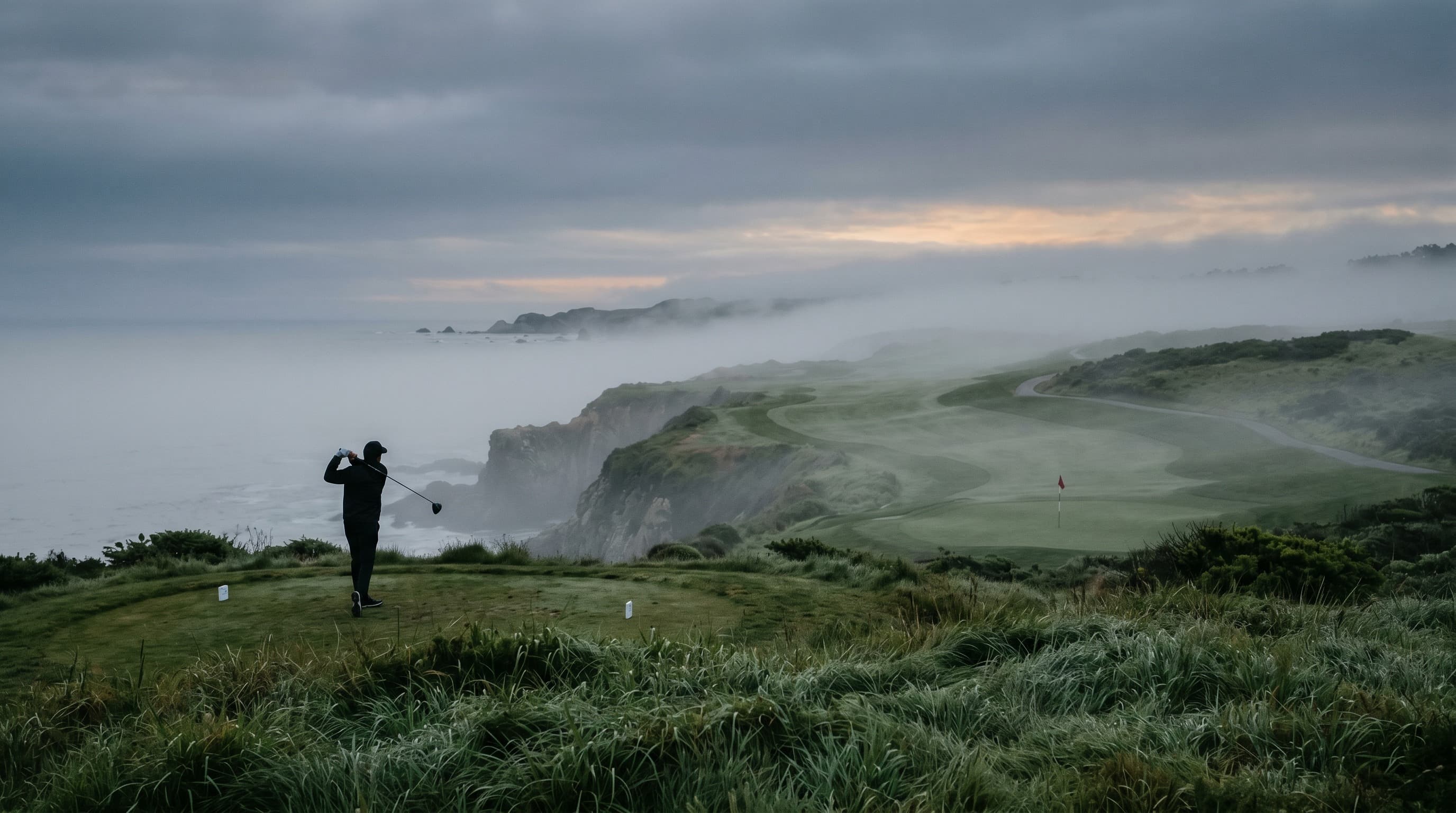
Reading Coastal Wind: How the Marine Layer Reshapes Pebble Beach, Bandon, and the Pacific Coast Game
Coastal golf does not play by inland rules. The marine layer suppresses wind in the morning, then releases it through midday in a thermal cycle that turns a calm 7am tee into a 22mph back nine. Here is the meteorology behind the pattern, the G-Score data that confirms it across the Pacific coast, and the morning workflow that turns the marine layer from a confusion into a competitive advantage.
Read Story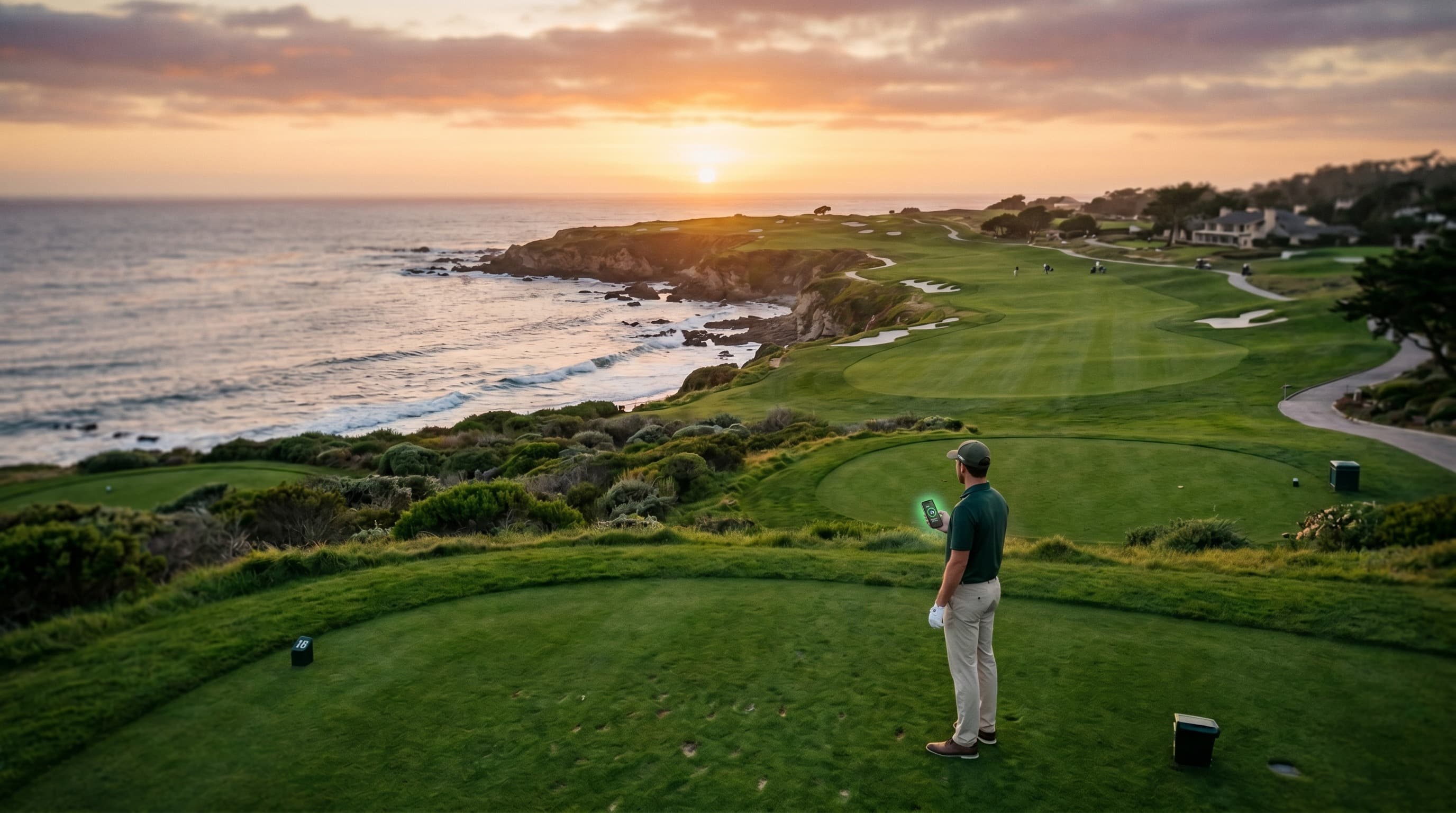
How to Read a G-Score: The 0–100 Golf Playability Number, Decoded
A G-Score on this site is a single 0–100 number that tells you whether today is worth tee-up. Here is exactly what each band means, what drives the calculation, and how to use it to plan a round you will actually score on.
Read StoryDanorie
Editorial & Data
Golf Weather Score is built by Danorie. We compute the G-Score — our own playability rating — from live NOAA forecasts and published course scorecards, so any US course can be compared on any day with a single number. Methodology and data sources are documented on every page.
Every Friday Morning
When Pebble Beach Golf Course plays best next weekend.
Friday 6am ET: peak G-Score windows for Pebble Beach Golf Course, wind direction by hour, and one gear call. Three minutes to read, save you the round.
One email a week. Unsubscribe in one click.
The Caddie's Oracle
Draw your luck before the tee off