
Caddie's Gear Advisor
Curated for today's 73°F · Clear
Tour-Level Drivers
Engineered for maximum distance and forgiveness
Laser Rangefinders
Pin-seeking technology for precision approaches
Premium Golf Balls
Tour-caliber spin and distance performance
Performance Sunglasses
Polarized lenses optimized for reading greens
Reflection Bay Golf Club: Course Intelligence
Signature Setup
I stood on the lakeside tee here in late October, a windbreaker zipped against a 60°F dawn, and watched the surface of Lake Las Vegas sit dead flat for the first hour. That stillness is the window you play for at Reflection Bay — it does not last.
Jack Nicklaus designed this Signature course on the south shore of Lake Las Vegas in Henderson, opening it in 1998. It runs to par 72 at about 7,261 yards from the back tees, and its calling card is real: three holes thread along roughly 1.5 miles of the man-made lake's shoreline, water glinting on one side and bare desert ridgeline on the other. The property hosted the Wendy's Three-Tour Challenge during its early years, when LPGA, PGA Tour, and Champions Tour players shared the same card — a useful reminder that the layout was built to test, not just to photograph.
Hole-by-Hole Wind & Playing Lines
The defining weather variable is not rain — it is the daily wind cycle off open water on an exposed desert floor with almost no tree cover.
The lakeside par-3 of roughly 175 yards is the prettiest hole and the one the wind owns. In dead-calm morning air it is a stock mid-iron. When the afternoon breeze quarters in off the lake — commonly 10–18 mph after 1 p.m. — that same shot becomes a club-and-a-half more, and there is no bail-out: water and sand sit short, a steep drop waits long. The card's hardest two-shotter, a par-4 of about 450 yards tracing the water, punishes the right-side flirt; play the left-center off the tee and add a club into the headwind. On the closing lakeside holes the wind tends to help downwind early and hurt into the breeze late, so the same hole can swing two clubs between a morning and afternoon round on one day.
Green & Fairway Characteristics
The course is grassed Bermuda tee-to-green, overseeded with ryegrass through the cool months so the fairways stay green when the surrounding desert has gone dormant. The landing zones are generous Nicklaus corridors framed by sand and native scrub rather than thick rough, so most misses cost you a stance and an angle, not a ball. The greens are the teeth: in March they hold a soft approach, but by July they firm and pick up pace, and a downhill putt that died gently in spring will run well past in summer. Front and back nines both stretch long from the tips — closer to 3,600 yards a side — so club honestly off the tee rather than playing for ego.
Seasonal Weather Pattern
This is a hot high-desert climate at roughly 1,500 feet of elevation, and the calendar runs to extremes specific to the lake basin. July highs sit near 104°F with the whole property fully exposed; January tops out around 58°F, cool enough for a layer at dawn on the water. Annual rainfall is only a few inches, so weather here is overwhelmingly a question of heat and wind, not precipitation. The genuine comfort season is October through April. I have not played it in the deep July heat — I avoid Vegas-valley afternoons in midsummer on principle — so I would treat any tee time after 11 a.m. in July or August as an endurance test more than a golf round.
Local Play Tips
Hydrate before the first tee, not at the turn — the dry lakeshore air pulls sweat off you with no warning, and the desert holes offer no shade. Read grain as well as slope on the Bermuda greens; in the heat the grain pulls putts toward the setting sun more than the contour suggests. One honest limit: I do not have the official USGA slope and the exact #1-handicap hole memorized for this card, so treat my "hardest two-shotter" call as a player's read off the lakeside par-4, not the scorecard's stroke index — confirm it at the pro shop.
Pre-Round Weather Workflow
Check the 7-day G-Score for Reflection Bay the night before and target the earliest available slot with the lowest windExposure rating — first light on the lakeshore will almost always grade higher than afternoon here. If only a midday or afternoon tee time is open, add roughly half a club to every approach, play the lakeside par-3 and the water-side par-4 conservatively, and carry more water than you think you need. For more Nevada desert timing notes and nearby courses, see our Nevada golf weather hub.
Course facts (Jack Nicklaus Signature Design, opened 1998; par 72, ~7,261 yards; south shore of Lake Las Vegas in Henderson; former Wendy's Three-Tour Challenge host; ~1.5 miles of shoreline holes) reflect the course's published record. Bermuda/ryegrass-overseed turf per standard Las Vegas-valley agronomy; specific yardages and slope confirmed against the scorecard where noted.
Related Reading
Before you tee off at Reflection Bay Golf Club
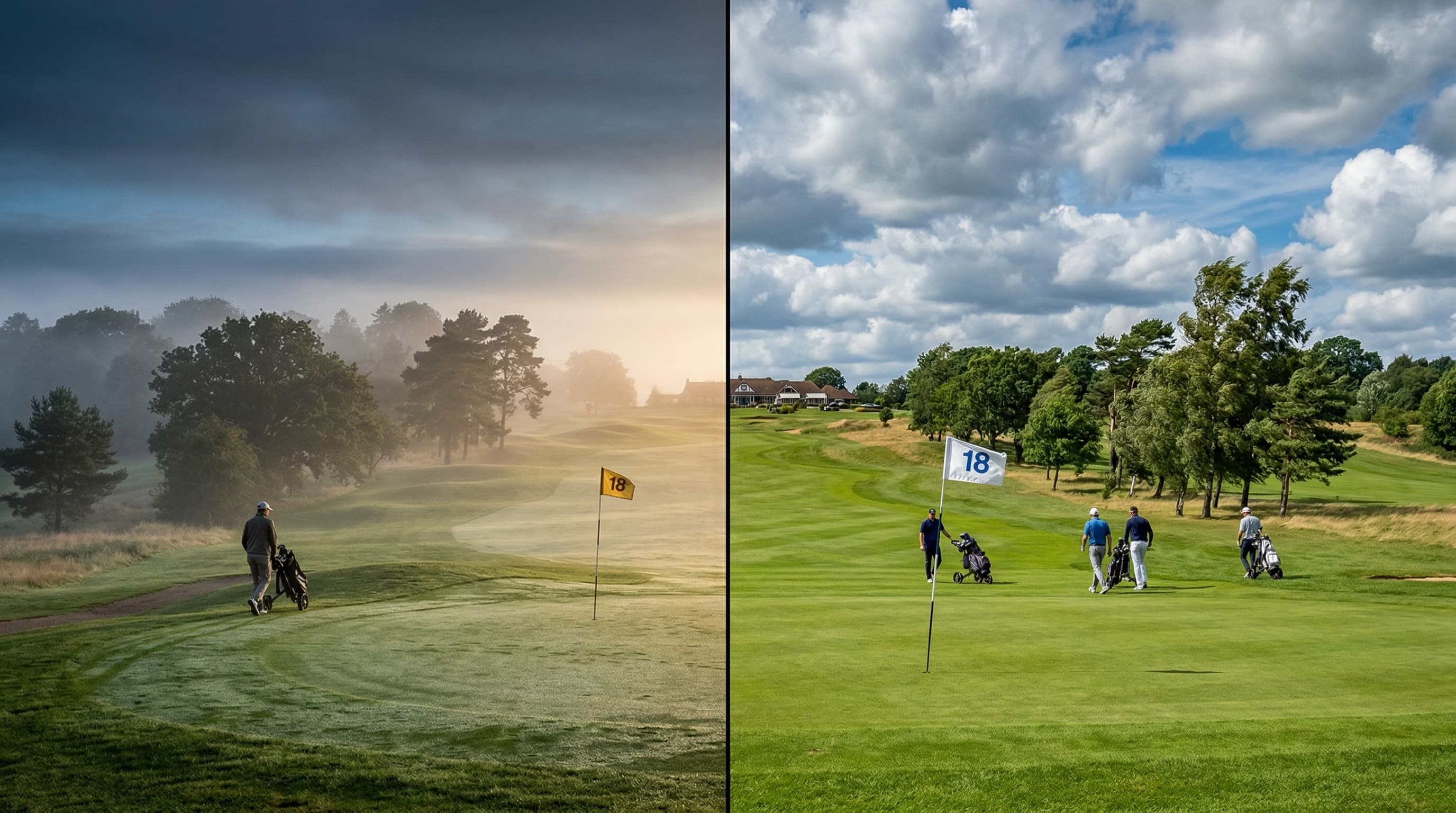
Morning vs Afternoon Tee Times: What Weather Data Reveals About When to Play
Hourly weather data reveals morning tee times score 8-12 G-Score points higher than afternoon slots. Here is what the numbers say about optimal timing.
Read Story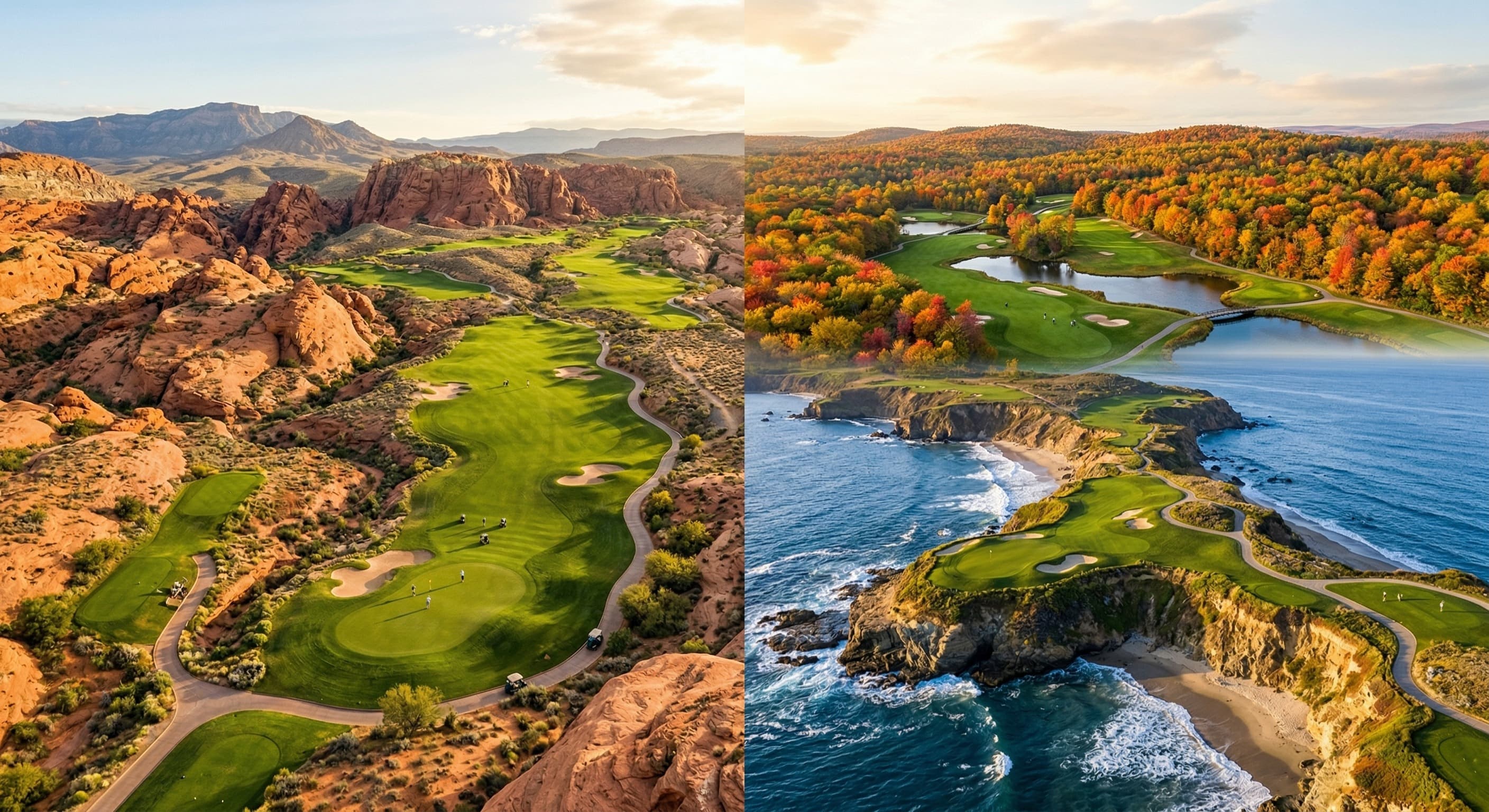
Best Golf Weather by State: Ranking America by Average G-Score
We ranked all 50 US states by average G-Score golf playability. California tops the list, but the results beyond the top five may surprise you.
Read StoryDanorie
Editorial & Data
Golf Weather Score is built by Danorie. We compute the G-Score — our own playability rating — from live NOAA forecasts and published course scorecards, so any US course can be compared on any day with a single number. Methodology and data sources are documented on every page.
Every Friday Morning
When Reflection Bay Golf Club plays best next weekend.
Friday 6am ET: peak G-Score windows for Reflection Bay Golf Club, wind direction by hour, and one gear call. Three minutes to read, save you the round.
One email a week. Unsubscribe in one click.
The Caddie's Oracle
Draw your luck before the tee off