
Caddie's Gear Advisor
Curated for today's 97°F · Clear
Ultralight Distance Drivers
Maximum carry in hot, low-drag conditions
UV Protection Apparel
UPF 50+ cooling fabrics for peak-sun rounds
Precision Rangefinders
Slope-adjusted yardage in any condition
Hydration & Cooling
Insulated bottles and cooling towels
Your Golf Trip, Handled
The Ultimate Golf Trip Planner
Everything you need to play Riviera Country Club — from booking your flight to checking in course-side.
Best time to golf in CaliforniaCourse-Side Stays
Luxury hotels, resorts, and stay-and-play packages just minutes from the first tee.
Flights
Compare fares across 700+ airlines for the best route to your tee time.
SUV Rentals for Golf Bags
Spacious vehicles with room for clubs, bags, and your foursome.
Travel Insurance
Coverage for medical, weather delays, and gear at your destination.
Riviera Country Club: Course Intelligence
Signature Setup
Riviera sits in a barranca below Sunset Boulevard in Pacific Palisades, about three miles from Santa Monica Bay. George C. Thomas Jr. routed it in 1926, with Billy Bell handling construction — and the two of them left a course that still hosts a PGA Tour stop a century later (the Genesis Invitational, run as the Los Angeles Open since 1929). Ben Hogan won the 1948 U.S. Open here, which is why the place still gets called "Hogan's Alley." Steve Elkington took the 1995 PGA Championship on these greens. The terrain falls from the clubhouse into the canyon and climbs back out at 18, so you feel the elevation in your legs by the turn.
Hole-by-Hole Wind & Playing Lines
The three holes that decide your card are 1, 10, and 18.
Hole 1 (par-5, 503y) drops off the clubhouse terrace. The morning SW sea breeze quarters left-to-right; on those mornings my second shot kept drifting toward the barranca on the right, so I now lay up to the left rough on purpose and take an extra club.
Hole 10 (315y par-4) is the famous one — drivable, but the green is pinched and canted away from a left-front bunker. Into any breeze off the bay, laying back to 70–80 yards and spinning a wedge beats a driver that leaks into the right collection area.
Hole 18 (475y par-4) climbs uphill into the amphitheater. The breeze is usually behind-left by mid-morning, but the uphill eats the help — I play it as a full 475, not the number the wind suggests.
Green & Fairway Characteristics
The fairways and rough are kikuyu — thick, grabby, and unlike anything on most U.S. parkland courses. Out of the rough the kikuyu wraps the hosel and kills spin, so flyers and dead-pulls both happen from the same lie. The greens are Poa annua, bumpy by late afternoon as the Poa grows, and they run in the mid-11s on tournament weeks. Front nine plays slightly longer on the card; the back is shorter but tighter through the canyon doglegs at 12 and 15.
Seasonal Weather Pattern
Coastal LA "June Gloom" defines spring and early summer here: a marine layer parks over the canyon and dawn temps sit in the high 50s to low 60s, often not clearing until 9–10 a.m. February (Genesis week) is cool and can be wet — fairways soften and the kikuyu plays heavier. By August, mornings warm into the low 70s and the layer thins; afternoons bring a steadier 8–12 mph sea breeze from the southwest off Santa Monica Bay.
Local Play Tips
The kikuyu changes club selection more than the yardage does. From a clean fairway lie the ball sits up and you can be aggressive, but the same grass in the rough takes a full club of distance off and removes your spin — plan to land short and run it up rather than fly it to a tucked pin. I keep a 7-iron and a 5-iron both in mind on approaches into the breeze, because the kikuyu lie decides which one actually flies the number.
Pre-Round Weather Workflow
Pull the 7-day G-Score the night before and target a tee time before the marine layer lifts — damp kikuyu grabs less and the greens are smoother before the Poa grows in the afternoon. Check windExposure for the SW sea-breeze onset; if it's already up by your tee time, club up on 1 and 18 and lay back off 10. A morning round here scores 8–12 G-Score points higher than the same round at 2 p.m.
Related Reading
Before you tee off at Riviera Country Club

Reading Coastal Wind: How the Marine Layer Reshapes Pebble Beach, Bandon, and the Pacific Coast Game
Coastal golf does not play by inland rules. The marine layer suppresses wind in the morning, then releases it through midday in a thermal cycle that turns a calm 7am tee into a 22mph back nine. Here is the meteorology behind the pattern, the G-Score data that confirms it across the Pacific coast, and the morning workflow that turns the marine layer from a confusion into a competitive advantage.
Read Story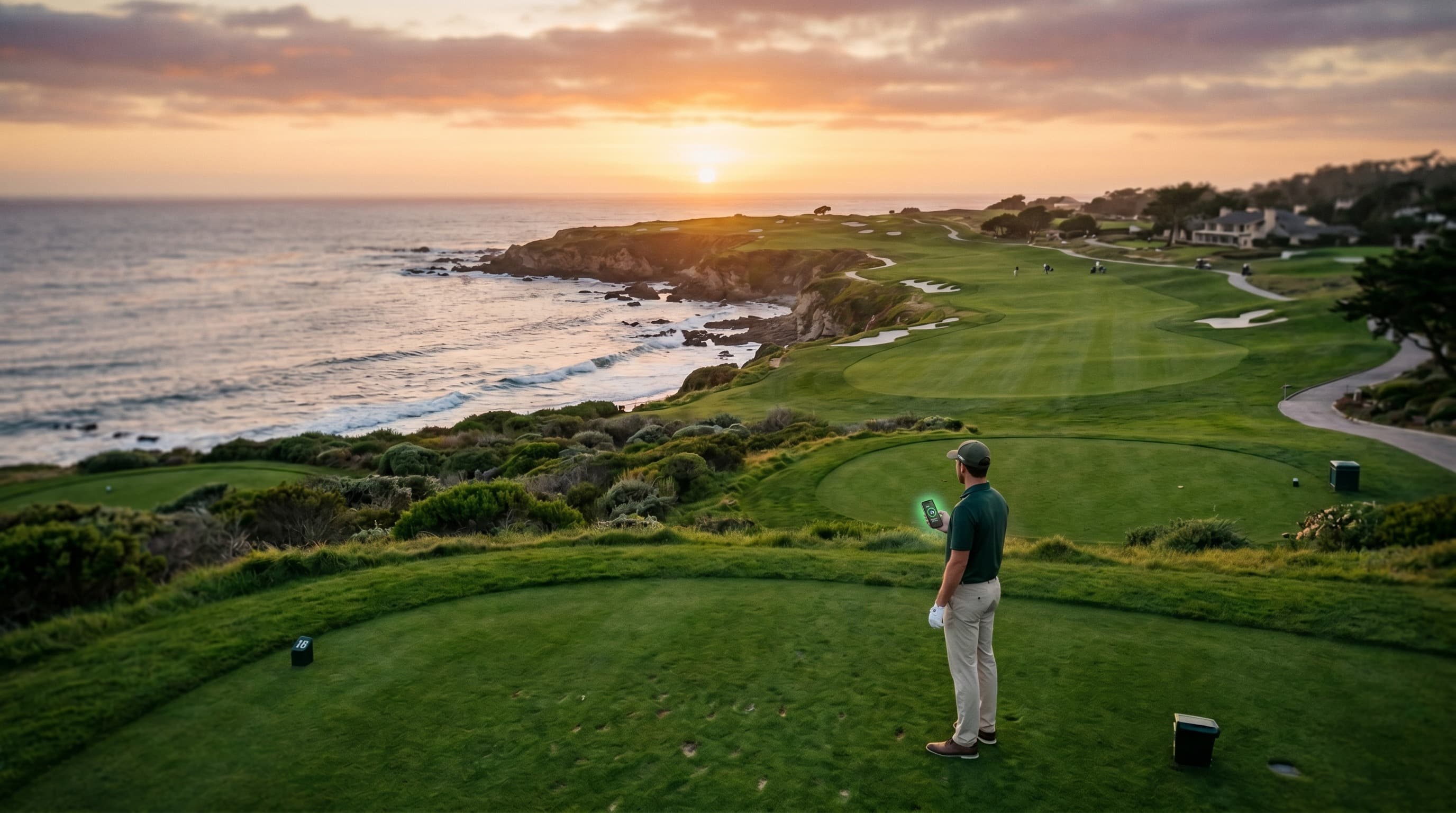
How to Read a G-Score: The 0–100 Golf Playability Number, Decoded
A G-Score on this site is a single 0–100 number that tells you whether today is worth tee-up. Here is exactly what each band means, what drives the calculation, and how to use it to plan a round you will actually score on.
Read StoryDanorie
Editorial & Data
Golf Weather Score is built by Danorie. We compute the G-Score — our own playability rating — from live NOAA forecasts and published course scorecards, so any US course can be compared on any day with a single number. Methodology and data sources are documented on every page.
Every Friday Morning
When Riviera Country Club plays best next weekend.
Friday 6am ET: peak G-Score windows for Riviera Country Club, wind direction by hour, and one gear call. Three minutes to read, save you the round.
One email a week. Unsubscribe in one click.
The Caddie's Oracle
Draw your luck before the tee off