
Caddie's Gear Advisor
Curated for today's 60°F · Clouds
Tour-Level Drivers
Engineered for maximum distance and forgiveness
Laser Rangefinders
Pin-seeking technology for precision approaches
Premium Golf Balls
Tour-caliber spin and distance performance
Performance Sunglasses
Polarized lenses optimized for reading greens
Your Golf Trip, Handled
The Ultimate Golf Trip Planner
Everything you need to play Spyglass Hill Golf Course — from booking your flight to checking in course-side.
Best time to golf in CaliforniaCourse-Side Stays
Luxury hotels, resorts, and stay-and-play packages just minutes from the first tee.
Flights
Compare fares across 700+ airlines for the best route to your tee time.
SUV Rentals for Golf Bags
Spacious vehicles with room for clubs, bags, and your foursome.
Travel Insurance
Coverage for medical, weather delays, and gear at your destination.
Spyglass Hill Golf Course: Course Intelligence
Signature Setup
The 1st tee at Spyglass Hill sits up in the Monterey pines, and the fairway falls away in front of you toward a thin band of Pacific. I stood there on a February morning at 7:40, 49°F, the marine layer still lying flat over the dunes below — and that downhill opener is the most intimidating first shot I have hit on the Peninsula.
Robert Trent Jones Sr. routed the course in 1966 and named all 18 holes after characters and places from Robert Louis Stevenson's Treasure Island — the 1st is "Treasure Island," the 2nd "Billy Bones." The design splits cleanly in two: the first 5 holes run out through ocean sand dunes near Spanish Bay, then holes 6 through 18 turn inland and climb through the Del Monte Forest. It has anchored the AT&T Pebble Beach Pro-Am rotation for decades and consistently rates the hardest of the three Pebble courses, with a back-tee course rating around 75.5.
Hole-by-Hole Wind & Playing Lines
Hole 8 (#1 handicap, par-4, 399y). The toughest card-wrecker. It plays uphill into the prevailing W wind to one of the smallest greens on the property. From the tips it is effectively a three-shot par-4 for most players — I lay back off the tee, leave a full short-iron rather than a knockdown, and always take one extra club because the uphill plus the breeze steals 15–20 yards of carry.
Hole 4 (par-4, 370y). A short, brilliant two-shotter with a long, thin green angled hard right and dunes pressing both sides. Distance is not the defense — the green is barely 12 paces wide in spots. On a NW dune wind I aim my approach at the front-left edge and let the wind feed it across; going for the flag on the right is how you find the sand.
Hole 1 (par-5, 595y). The signature opener. Downhill off the elevated tee, the dune wind off the ocean usually quarters left-to-right. I favor the left side of the fairway and accept the drift; a tee ball started down the right gets shoved into the sandy native and the hole stops being reachable.
Green & Fairway Characteristics
The greens are Poa annua with the bold contouring RTJ Sr. was known for — more break than Pebble's tiny surfaces, and they grain toward the late-day sun. The real surprise is the turf underfoot: the forest holes from the 6th in drain slowly, and in winter the shaded fairways stay damp into the afternoon. My 265-yard drive that released to 285 on the open 2nd plugged to a dead stop on the 11th. Par is 72 over roughly 6,960 yards from the back, but it plays longer than the card because so little of the inland half gives you any roll.
Seasonal Weather Pattern
Monterey's coastal air keeps temperatures in a narrow 50–63°F band almost year-round, but Spyglass has two distinct weather problems. June through August the marine-layer fog is heaviest and often hangs past 11 a.m., softening the dunes. December through February — AT&T season — is the wet stretch: I have played the forest holes in 50°F drizzle with "lift, clean and place" in effect and zero release on every fairway. The clearest, firmest mornings I have had here came in late September and October.
Local Play Tips
One thing no yardage book prints: the transition between the 5th and 6th holes is where your whole day changes. You leave the wind-hammered dunes and step into the trees, and the W breeze that was a two-club factor on the 4th nearly disappears by the 7th. Most players keep over-clubbing for wind that is no longer there and fly the forest greens long. I reset my wind allowance to zero standing on the 6th tee. I have not played Spyglass in true summer fog from the back tees, so for that exact scenario I lean on historical data rather than my own card.
Pre-Round Weather Workflow
Use the 7-day G-Score on this page the way I do. Three days out, check the wind direction for your tee window — a W or NW reading means the opening dune holes 1–5 will play two clubs longer while the forest stretch stays calm, so plan your number expectations in two halves. The morning of, read the windExposure panel: if it flags the front five as high-exposure and the temperature is under 53°F with the marine layer heavy, expect no fairway release on the shaded forest holes and add a full club into every inland green. Book the earliest slot you can — the dune wind builds through the late morning and the score gap is largest before it fills in.
Related Reading
Before you tee off at Spyglass Hill Golf Course
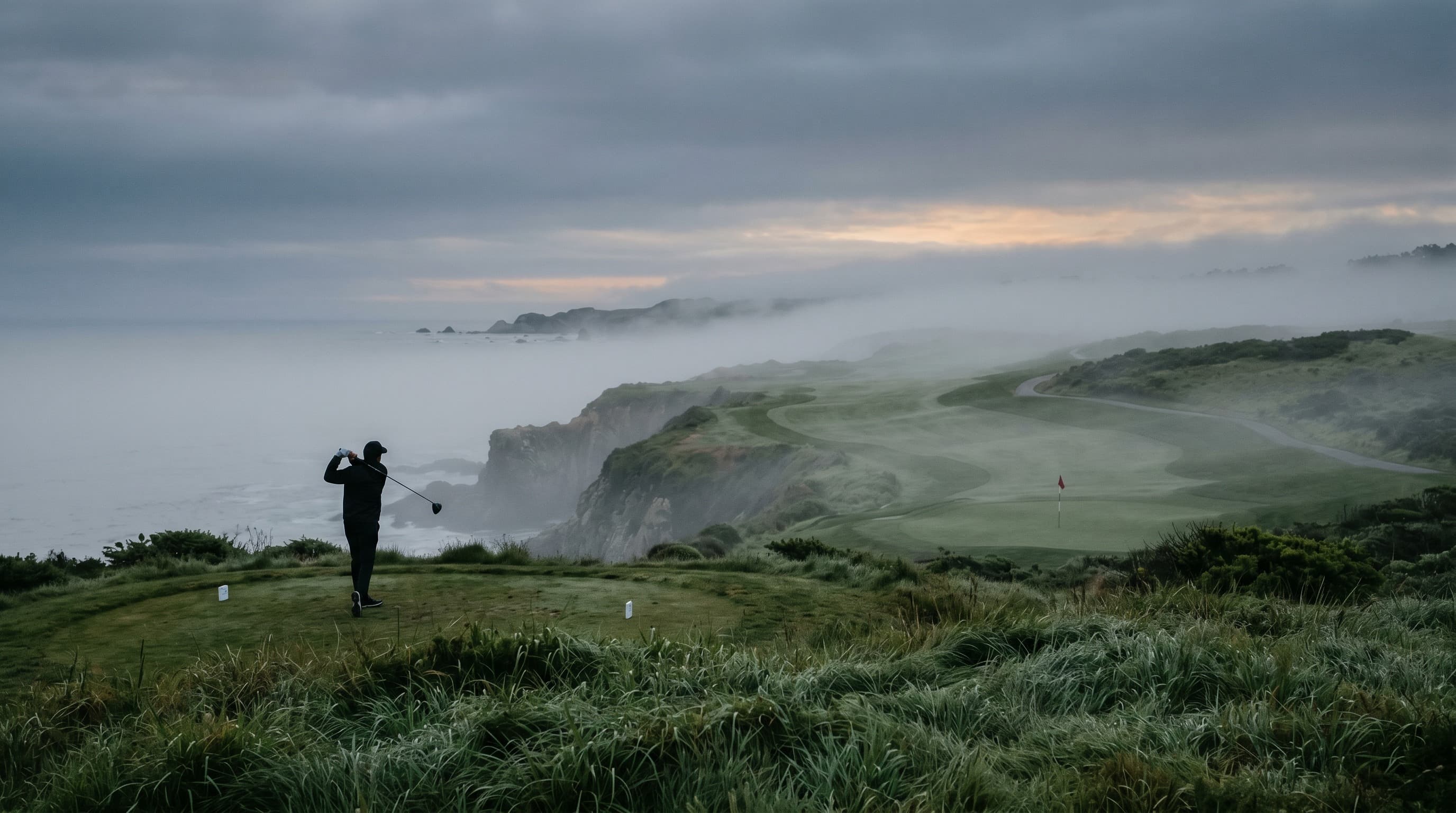
Reading Coastal Wind: How the Marine Layer Reshapes Pebble Beach, Bandon, and the Pacific Coast Game
Coastal golf does not play by inland rules. The marine layer suppresses wind in the morning, then releases it through midday in a thermal cycle that turns a calm 7am tee into a 22mph back nine. Here is the meteorology behind the pattern, the G-Score data that confirms it across the Pacific coast, and the morning workflow that turns the marine layer from a confusion into a competitive advantage.
Read Story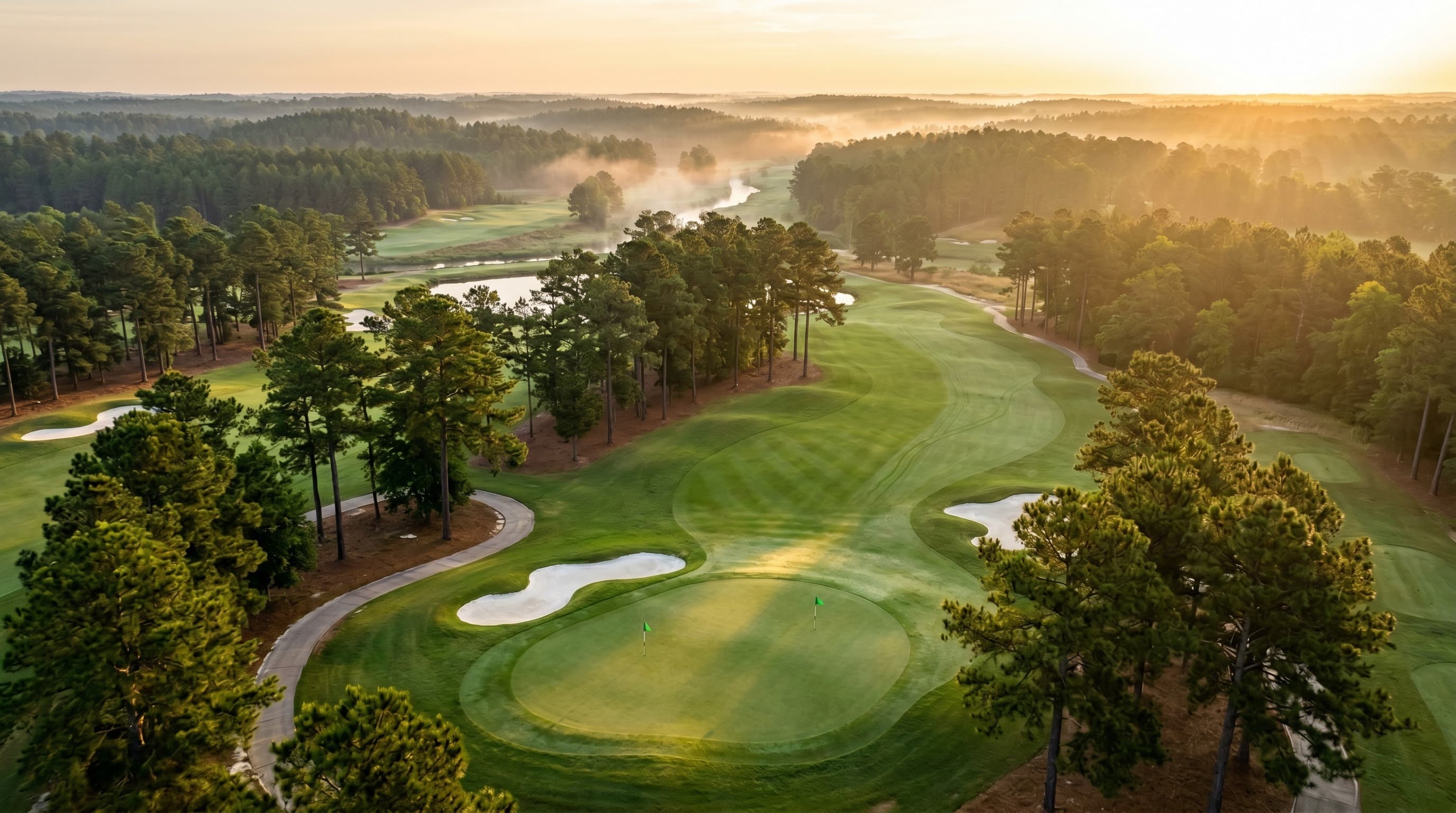
The May 2026 G-Score Heatmap: Where American Golf Peaks This Spring
May is the most underrated month on the American golf calendar. Five regions hit their annual peak this spring, three turn quietly hostile, and the data tells a clearer story than the brochures. Here is where to play, where to avoid, and how to time your booking window.
Read StoryDanorie
Editorial & Data
Golf Weather Score is built by Danorie. We compute the G-Score — our own playability rating — from live NOAA forecasts and published course scorecards, so any US course can be compared on any day with a single number. Methodology and data sources are documented on every page.
Every Friday Morning
When Spyglass Hill Golf Course plays best next weekend.
Friday 6am ET: peak G-Score windows for Spyglass Hill Golf Course, wind direction by hour, and one gear call. Three minutes to read, save you the round.
One email a week. Unsubscribe in one click.
The Caddie's Oracle
Draw your luck before the tee off