
Caddie's Gear Advisor
Curated for today's 52°F · Clear
Cold-Weather Performance Layers
Thermal mid-layers that move with your swing
Tour Hand Warmers
Rechargeable warmers trusted by caddies
Thermal Base Layers
Lightweight compression that traps heat
Winter Golf Headwear
Beanies and ear warmers built for the links
Your Golf Trip, Handled
The Ultimate Golf Trip Planner
Everything you need to play The Broadmoor Golf Courses — from booking your flight to checking in course-side.
Course-Side Stays
Luxury hotels, resorts, and stay-and-play packages just minutes from the first tee.
Flights
Compare fares across 700+ airlines for the best route to your tee time.
SUV Rentals for Golf Bags
Spacious vehicles with room for clubs, bags, and your foursome.
Travel Insurance
Coverage for medical, weather delays, and gear at your destination.
The Broadmoor Golf Courses: Course Intelligence
Signature Setup
I teed off on the East Course on a July morning with the thermometer reading 52°F and my hands a half-club stiff. The thin air at 6,300 feet does something strange to a flat morning sky — sound carries, the ball hangs, and Cheyenne Mountain sits over your right shoulder the whole round like a referee. By 8 a.m. it was calm; the weather here saves its drama for the afternoon.
The East Course is the historic anchor of The Broadmoor, opened in 1918 to a Donald Ross routing, with holes 8 through 15 later reworked by Robert Trent Jones Sr. It plays to par 72 at 7,189 yards from the tips, course rating 73.0, slope 127. Its place in the record is fixed: in 1959 a 19-year-old Jack Nicklaus won the U.S. Amateur here — the first real glimpse of the Golden Bear — and the course has since hosted multiple U.S. Senior Opens, including 2018 (David Toms) and the 2025 staging on these same slick greens.
Hole-by-Hole Wind & Playing Lines
Altitude is the wind here. At 6,300 feet the ball carries roughly 10% farther, so your real problem is not adding distance — it's clubbing down without bailing out short on the elevated greens Ross left you.
Hole 13, the No. 1 handicap, is a 493-yard par-4 (466 from the white tees) and a rare dogleg right. Even with the altitude boost it plays its full length; take the widest line you can off the tee, then accept a long-iron or hybrid into a green that does not invite a running shot. The signature 6th — a 402-yard par-4 from Ross's original nine — funnels you with three fairway bunkers down the left, nudging the tee shot right and leaving an uphill approach to a three-bunkered, elevated green; favor the front edge and let the slope feed it. The par-3s are where the thin air punishes a hard swing: the 4th (165 yards) and the 16th (180 yards) both play a full club shorter than the number, and an aggressive flier sails the back fringe. On afternoon rounds, the bigger variable isn't crosswind — it's the storm cell building over the mountain (see S4).
Green & Fairway Characteristics
The greens are the whole examination. They run firm and slick — tuned up to U.S. Senior Open speeds for championships — and they hold the single most important local fact on the property: every putt breaks away from Cheyenne Mountain, away from the Will Rogers Shrine of the Sun sitting up the hill to the west. Putts that look dead uphill will drift away from the mountain; downhill-looking putts can be lightning. The ground undulations lie to your eye; the mountain does not. Fairways are firm parkland turf at altitude, generous off the tee but framed so that the second shot, not the drive, is where the East defends par. Front-nine and back-nine yardages are balanced, but the Trent Jones stretch (8–15) carries most of the length.
Seasonal Weather Pattern
This is high-altitude, semi-arid Colorado Springs, not a generic mountain resort climate. The genuine season runs roughly May through September; snow closes or limits play November to March. Summer mornings are cold for the latitude — 45–55°F at first light — and climb into the upper 70s and low 80s by afternoon, with humidity low enough that you dehydrate without feeling it. The defining hazard is the July–August monsoon pattern: clear mornings give way to thunderstorm cells that stack up over Cheyenne Mountain by early afternoon, bringing lightning that clears the course fast. The diurnal swing is large — dress for two different rounds in the same day.
Local Play Tips
Learn the mountain rule before your first putt, not your tenth: away from the Will Rogers Shrine, every time, no matter what the slope under your feet says. Locals quote a rhyme about keeping the Shrine in mind — treat it as gospel and you'll three-putt far less. Second, trust the altitude and club down one, especially on the par-3s, where ego costs you the back of the green. And take the lightning seriously — afternoon cells here are not background risk; when the cloud builds over the peak, the horn means leave. In full honesty, I've only ever played the East in midsummer; I can't speak first-hand to how firm and fast it gets in a dry late-September wind, so treat the autumn green speeds as faster than my notes.
Pre-Round Weather Workflow
Check the 7-day G-Score for The Broadmoor the night before and target the earliest slot with the lowest windExposure and storm rating — mornings will almost always grade higher here, both for calm air and for staying ahead of the afternoon mountain cells. If only a midday tee time is open in July or August, watch the radar for build-up over Cheyenne Mountain and bank your scoring on the front nine. For more Colorado high-altitude timing notes and nearby courses, see our Colorado golf weather hub.
Course facts confirmed via the club's published history and USGA records (Donald Ross, 1918; RTJ Sr. holes 8–15; 7,189 yards / par 72 / 73.0 / 127; Nicklaus 1959 U.S. Amateur; 2018 & 2025 U.S. Senior Opens). The "breaks away from the mountain" green rule is documented Broadmoor caddie knowledge.
Related Reading
Before you tee off at The Broadmoor Golf Courses
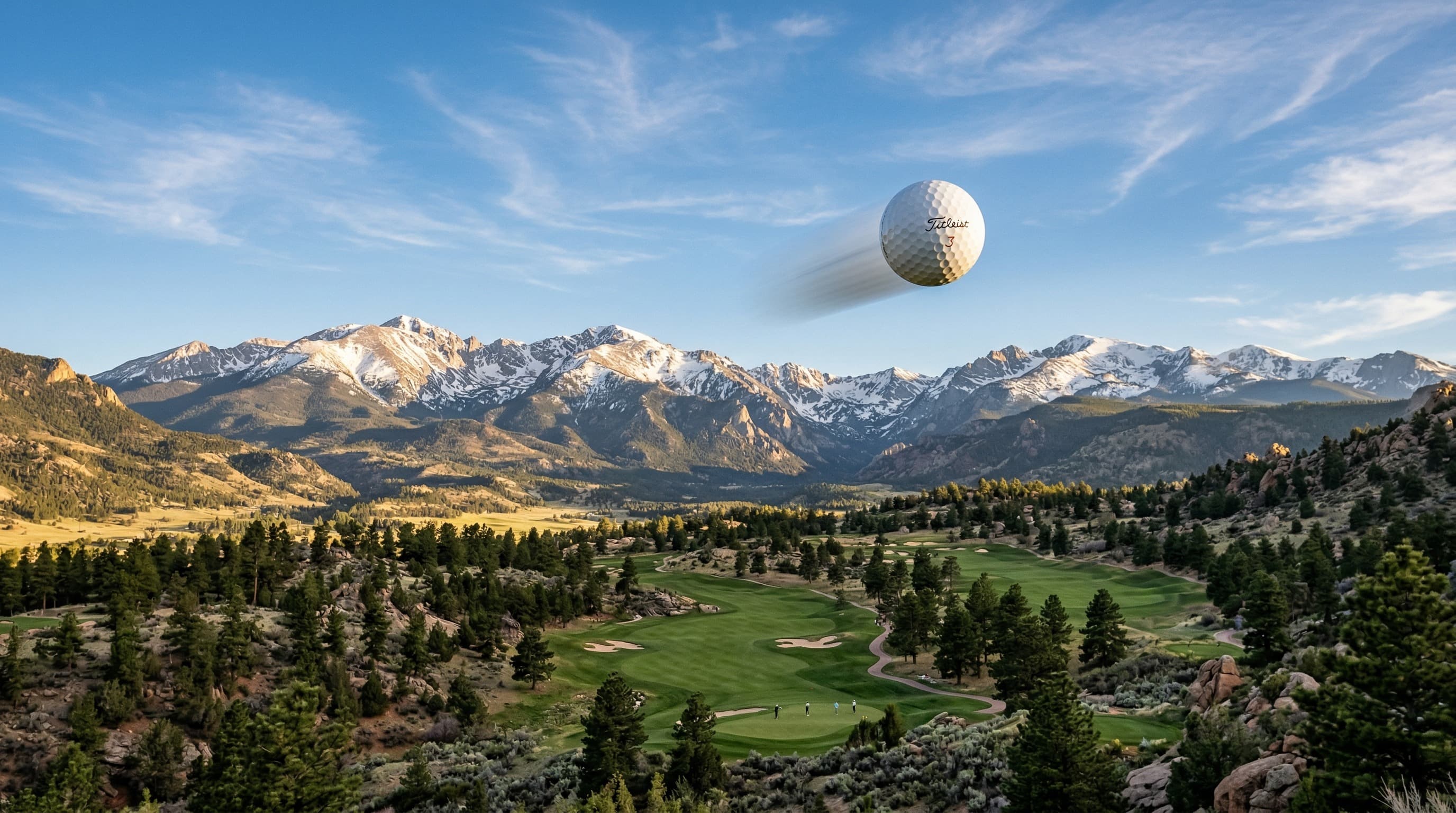
How Altitude Affects Golf Ball Distance: The Science Behind Every Extra Yard
At elevation, your golf ball flies farther than you expect. We break down exactly how altitude changes carry distance, spin rates, and club selection using real data from high-altitude courses across America.
Read Story
The May 2026 G-Score Heatmap: Where American Golf Peaks This Spring
May is the most underrated month on the American golf calendar. Five regions hit their annual peak this spring, three turn quietly hostile, and the data tells a clearer story than the brochures. Here is where to play, where to avoid, and how to time your booking window.
Read StoryDanorie
Editorial & Data
Golf Weather Score is built by Danorie. We compute the G-Score — our own playability rating — from live NOAA forecasts and published course scorecards, so any US course can be compared on any day with a single number. Methodology and data sources are documented on every page.
Every Friday Morning
When The Broadmoor Golf Courses plays best next weekend.
Friday 6am ET: peak G-Score windows for The Broadmoor Golf Courses, wind direction by hour, and one gear call. Three minutes to read, save you the round.
One email a week. Unsubscribe in one click.
The Caddie's Oracle
Draw your luck before the tee off