
Caddie's Gear Advisor
Curated for today's 67°F · Clear
Tour-Level Drivers
Engineered for maximum distance and forgiveness
Laser Rangefinders
Pin-seeking technology for precision approaches
Premium Golf Balls
Tour-caliber spin and distance performance
Performance Sunglasses
Polarized lenses optimized for reading greens
Your Golf Trip, Handled
The Ultimate Golf Trip Planner
Everything you need to play The Country Club — from booking your flight to checking in course-side.
Course-Side Stays
Luxury hotels, resorts, and stay-and-play packages just minutes from the first tee.
Flights
Compare fares across 700+ airlines for the best route to your tee time.
SUV Rentals for Golf Bags
Spacious vehicles with room for clubs, bags, and your foursome.
Travel Insurance
Coverage for medical, weather delays, and gear at your destination.
The Country Club: Course Intelligence
Signature Setup
I have not teed it up at The Country Club — Brookline is one of the most private addresses in American golf — but I walked the Composite layout inside the ropes during the 2022 U.S. Open, a humid Friday with the morning reading 64°F at 7 a.m. and climbing fast. What struck me on foot was the rock: glacial granite shoulders the fairways and frames greens in a way no yardage book conveys.
Founded in 1882 in Brookline, Massachusetts, just southwest of downtown Boston, The Country Club was one of the five charter clubs that founded the USGA in 1894. Willie Campbell laid the early holes in the 1890s; William Flynn redesigned and expanded the property to 27 holes in 1927. It has hosted four U.S. Opens — 1913 (Francis Ouimet's amateur upset of Vardon and Ray), 1963, 1988, and 2022 (Matt Fitzpatrick) — plus the 1999 Ryder Cup, the "Battle of Brookline."
Hole-by-Hole Wind & Playing Lines
Composite 3rd (#1 handicap territory, par-4). It bends around a rock outcrop, and into the prevailing W/NW breeze the corner pinches hard. Lay a 3-wood to the right-center plateau and take the mid-iron in; the driver line over the granite gains you little and brings the trees into play.
11th, the "Himalayas" (par-4, ~450y, Clyde nine). The green sits above a wall of glacial rock. A SW summer sea breeze quartering off Boston Harbor pushes the long approach right, toward the drop — aim at the left third and let the wind feed it back.
17th (par-4). The most historic green in U.S. golf: Ouimet birdied it in the 1913 playoff and Justin Leonard holed a 45-footer here to clinch 1999. Into a head-on W wind it plays a full club longer; a back-left pin behind the bunker is a sucker flag — middle of the green is a win.
Green & Fairway Characteristics
The greens are bentgrass over old Poa, small and severely pitched, and they ran 12–13-plus on the Stimp for the 2022 Open. They sit on glacial till, so the surfaces follow the land's natural tilt rather than fight it — a downhill putt that looks like two feet of break can be four. Fairways are lined with fescue-and-bluegrass rough and broken by exposed granite, which is why the Composite, stretched to roughly 7,254 yards at par 70, plays far tougher than its number. The front nine of the Composite climbs and twists through the rock; the closing holes open slightly to the wind.
Seasonal Weather Pattern
Brookline sits in southern New England's humid continental zone, about six miles southwest of downtown Boston and roughly eight miles inland from the open Atlantic — close enough to feel the sea breeze, far enough to dodge true coastal fog. Spring (April–May) is cool and raw, 42–62°F, with soft turf and zero roll. Summer (June–August) runs 70–86°F and humid, and the giveaway is the afternoon SW sea breeze off the harbor, often 8–15 mph, that builds after noon — the 2022 Open played in exactly that pattern. Autumn (late September–October) is the prime window: 50–66°F, firm ground, brilliant foliage, and the year's calmest mornings before the prevailing W/NW wind of the cold months sets in.
Local Play Tips
Honest limitation first: my read comes from walking the 2022 Open and the historical record, not a personal scorecard — Brookline is member-or-invited-guest only. The thing no online preview tells you: there is no fixed "course." Championships and most member play stitch a Composite or rotating route through three nines — Clyde, Squirrel, and Primrose — so the hole numbers and yardages you memorize from a U.S. Open broadcast will not line up with the routing you actually walk. Confirm which nines are in play before you commit a strategy, and read wind off the tall pines on the rock-framed holes, since the granite and trees create swirl the open flags won't show.
Pre-Round Weather Workflow
Use the 7-day G-Score on this page the way I would here. Three days out, check whether your tee window lands before or after the afternoon SW sea breeze builds — on a Composite this long, a noon-onward wind off the harbor swings the score several strokes, especially on the exposed 11th and 17th. The morning of, read the windExposure panel: a W or NW reading means the 3rd and 17th play into the breeze, so club up and aim center on every rock-framed green. If the temperature reads below 55°F with overnight rain — common in spring and late fall — expect no fairway release at all; take an extra club into the small, fast greens and let your wedges and putter, not your driver, decide the round on a course this tight and this rocky.
More Courses in Massachusetts
View AllRelated Reading
Before you tee off at The Country Club
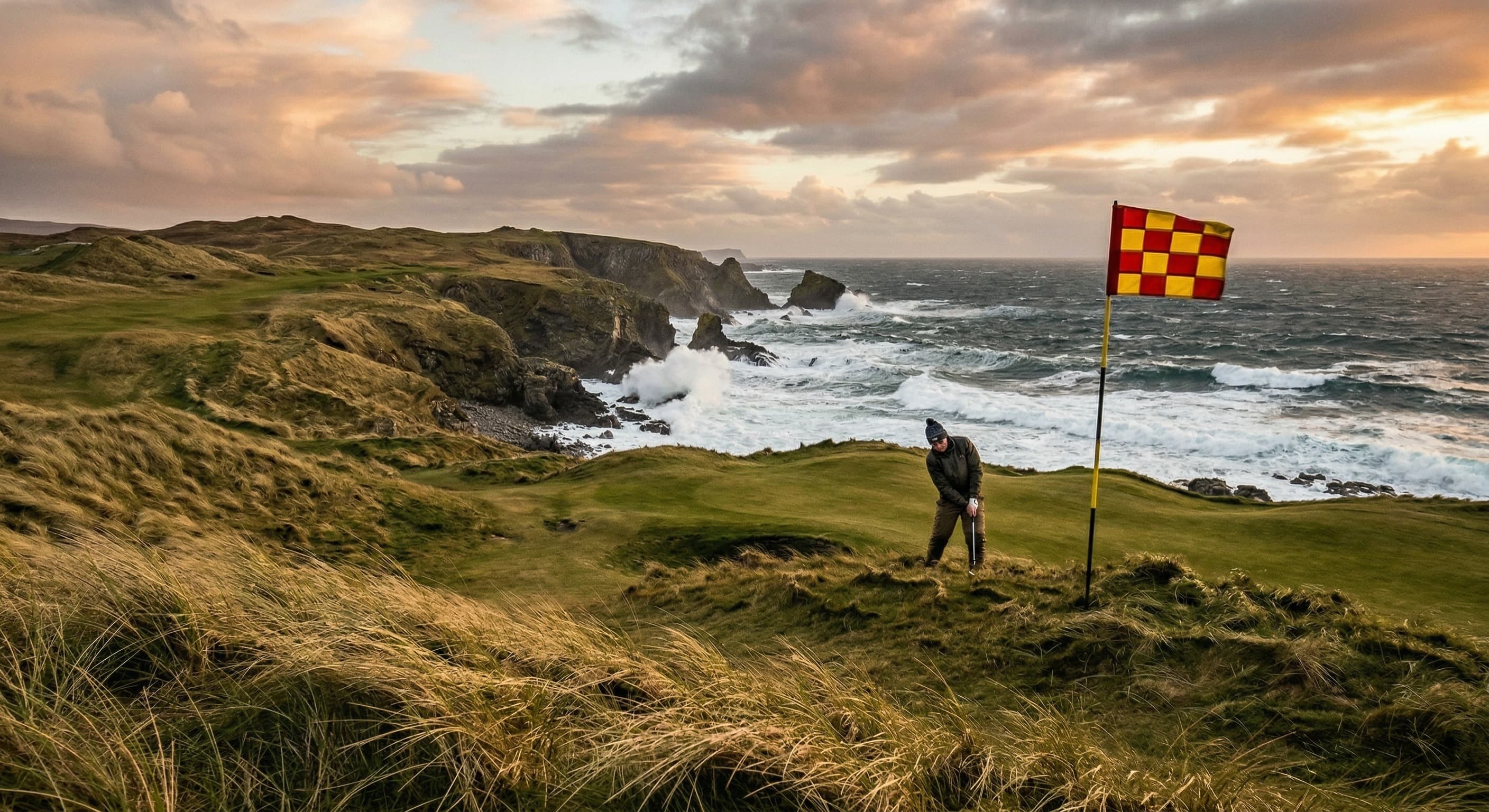
America's 20 Windiest Golf Courses: A G-Score Wind Analysis
We ranked America's 20 windiest golf courses using G-Score wind penalty data. See how coastal gusts and prairie gales reshape playability scores.
Read Story
The Mental Game: Sports Psychology Research Behind Golf's Greatest Clutch Performers
Science-backed sports psychology research reveals why golf's greatest clutch performers master pressure through routines, visualization, and focus.
Read StoryDanorie
Editorial & Data
Golf Weather Score is built by Danorie. We compute the G-Score — our own playability rating — from live NOAA forecasts and published course scorecards, so any US course can be compared on any day with a single number. Methodology and data sources are documented on every page.
Every Friday Morning
When The Country Club plays best next weekend.
Friday 6am ET: peak G-Score windows for The Country Club, wind direction by hour, and one gear call. Three minutes to read, save you the round.
One email a week. Unsubscribe in one click.
The Caddie's Oracle
Draw your luck before the tee off