
Caddie's Gear Advisor
Curated for today's 79°F · Clouds
Tour-Level Drivers
Engineered for maximum distance and forgiveness
Laser Rangefinders
Pin-seeking technology for precision approaches
Premium Golf Balls
Tour-caliber spin and distance performance
Performance Sunglasses
Polarized lenses optimized for reading greens
Your Golf Trip, Handled
The Ultimate Golf Trip Planner
Everything you need to play TPC Southwind — from booking your flight to checking in course-side.
Course-Side Stays
Luxury hotels, resorts, and stay-and-play packages just minutes from the first tee.
Flights
Compare fares across 700+ airlines for the best route to your tee time.
SUV Rentals for Golf Bags
Spacious vehicles with room for clubs, bags, and your foursome.
Travel Insurance
Coverage for medical, weather delays, and gear at your destination.
TPC Southwind: Course Intelligence
Signature Setup
The 18th at Southwind looks flatter on the broadcast than it feels from the tee, where the whole left side is lake and the green sits out past it like a dare. I stood there on a humid June morning, 78°F at 7:40 a.m. with the dew still heavy and the air already thick enough to feel on the back of my neck — and the wind hadn't come up yet. That window, before Memphis heat turns the afternoon into a furnace, is the entire game on this course.
TPC Southwind was designed by Ron Prichard and opened in 1988, with tour players Hubert Green and Fuzzy Zoeller consulting on shot values. It plays to a par of 70 at roughly 7,243 yards from the back tees in Memphis, Tennessee. It has hosted a PGA Tour stop every year since the 1989 St. Jude Classic, ran as the WGC-FedEx St. Jude Invitational from 2019 to 2021, and since 2022 has opened the FedExCup Playoffs as the FedEx St. Jude Championship in mid-August — the hottest, most humid window of the Memphis calendar.
Hole-by-Hole Wind & Playing Lines
Hole 18 (#1 handicap, par-4, 467y). The closing dogleg-left with the lake hugging the entire left flank to the green. Into the prevailing S/SW summer wind it stretches past its number, so it's driver up the right side and a long iron in. Bail right of the water and take the center — a pulled approach at a left pin here is wet, and a clean par feels like a birdie.
Hole 11 (par-3, 163y). A mid-iron straight over water to a green guarded short and left. It sits exposed to any crossing breeze off the open ground; on a S/SW wind the carry plays half a club longer and short is in the hazard. Trust the number and favor the back-center, not the tucked pin.
Hole 14 (par-4, 432y). A subtle scorecard-killer the cameras skip. The tee shot must avoid fairway bunkers, and the approach is into the same warm S/SW flow that softens spin on a humid afternoon. Club up, aim center, and let the firm bentgrass green release rather than chasing it tight.
Green & Fairway Characteristics
The greens are bentgrass — a transition-zone gamble that demands near-constant water through a Memphis summer — fast and firm for tournament week and steep enough on the water holes that a downhill putt toward the lake makes you flinch. The Bermuda fairways are tight and quick-draining, so a humid dawn leaves them receptive while a baked afternoon adds roll and pulls the bunkers into play. Slope runs in the mid-130s from the championship tees. The land is parkland-flat but guarded by water on 11 of the 18 holes, so the lakes — never elevation — write the strategy from the first tee to the home green, and on a humid afternoon a flighted approach beats a high one the dead air won't help stop.
Seasonal Weather Pattern
Heat and Mississippi-valley humidity define the Memphis golf year more than wind does, in a humid-subtropical climate that plays nearly twelve months. The August playoff window is the brutal end of it: mid-90s°F highs, dewpoints in the 70s, and near-daily afternoon cells boiling up the river valley — the reason the early waves play measurably softer and calmer than the steam-bath afternoons. April–May and late September–October are the visitor's sweet spots, with 70s-to-low-80s°F highs, drier air, and the bentgrass at its firmest. Winter stays playable but raw, January mornings often near 35°F. I haven't played a FedEx St. Jude week in the teeth of that August heat, so I defer to the Memphis NOAA record for it — and that record marks spring as the wettest, storm-prone stretch, which keeps radar timing as much a part of the read as the wind.
Local Play Tips
One thing the yardage book won't tell you: water is in play on 11 of the 18 holes, and in August the real hazard isn't the wind — it's the humidity. On a 90°F afternoon with a high dewpoint, the heat saps swing speed and the thick air kills spin, so approaches that would normally bite the green skid past it toward the water. I haven't played Southwind in the dead heat of a FedEx St. Jude week, so I lean on historical conditions for that, but the lesson from walking it in June is simple: the morning course and the afternoon course are not the same place. Get out early, hydrate harder than you think you need to, and treat every left pin near a lake as a sucker bet.
Pre-Round Weather Workflow
Start with the 7-day G-Score above. On a course defended by water on 11 of 18 holes, the biggest call three days out is beating the midday heat-and-wind build to the tee — worth 10–14 points by itself. Morning of, the windExposure panel sets the targets: an S/SW reading puts the over-water 11th, the 14th, and the dogleg 18th all into or across the lakes, so I aim center and add a club, and I treat every left pin near water as a sucker bet. Through spring and summer storm season the radar runs beside the wind gauge — a first-wave time is the only real defense against the Memphis heat, the afternoon cells, and the water that lines more than half of this routing. Hydrate harder than you think you need to while you're at it.
More Courses in Tennessee
View AllRelated Reading
Before you tee off at TPC Southwind
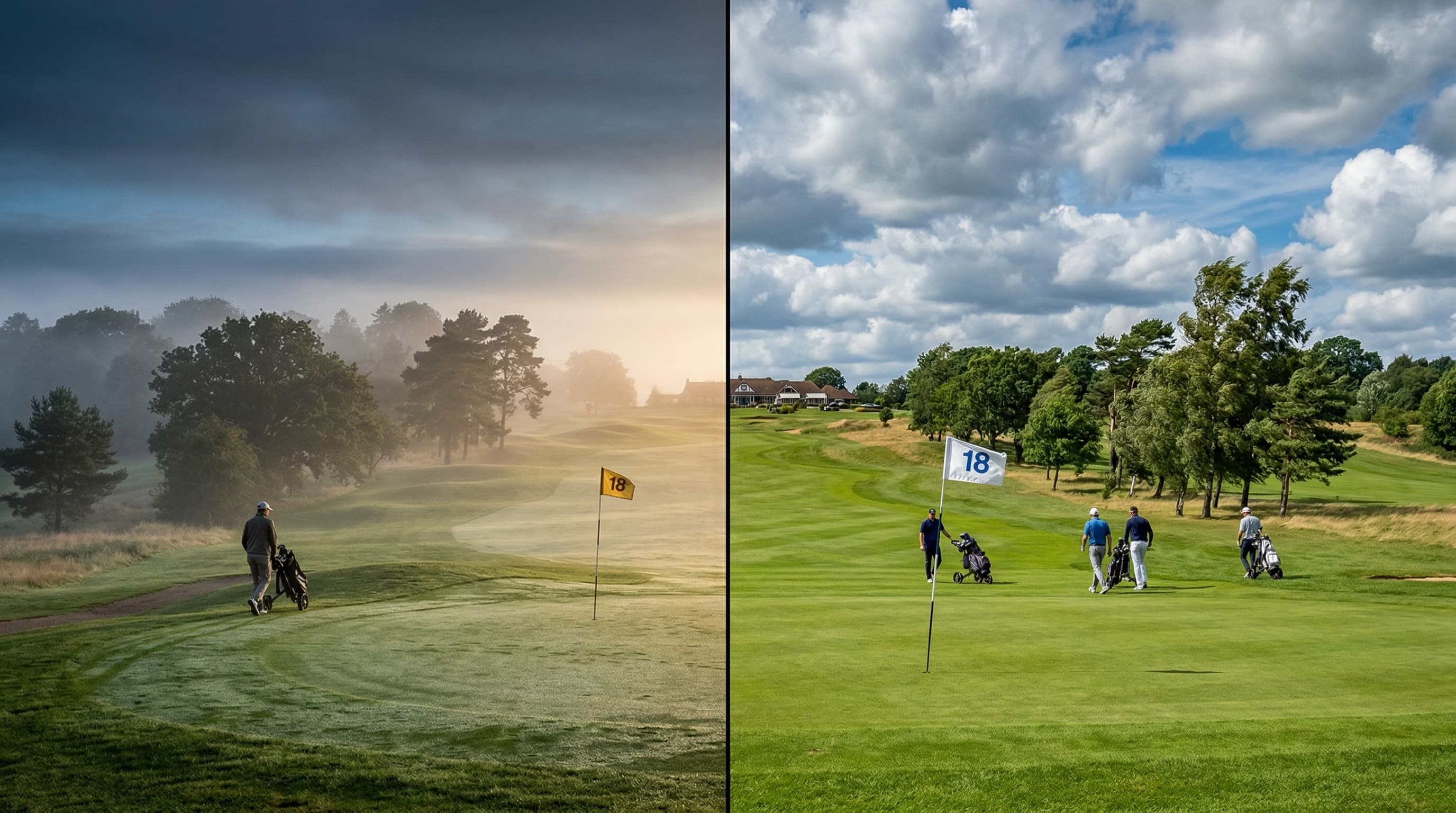
Morning vs Afternoon Tee Times: What Weather Data Reveals About When to Play
Hourly weather data reveals morning tee times score 8-12 G-Score points higher than afternoon slots. Here is what the numbers say about optimal timing.
Read Story
Best Golf Weather by State: Ranking America by Average G-Score
We ranked all 50 US states by average G-Score golf playability. California tops the list, but the results beyond the top five may surprise you.
Read StoryDanorie
Editorial & Data
Golf Weather Score is built by Danorie. We compute the G-Score — our own playability rating — from live NOAA forecasts and published course scorecards, so any US course can be compared on any day with a single number. Methodology and data sources are documented on every page.
Every Friday Morning
When TPC Southwind plays best next weekend.
Friday 6am ET: peak G-Score windows for TPC Southwind, wind direction by hour, and one gear call. Three minutes to read, save you the round.
One email a week. Unsubscribe in one click.
The Caddie's Oracle
Draw your luck before the tee off