
Caddie's Gear Advisor
Curated for today's 93°F · Clouds
Ultralight Distance Drivers
Maximum carry in hot, low-drag conditions
UV Protection Apparel
UPF 50+ cooling fabrics for peak-sun rounds
Precision Rangefinders
Slope-adjusted yardage in any condition
Hydration & Cooling
Insulated bottles and cooling towels
Your Golf Trip, Handled
The Ultimate Golf Trip Planner
Everything you need to play Amelia River Golf Course — from booking your flight to checking in course-side.
Course-Side Stays
Luxury hotels, resorts, and stay-and-play packages just minutes from the first tee.
Flights
Compare fares across 700+ airlines for the best route to your tee time.
SUV Rentals for Golf Bags
Spacious vehicles with room for clubs, bags, and your foursome.
Travel Insurance
Coverage for medical, weather delays, and gear at your destination.
Amelia River Golf Course: Course Intelligence
Signature Setup
I keep a note in my phone from a December round on the Intracoastal side of northeast Florida: 48°F at 8 a.m., breath fogging, the marsh grass silver with frost, and a wind that barely moved until the sun got high. That's the river side of Amelia Island in winter — quiet, raw, and deceptively easy off the first tee before the channel breeze wakes up. It's a different animal from the Atlantic-facing resort courses a few miles east.
Amelia River Golf Club is a daily-fee layout in Fernandina Beach, sitting on the western, Amelia River edge of the island rather than the ocean dunes. It opened in 2001 to a Tommy Walker routing that runs fairways out along tidal marsh and salt flats, playing to a par of 72 from roughly 6,800 yards on the back tees. There is no ocean surf here and no elevation to speak of — the governing variables are marsh carries, tidal wind funneling up the river channel, and firm Bermuda turf. That makes it a course where a weather read beats a yardage read.
Hole-by-Hole Wind & Playing Lines
Hole 1 (par-4, ~430y, #1 handicap). A demanding opener that often runs straight into the W/SW land breeze early. The right fairway bunker is the aiming line; carry it and you shorten a long second into a green that sheds a thin running shot. Cold-morning air is dense here, so even a calm day eats a few yards — take one more club than the number and aim for the center.
Hole 8 (par-3 over marsh). A carry one-shotter with tidal flat short and right. When the channel breeze fills from the south it quarters left-to-right, nudging a fade toward the marsh. Favor the left third of the green and let the wind feed it; the long miss is a manageable chip, the right miss is wet.
Hole 18 (par-4, marsh-edge finisher). The signature closer hugs the Amelia River with the tidal flat tight down the left the whole way. The safe tee shot leans right-center, away from the water, but that lengthens the approach. On a late-morning round with the river breeze up and helping off the right, resist the temptation to flirt with the left line — par here is a good walk in.
Green & Fairway Characteristics
The greens are an ultradwarf Bermuda, TifEagle-type, so grain is half the read: down-grain putts release and up-grain putts stall well short of where the slope alone suggests. Member-day speeds sit in the 9.5–10.5 range, quicker and firmer after a dry, breezy week. Fairways are Bermuda overseeded with ryegrass through the cool season, which tightens the winter lie and lets the ball sit down cleaner than the summer base. Elevation change across the property is minimal; the defense is the forced carry over marsh and the wind crossing it. Both nines run comparable yardage, but the holes that bend out toward the river — roughly the closing stretch of each side — sit most exposed to the channel wind.
Seasonal Weather Pattern
Fernandina Beach is humid subtropical, and on the river side the marsh amplifies both the chill and the humidity. The prime window runs November through April: dawn temperatures in the 40s–50s°F, afternoons in the 60s–70s, lower humidity, and a land breeze that stays light until midday before the river channel pulls a steadier southerly through. May through September flips to 88–92°F afternoons, oppressive humidity rising off the marsh, and near-daily late-day thunderstorms — summer here is a sunrise-tee game or nothing. The transition months bring frontal passages that can rotate the wind 180 degrees overnight, which is the single biggest reason a card that looked benign at the range plays hard by the back nine.
Local Play Tips
Here's the local read that won't show up in a tee-sheet description: because this course sits on the Amelia River and not the open Atlantic, its wind behaves like channel wind, not sea wind. At dawn it's often dead calm or a soft offshore drift; as the day heats up, the breeze funnels up the river corridor and presses on every marsh-edge hole. So bank your scoring on the early holes while the channel is asleep, and treat the closing marsh stretch of each nine as a club-up, aim-away-from-the-water situation. I haven't played it in the dead of August heat, so I won't pretend to know the summer afternoon storm timing first-hand — I plan summer rounds purely off historical convective patterns and an early tee.
Pre-Round Weather Workflow
Use the 7-day G-Score on this page the way I'd prep any tidal-marsh round. Two to three days out, watch for a cold front: a sharp drop in temperature or pressure means dense morning air (every iron flies shorter) and a wind that's rotating rather than steady, which makes the river-side holes unpredictable. The morning of, open the windExposure panel — if it flags a strengthening or shifting late-morning breeze, add a club on the marsh carries (8, 18) and aim for the fat, dry side of each green. In summer, check afternoon storm probability before anything else: if it's high, grab the earliest slot available and plan to be putting out on 18 before the mid-afternoon buildup rolls off the marsh.
Related Reading
Before you tee off at Amelia River Golf Course
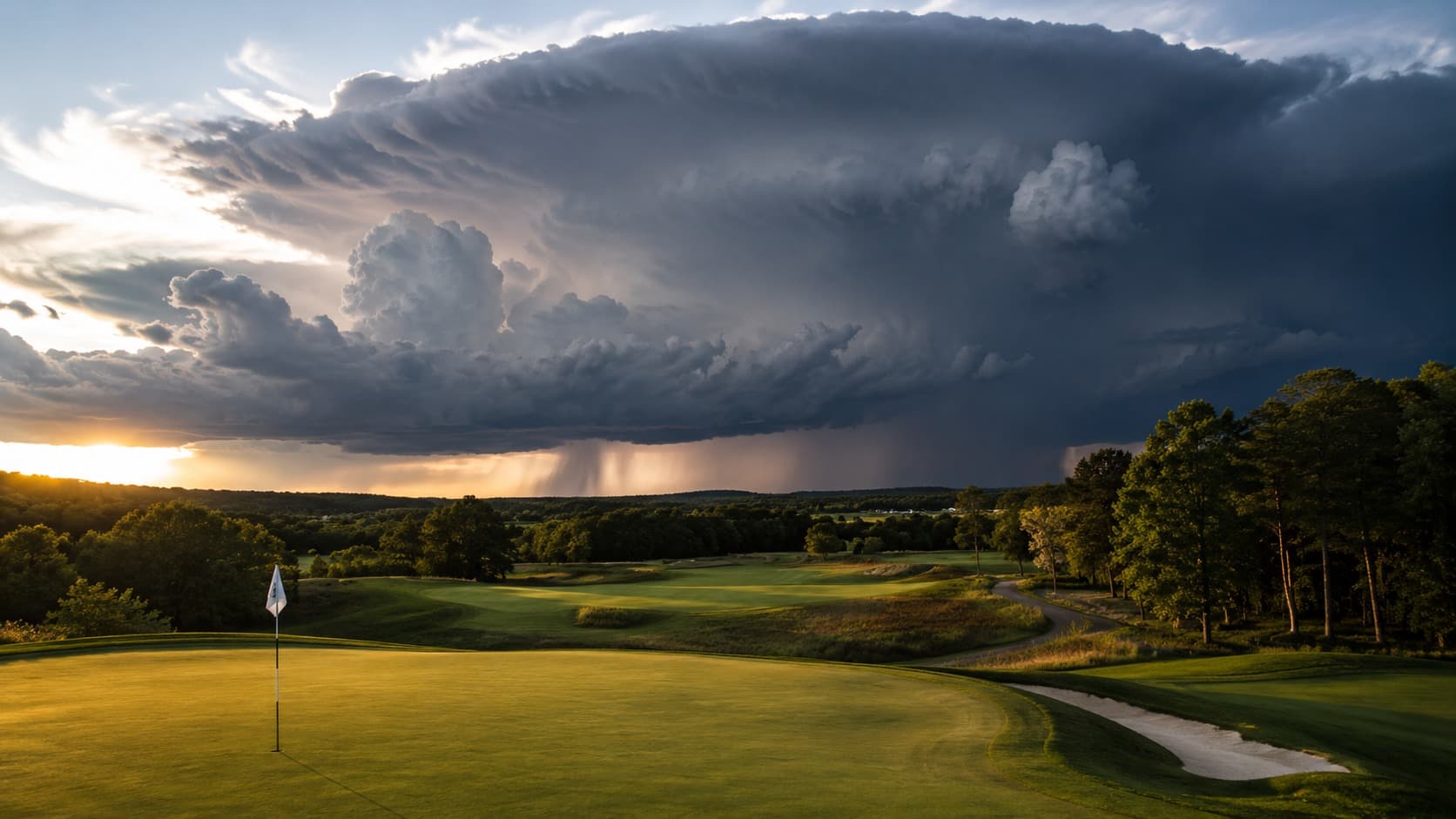
The Three O’Clock Storm: Reading Summer’s Convective Cycle to Protect Your Round
A 40% chance of afternoon thunderstorms does not mean a 40% chance of getting rained on. In the summer convective season it means the morning is nearly clear and the afternoon carries a fast-building, high-energy storm risk driven by a daily heating cycle. Here is the meteorology behind the pattern, the G-Score data on how the storm cycle punishes afternoon tee times across the Southeast, Midwest, and desert Southwest, the lightning-safety decision tree that actually matters, and the workflow that gets you off the course before the first bolt.
Read Story
How to Read a G-Score: The 0–100 Golf Playability Number, Decoded
A G-Score on this site is a single 0–100 number that tells you whether today is worth tee-up. Here is exactly what each band means, what drives the calculation, and how to use it to plan a round you will actually score on.
Read StoryMinSu Kim
Founder & Golf Data Analyst
MinSu is a data analyst and golfer with 10+ years on the course. He built Golf Weather Score to answer one question: is today a good day to play? He combines weather data, course intelligence, and the proprietary G-Score algorithm to help golfers make smarter decisions.
Every Friday Morning
When Amelia River Golf Course plays best next weekend.
Friday 6am ET: peak G-Score windows for Amelia River Golf Course, wind direction by hour, and one gear call. Three minutes to read, save you the round.
One email a week. Unsubscribe in one click.
The Caddie's Oracle
Draw your luck before the tee off