
Caddie's Gear Advisor
Curated for today's 74°F · Clear
Tour-Level Drivers
Engineered for maximum distance and forgiveness
Laser Rangefinders
Pin-seeking technology for precision approaches
Premium Golf Balls
Tour-caliber spin and distance performance
Performance Sunglasses
Polarized lenses optimized for reading greens
Your Golf Trip, Handled
The Ultimate Golf Trip Planner
Everything you need to play Apostle Highlands Golf Course — from booking your flight to checking in course-side.
Course-Side Stays
Luxury hotels, resorts, and stay-and-play packages just minutes from the first tee.
Flights
Compare fares across 700+ airlines for the best route to your tee time.
SUV Rentals for Golf Bags
Spacious vehicles with room for clubs, bags, and your foursome.
Travel Insurance
Coverage for medical, weather delays, and gear at your destination.
Apostle Highlands Golf Course: Course Intelligence
Signature Setup
I drove up to Bayfield on a September morning, 54°F at the first tee, the lake already throwing a cold breath up the bluff. Apostle Highlands sits on a ridge above the town, and you feel the elevation before you feel the golf.
The course was built in 1996 to a Don Herfort routing, an 18-hole public layout that climbs and falls across the high ground southwest of Bayfield, Wisconsin. Its identity is the view: from the upper holes you look out over Lake Superior and the scatter of the Apostle Islands. This is not a resort-manicured championship track — it is a northern-Wisconsin daily-fee course where the wind, the elevation change, and the short Lake Superior season define the difficulty far more than length does. From the back tees it plays in the mid-6,000s; the rating, not the yardage, is where the bluff exposure shows up.
Hole-by-Hole Wind & Playing Lines
The wind here is the whole story, and it comes off the largest cold-water body in the contiguous U.S.
- Hole 4 (the #1 handicap, a long par-4): On the prevailing NW mornings the approach plays straight into a wind that has crossed open water. A 150-yard shot on the card is a 175-to-180-yard shot in fact. I club up two full clubs and aim at the fat of the green — anything chasing the right edge gets pushed off. Roughly the back half of fall mornings here are into-the-wind on this hole.
- A downwind par-5 on the high ground: When the NW carries behind you, the same elevation that punishes you on Hole 4 rewards you — tee shots from the ridge ride the wind and the ball runs out on firm turf. Reachable becomes realistic; lay-up math changes entirely.
- The 9th (signature): Downhill, with the lake and islands across the sightline. The view pulls your eye and your aim long. On a left-to-right crosswind off the water, start the tee ball up the left side and let the wind work it back.
Green & Fairway Characteristics
The greens are bentgrass and run medium-fast — call it a Stimp around 10 on a normal day, slower after a cool overnight when the dew sits late, which it does up here well into the morning. They hold a struck iron but the bluff-top fairways are firm in a dry wind, so a low runner releases more than you expect. Read the slope toward the lake: putts trend downhill toward the water side of the property more often than the contour alone suggests. The front nine works the lower ground; the back climbs to the exposed ridge, where both the wind and the green firmness step up.
Seasonal Weather Pattern
Bayfield's golf season is short and cold-edged. May mornings can open in the low 40s°F with frost delays not unusual; you are often teeing off into single-digit-Celsius air. June through August is the real window — daytime highs commonly in the 70s°F, mornings still cool at 50–58°F because Lake Superior never warms. September is, to me, the best month: stable highs in the 60s°F, hard color in the maples on the bluff, and the wind a touch more predictable. By October the lake-driven NW wind has teeth and the season is closing. Unlike inland Wisconsin courses in the same climate band, the lake keeps afternoons cooler and the wind steadier here — you cannot borrow a generic "Upper Midwest" forecast and trust it on this bluff.
Local Play Tips
Two things that don't show up in a yardage book. First, the morning wind is materially lighter than the afternoon — the NW off the lake builds through the day, so the same back-nine bluff holes that are fair at 9 a.m. are a different course at 3 p.m. Second, this is a true bring-a-layer round even in July; I keep a windshirt in the bag through August because the first three holes near the high ground run cold off the water. I have not played it in peak summer heat, so I won't speak to August firmness from experience — but the dry-wind release I saw in September was real.
Pre-Round Weather Workflow
Use the 7-day G-Score and windExposure before you book a tee time here. Three checks:
- Wind direction and speed — a NW reading over ~12 mph means the back-nine bluff holes (especially Hole 4) will play long; shift your target scoring expectation and club up early.
- Morning vs afternoon split — the G-Score will almost always favor an earlier slot in summer and fall; take the morning tee time and beat the lake breeze.
- Temperature and frost — in May and October, check the overnight low; a frost delay is common, and cold turf means less roll, so plan one extra club into greens.
Pull the forecast the night before, pick the calmest, warmest window the G-Score offers, and let the lake set your strategy — up here, it always does.
Related Reading
Before you tee off at Apostle Highlands Golf Course
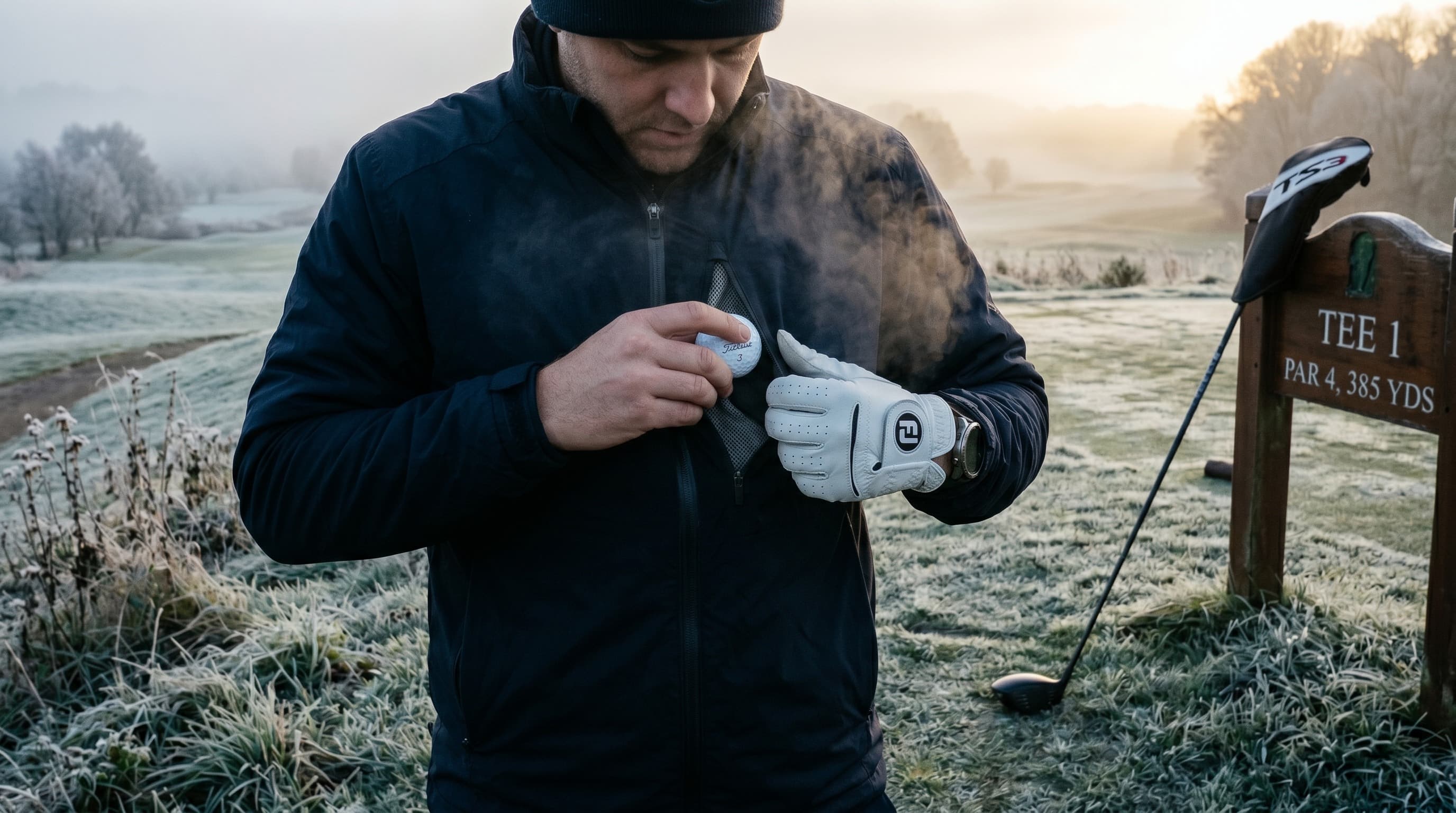
How Cold Weather Steals Distance: The Ball Compression Physics Every Golfer Should Know
Every 10°F drop costs the average golfer two to four yards of driver carry. Here is the physics — ball compression, air density, muscle temperature — and the field data we pulled from G-Score-monitored cold rounds to show exactly how distance loss compounds, and how to compensate without changing your swing.
Read Story
How to Read a G-Score: The 0–100 Golf Playability Number, Decoded
A G-Score on this site is a single 0–100 number that tells you whether today is worth tee-up. Here is exactly what each band means, what drives the calculation, and how to use it to plan a round you will actually score on.
Read StoryMinSu Kim
Founder & Golf Data Analyst
MinSu is a data analyst and golfer with 10+ years on the course. He built Golf Weather Score to answer one question: is today a good day to play? He combines weather data, course intelligence, and the proprietary G-Score algorithm to help golfers make smarter decisions.
Every Friday Morning
When Apostle Highlands Golf Course plays best next weekend.
Friday 6am ET: peak G-Score windows for Apostle Highlands Golf Course, wind direction by hour, and one gear call. Three minutes to read, save you the round.
One email a week. Unsubscribe in one click.
The Caddie's Oracle
Draw your luck before the tee off