
Caddie's Gear Advisor
Curated for today's 45°F · Rain
Storm-Ready Outerwear
Waterproof layers built for 18 holes in the rain
Tour-Grade Umbrellas
68" double-canopy wind-resistant coverage
Wet-Weather Gloves
All-weather grip that performs in the rain
Waterproof Golf Shoes
Keep your feet dry through every fairway
Apple Creek Golf Course: Course Intelligence
Signature Setup
I haven't walked Apple Creek in the dead of a Wisconsin winter freeze, but I've stood on enough open Fox-valley tees in shoulder season to know what the wind does here — 51°F at 8 a.m. one October, calm at the first tee and then a steady push by the turn. Apple Creek Golf Course sits in the Green Bay / Bellevue area of northeastern Wisconsin, an 18-hole public par 72 laid across gently rolling, open farmland terrain near the Fox River valley. It's a daily-fee course built for honest, walkable golf rather than tournament drama, opened to public play around the early 1990s. The architect isn't publicly documented, so I won't invent one — but the routing tells you plenty: open exposure, few trees to hide behind, and a layout where the prevailing wind, not the yardage, writes your card.
Hole-by-Hole Wind & Playing Lines
The single most important variable at Apple Creek is exposure. With little tree cover, the SW summer wind off the open valley reaches almost every hole, and that changes the math on the longest holes.
The #1-handicap par-4 (~430 yards). Into a 12–18 mph SW wind this plays a full club-and-a-half longer than the card. I'd take driver and a flighted-down long iron, but the smart line is to lay back to a full wedge yardage rather than thinning a 3-wood into the breeze — the open green won't hold a low runner coming in hot.
The water-guarded back-nine par-3. This is the hole the wind owns. Sheltered tees make it feel calmer than it is; the ball climbs into the valley crosswind and the carry over water leaves no margin short. I'd rather be pin-high long than wet — take the extra club and aim for the fat of the green.
The downwind par-5s. Riding a SW tailwind these become genuine birdie holes — a flushed drive plus a long second can reach. The catch is the firm, open landing areas: a downwind approach releases hard, so plan to land it short and let it feed rather than flying the flag.
> I'm reading these lines off the course's open exposure and the regional wind pattern, not a dozen rounds in July heat — I'd rather flag that than fake first-hand summer notes.
Green & Fairway Characteristics
Apple Creek plays like the rolling, open parkland course it is. Greens are bentgrass running at moderate, honest speeds rather than glassy tournament pace; fairways are a bluegrass/rye mix that stays generous and walkable. The terrain rolls gently, so you'll catch sidehill and uphill lies but nothing severe, and the slope rating sits in the low-to-mid 120s from the back tees — a number that tells you this is a fair, get-around layout, not a card-wrecker. The greens are mid-sized and mostly open in front, which rewards a low chasing shot in firm summer conditions; a high spinner into the SW breeze, the kind the valley gust will stand up and drop short, is exactly the shot this layout punishes. The full 18 stretches to roughly 6,500 yards from the tips across a par 72, with both nines giving up reachable par-5s when the wind cooperates.
Seasonal Weather Pattern
Northeastern Wisconsin runs a humid-continental cycle moderated by Green Bay and Lake Michigan, and the golf season is roughly mid-April through October. Spring (April–May) is cold and wet — soft fairways, 40s-to-50s°F mornings, and a lake chill that lingers later here than inland. Summer is the scoring season but also the windy one: July and August bring highs in the low-to-mid 80s°F, real humidity, and a SW wind that builds with the afternoon heat and the lake-breeze interaction off the bay. Pop-up afternoon thunderstorms can erase a back nine. September and October are the best golf of the year — crisp 45–65°F air, firmer faster turf, and a sharpening NW wind as fall sets in. The reliable pattern is daily, not seasonal: calm mornings, building SW wind by early afternoon (per NOAA regional climatology for the Green Bay area).
Local Play Tips
The local read no scorecard gives you: on an open valley course like this, the wind at address is the wind your ball flies in — there are no trees to bail you out. That sounds obvious, but golfers used to sheltered tree-lined courses consistently under-club into the SW breeze here because the tee box itself feels mild. Trust the flag and the forecast over the feel at your feet, and commit to the extra club into everything moving upwind. Second tip: the open layout drains and firms quickly after morning dew burns off, so an early tee time means soft, receptive greens while a midday slot means firm, releasing approaches — adjust your landing spots accordingly rather than fighting the same shot all day.
Pre-Round Weather Workflow
Apple Creek rewards planning around one number: the gap between an 8 a.m. and a 2 p.m. G-Score on this course page. Three days out, look at where your tee window falls — the calm dawn or the filled-in afternoon SW wind off the Fox valley. On a hot July day that single choice is worth 8–12 G-Score points, so if the forecast trends warm and breezy, grab the early slot before the lake-breeze stands the flags up. On the day itself, the windExposure panel tells you how to split the round: a SW wind hands you the downwind par-5s as birdie holes, so spend your aggressive clubs there, while the ~430-yard #1-handicap par-4 and the water-guarded back-nine par-3 turn into bogey-management holes — take the extra club, aim at the fat of the open green, and let the ball run rather than fly it. When the panel reads a sub-50°F October morning with the season's NW wind, the move is the ground game: more club into every upwind approach and a landing spot short of the pin so the firm turf feeds it home.
Related Reading
Before you tee off at Apple Creek Golf Course
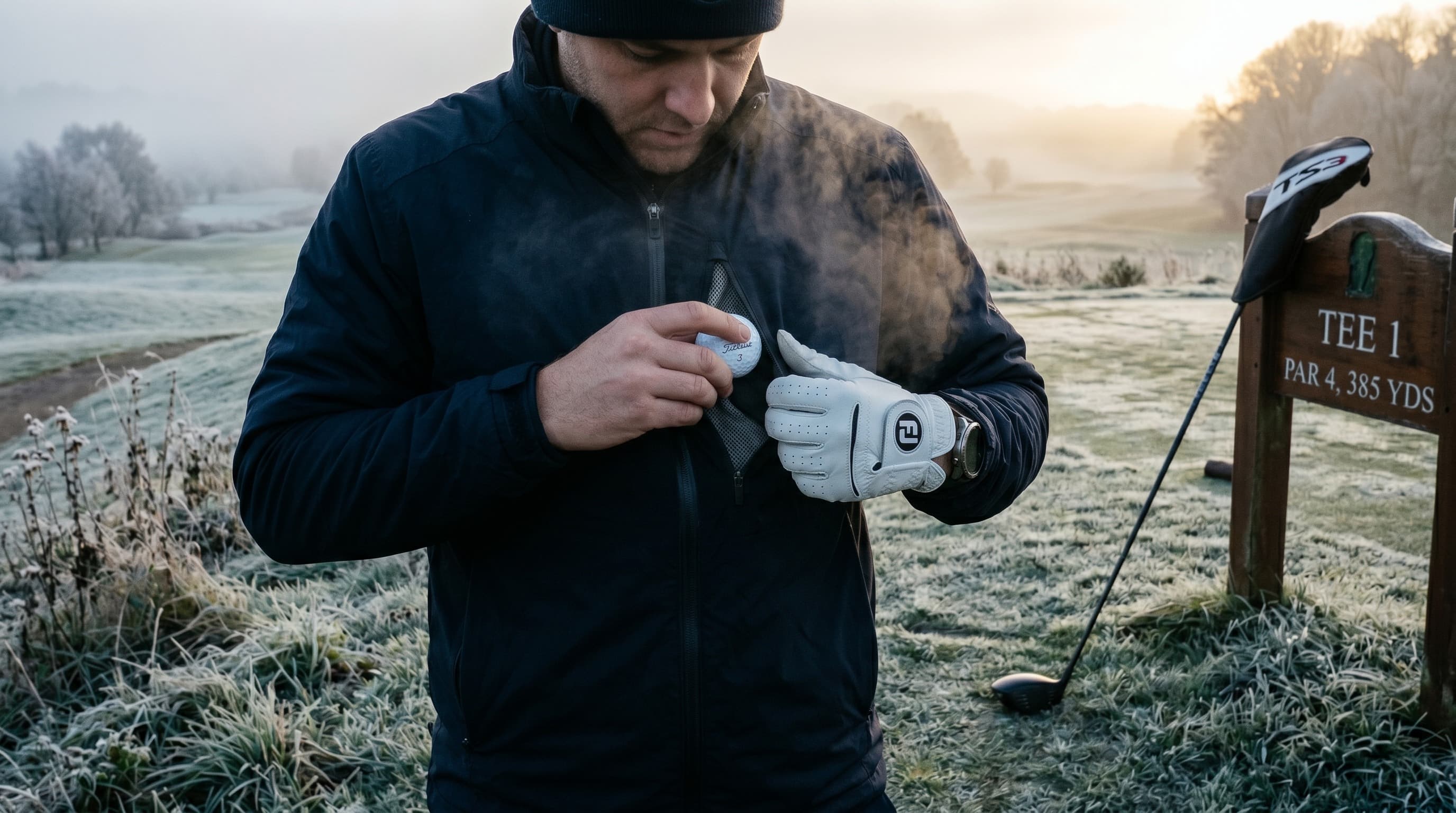
How Cold Weather Steals Distance: The Ball Compression Physics Every Golfer Should Know
Every 10°F drop costs the average golfer two to four yards of driver carry. Here is the physics — ball compression, air density, muscle temperature — and the field data we pulled from G-Score-monitored cold rounds to show exactly how distance loss compounds, and how to compensate without changing your swing.
Read Story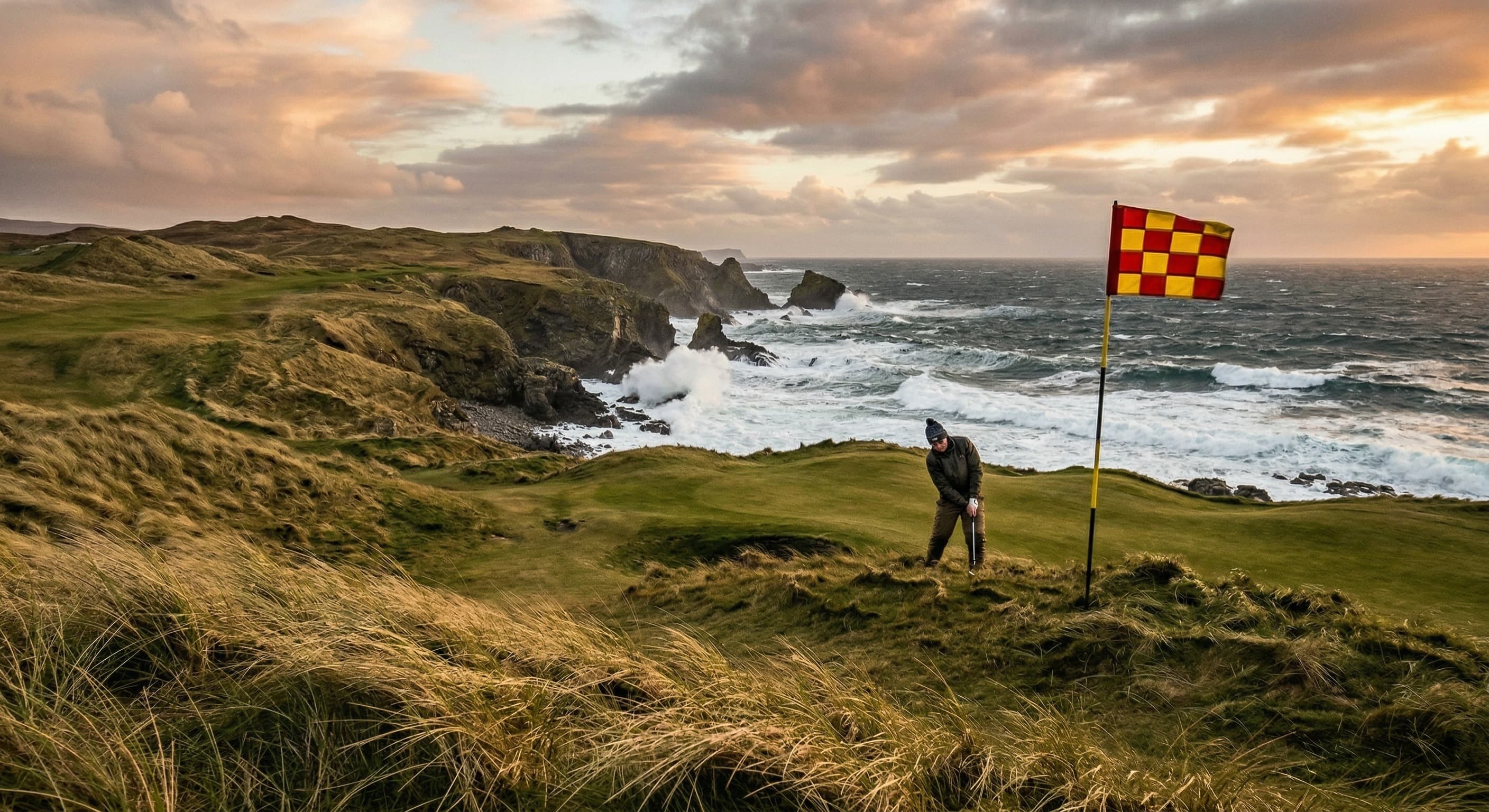
America's 20 Windiest Golf Courses: A G-Score Wind Analysis
We ranked America's 20 windiest golf courses using G-Score wind penalty data. See how coastal gusts and prairie gales reshape playability scores.
Read StoryDanorie
Editorial & Data
Golf Weather Score is built by Danorie. We compute the G-Score — our own playability rating — from live NOAA forecasts and published course scorecards, so any US course can be compared on any day with a single number. Methodology and data sources are documented on every page.
Every Friday Morning
When Apple Creek Golf Course plays best next weekend.
Friday 6am ET: peak G-Score windows for Apple Creek Golf Course, wind direction by hour, and one gear call. Three minutes to read, save you the round.
One email a week. Unsubscribe in one click.
The Caddie's Oracle
Draw your luck before the tee off