
Caddie's Gear Advisor
Curated for today's 75°F · Clear
Tour-Level Drivers
Engineered for maximum distance and forgiveness
Laser Rangefinders
Pin-seeking technology for precision approaches
Premium Golf Balls
Tour-caliber spin and distance performance
Performance Sunglasses
Polarized lenses optimized for reading greens
Your Golf Trip, Handled
The Ultimate Golf Trip Planner
Everything you need to play Arcadia Bluffs Golf Club — from booking your flight to checking in course-side.
Course-Side Stays
Luxury hotels, resorts, and stay-and-play packages just minutes from the first tee.
Flights
Compare fares across 700+ airlines for the best route to your tee time.
SUV Rentals for Golf Bags
Spacious vehicles with room for clubs, bags, and your foursome.
Travel Insurance
Coverage for medical, weather delays, and gear at your destination.
Arcadia Bluffs Golf Club: Course Intelligence
Signature Setup
The first thing you notice at Arcadia Bluffs is how high you are above the water. The Bluffs Course sits roughly 225 feet above Lake Michigan, and the lake is in view on most of the round. I walked the first tee on an October morning, hands colder than I'd planned for — about 49°F at 8 a.m. with a steady push off the water. Rick Smith and Warren Henderson built this links-style layout in 1999, leaning on fescue, blowout bunkers, and big open sightlines rather than tree-lined target golf. It plays as a par 72 stretching past 7,300 yards from the tips, and the slope from the back set climbs into the 140s. This is not a course that hides its difficulty — it shows you the trouble and dares you to flight the ball low enough to beat the wind.
Hole-by-Hole Wind & Playing Lines
The three holes that decide your card here are the exposed long par-4s and the bluff-edge stretch.
- Hole 5 (the #1 handicap): On a NW wind off the lake — common in fall mornings — the tee shot plays dead into the breeze. A 430-yard hole effectively becomes 460-plus. I aim left of the fairway crown so the ball feeds right with the slope instead of leaking into fescue, and I take one to two extra clubs on the approach.
- Hole 11: The signature stretch runs along the bluff toward Lake Michigan. With a left-to-right onshore wind, the safe miss is up the left; anything bailed right rides the wind toward the drop-off.
- Closing holes: The finish is into the prevailing afternoon wind more often than not. Keep the ball under the gusts — a stinger off the tee saves you a full club into the green.
Green & Fairway Characteristics
The fairways are fescue and run firm in summer and early fall, so a tee shot that lands soft can still chase 20-plus yards. That's an asset downwind and a liability into it, when shots check up short of where you expect. The bentgrass greens are large but tilted, and into a stiff breeze they feel quicker than the stated speed — putts die slower uphill, hold their line less downhill. Front nine and back nine both reward a low ball flight; the back is the more exposed of the two.
Seasonal Weather Pattern
Northern Michigan's season is short. The course typically opens around May and runs into October, with peak conditions in July and August when daytime highs sit in the high-70s to low-80s°F. Mornings in May and late September can start near 45–50°F with brisk lake wind. October, when I played, brings the firmest fescue and the strongest, most directional winds off the lake — beautiful, but two clubs harder than a calm July afternoon.
Local Play Tips
Walk it if your legs allow — the routing and the lake reveals are built for it. Bring more layers than the forecast suggests; the bluff-top wind makes 55°F feel like 45°F on the exposed holes. And don't trust the yardage book on into-wind approaches: I add roughly 10% to the carry number anytime the lake is in my face.
Pre-Round Weather Workflow
Check the 7-day G-Score for Arcadia, Michigan, two or three days out, then again the night before. The number that matters most here is windExposure — this is one of the most wind-driven courses in the Midwest, and the onshore lake breeze usually strengthens through midday. If you can choose your tee time, take the earliest available window before the afternoon build. Pair the G-Score with the wind-direction forecast: a NW or W wind means the long par-4s and the closing holes will play their hardest, so plan to club up and flight it low before you ever reach the first tee.
Related Reading
Before you tee off at Arcadia Bluffs Golf Club
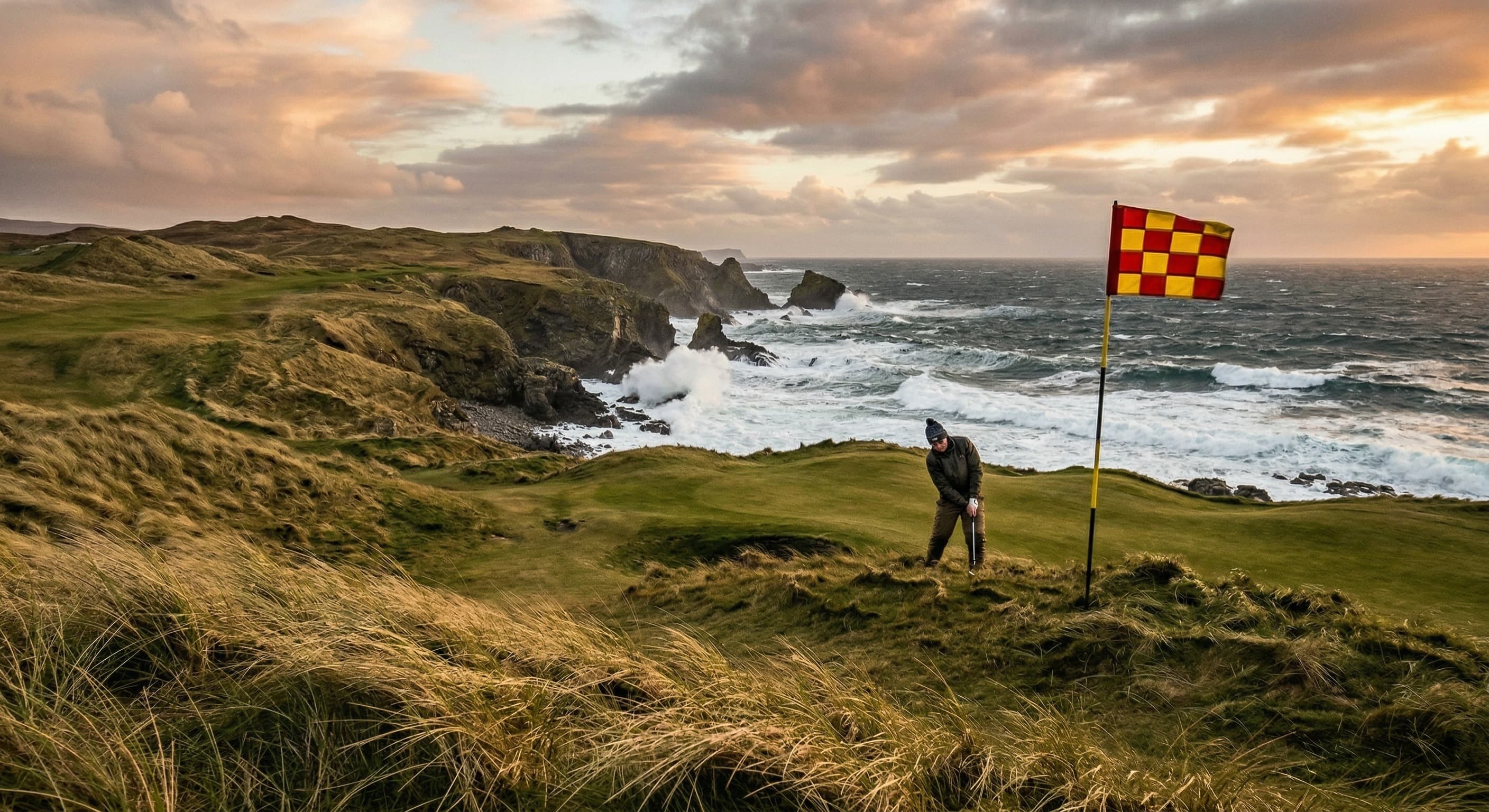
America's 20 Windiest Golf Courses: A G-Score Wind Analysis
We ranked America's 20 windiest golf courses using G-Score wind penalty data. See how coastal gusts and prairie gales reshape playability scores.
Read Story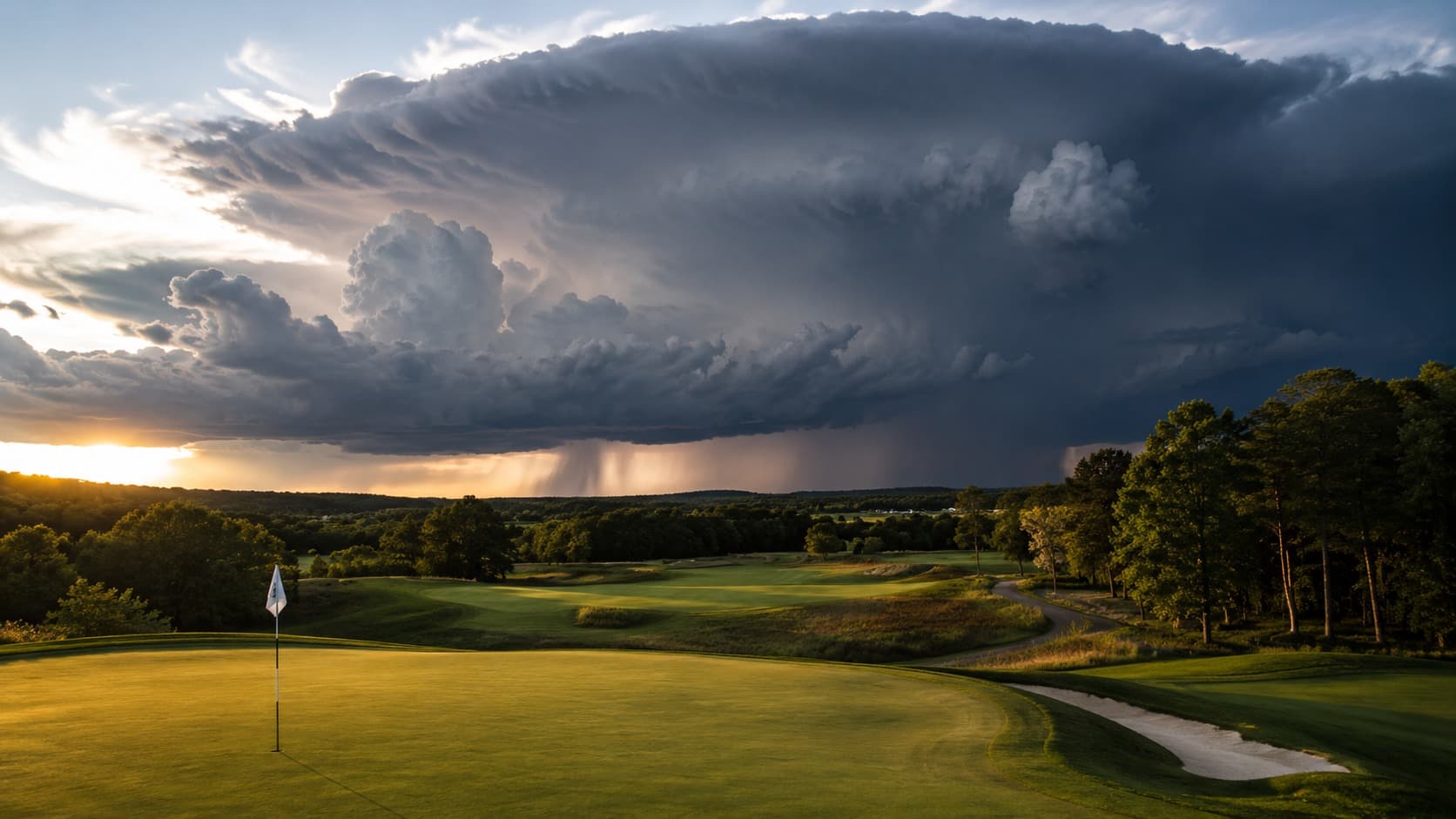
The Three O’Clock Storm: Reading Summer’s Convective Cycle to Protect Your Round
A 40% chance of afternoon thunderstorms does not mean a 40% chance of getting rained on. In the summer convective season it means the morning is nearly clear and the afternoon carries a fast-building, high-energy storm risk driven by a daily heating cycle. Here is the meteorology behind the pattern, the G-Score data on how the storm cycle punishes afternoon tee times across the Southeast, Midwest, and desert Southwest, the lightning-safety decision tree that actually matters, and the workflow that gets you off the course before the first bolt.
Read StoryMinSu Kim
Founder & Golf Data Analyst
MinSu is a data analyst and golfer with 10+ years on the course. He built Golf Weather Score to answer one question: is today a good day to play? He combines weather data, course intelligence, and the proprietary G-Score algorithm to help golfers make smarter decisions.
Every Friday Morning
When Arcadia Bluffs Golf Club plays best next weekend.
Friday 6am ET: peak G-Score windows for Arcadia Bluffs Golf Club, wind direction by hour, and one gear call. Three minutes to read, save you the round.
One email a week. Unsubscribe in one click.
The Caddie's Oracle
Draw your luck before the tee off