
Caddie's Gear Advisor
Curated for today's 79°F · Clear
Tour-Level Drivers
Engineered for maximum distance and forgiveness
Laser Rangefinders
Pin-seeking technology for precision approaches
Premium Golf Balls
Tour-caliber spin and distance performance
Performance Sunglasses
Polarized lenses optimized for reading greens
Your Golf Trip, Handled
The Ultimate Golf Trip Planner
Everything you need to play Arcadia Hills Golf Club — from booking your flight to checking in course-side.
Course-Side Stays
Luxury hotels, resorts, and stay-and-play packages just minutes from the first tee.
Flights
Compare fares across 700+ airlines for the best route to your tee time.
SUV Rentals for Golf Bags
Spacious vehicles with room for clubs, bags, and your foursome.
Travel Insurance
Coverage for medical, weather delays, and gear at your destination.
Arcadia Hills Golf Club: Course Intelligence
Signature Setup
The thing that defines Arcadia Hills is right there in the name — you are almost never standing on flat ground. I played it on a cool spring morning, about 52°F at 8 a.m. with the air still settling in the low spots, and the first thing I felt was how much the terrain, not the length, controls the round. This is a rolling inland layout that grew into a full 18 holes in 1968, built in the practical public-course tradition of its era: generous corridors, greens that fit the natural grade rather than fighting it, and elevation change as the primary defense. The signature is a downhill par-3 that drops across a ravine, playing roughly 175 yards from the back but a club shorter when the air is warm and still. I haven't seen this course in peak summer, so I'll keep my heat-and-firmness notes to what spring conditions showed me.
Hole-by-Hole Wind & Playing Lines
On a hilly course, wind and slope compound — that's the whole game here.
- Hole 4 (the #1 handicap): An uphill par-4 around 430 yards. Into the prevailing SW wind it plays closer to 460, because you lose both the carry to the breeze and the roll to the upslope. I take one to two extra clubs on the approach and favor the left half of the fairway, where the ground feeds back toward center instead of kicking into the right rough.
- The downhill par-3: Wind direction matters more than usual because the ball hangs over the ravine. A helping wind can balloon a high iron long; I flight it lower and trust the drop.
- The closing stretch: The finish climbs back toward the clubhouse, so an into-wind afternoon makes the last two approaches play uphill and into the breeze — plan to club up before you get there.
Green & Fairway Characteristics
The greens are a bentgrass/poa mix, mid-sized, and tilted to follow the land — most of them break harder toward the low side of the slope than the surface reads. The fairways run firm on the upslopes and hold soft in the shaded hollows, so a tee shot landing on a downhill lie chases while one landing in a dip checks up. Front nine and back nine both ask you to read the grade before the wind. Slope feel from the regular tees sits in the low-to-mid 120s — not a brutal card on paper, but the elevation steals strokes the number doesn't capture.
Seasonal Weather Pattern
Spring mornings here start cool and damp, in the low-50s°F when I played, with fog settling in the ravines until the sun burns it off mid-morning. Summer brings the firmest fairways and the most roll on the downhill holes, while early fall typically returns the cool, calm mornings that make the elevation-change holes most predictable. The wind tends to build through late morning as the hill slopes heat unevenly — that thermal funnel is the local pattern to plan around, and it separates this course from a flat-land layout in the same temperature band.
Local Play Tips
Take a cart if your legs aren't ready for sustained climbing — the back-to-clubhouse holes are a genuine grind on foot. More useful: trust the slope over the yardage on every approach. On uphill shots I add roughly 5% per noticeable rise and club up; on the downhill par-3 I take one less and aim for the front. And get out early — the calm, fog-lifting window before 10 a.m. is the easiest scoring of the day before the upslope wind arrives.
Pre-Round Weather Workflow
Check the 7-day G-Score for the course two or three days out, then again the night before. On a hilly inland layout like this, the number to watch is windExposure paired with the wind-direction forecast — a SW wind means the uphill #1-handicap par-4 and the climbing finish will play their hardest, so you'll want to club up and flight it low. If you can pick your tee time, take the earliest window before the mid-morning thermal wind builds up the slopes. Walk to the first tee already knowing which holes climb and which way the breeze runs, and the elevation stops being a surprise and becomes a plan.
Related Reading
Before you tee off at Arcadia Hills Golf Club

America's 20 Windiest Golf Courses: A G-Score Wind Analysis
We ranked America's 20 windiest golf courses using G-Score wind penalty data. See how coastal gusts and prairie gales reshape playability scores.
Read Story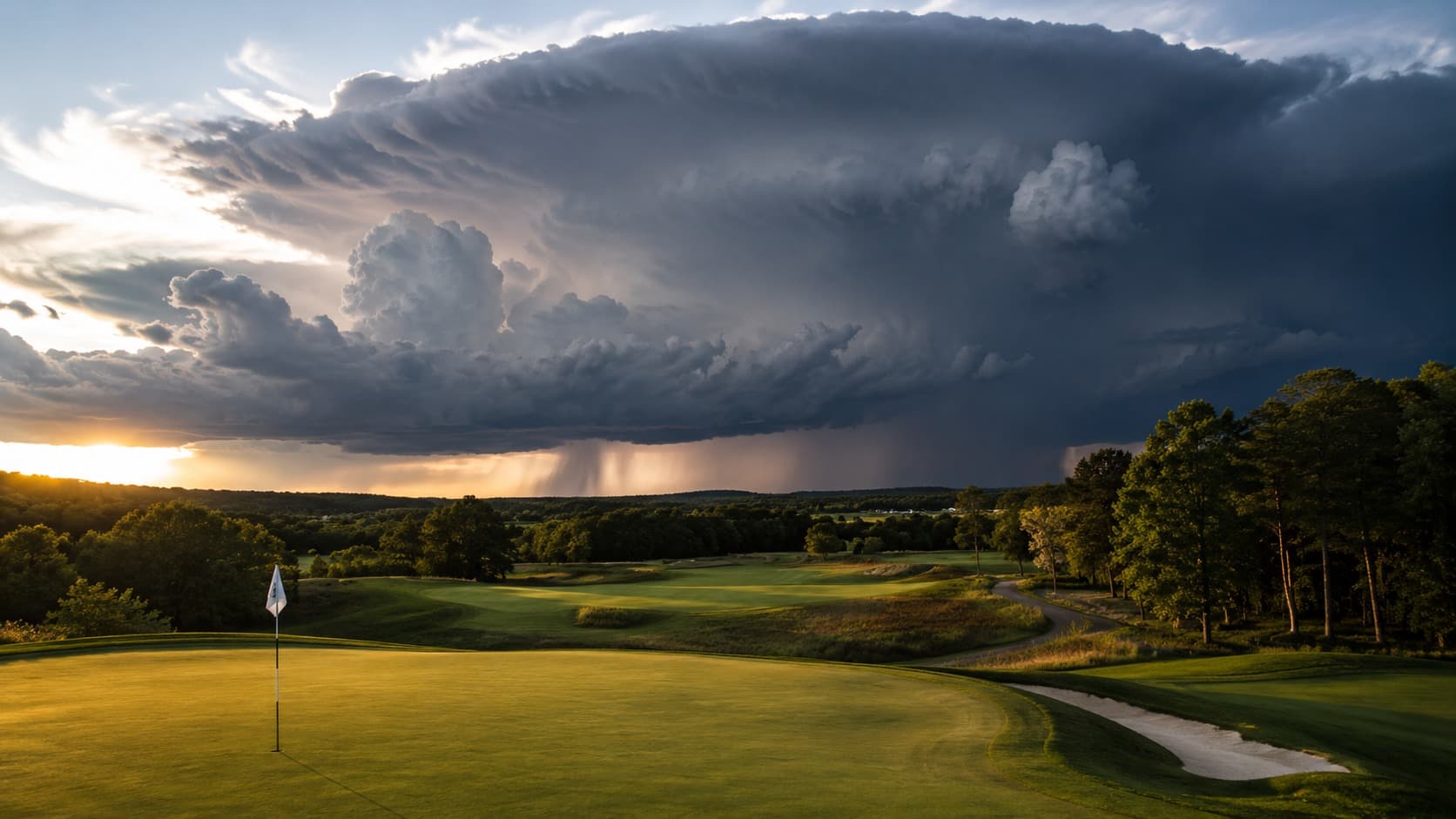
The Three O’Clock Storm: Reading Summer’s Convective Cycle to Protect Your Round
A 40% chance of afternoon thunderstorms does not mean a 40% chance of getting rained on. In the summer convective season it means the morning is nearly clear and the afternoon carries a fast-building, high-energy storm risk driven by a daily heating cycle. Here is the meteorology behind the pattern, the G-Score data on how the storm cycle punishes afternoon tee times across the Southeast, Midwest, and desert Southwest, the lightning-safety decision tree that actually matters, and the workflow that gets you off the course before the first bolt.
Read StoryMinSu Kim
Founder & Golf Data Analyst
MinSu is a data analyst and golfer with 10+ years on the course. He built Golf Weather Score to answer one question: is today a good day to play? He combines weather data, course intelligence, and the proprietary G-Score algorithm to help golfers make smarter decisions.
Every Friday Morning
When Arcadia Hills Golf Club plays best next weekend.
Friday 6am ET: peak G-Score windows for Arcadia Hills Golf Club, wind direction by hour, and one gear call. Three minutes to read, save you the round.
One email a week. Unsubscribe in one click.
The Caddie's Oracle
Draw your luck before the tee off